Coined by a Fugitive
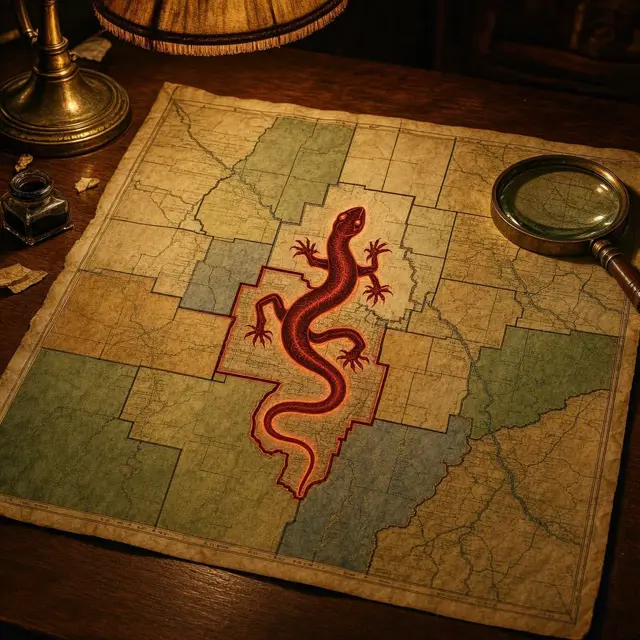
The phrase banana republic was invented by a man on the run. In 1897, the American writer O. Henry spent six months hiding in Honduras — he was wanted in the United States for embezzlement — and watched how the country around him actually worked. In his 1904 story collection *Cabbages and Kings*, he distilled it into a fictional nation called Anchuria: the first "banana republic".
The label stuck because it named something real: a politically and economically unstable country whose economy hangs on exporting a single natural resource — and whose government is effectively run as a private business for the profit of its ruling class. A tiny plutocracy of business, political, and military elites on top; a vast impoverished workforce underneath; and foreign corporations holding the actual levers.
The Octopus
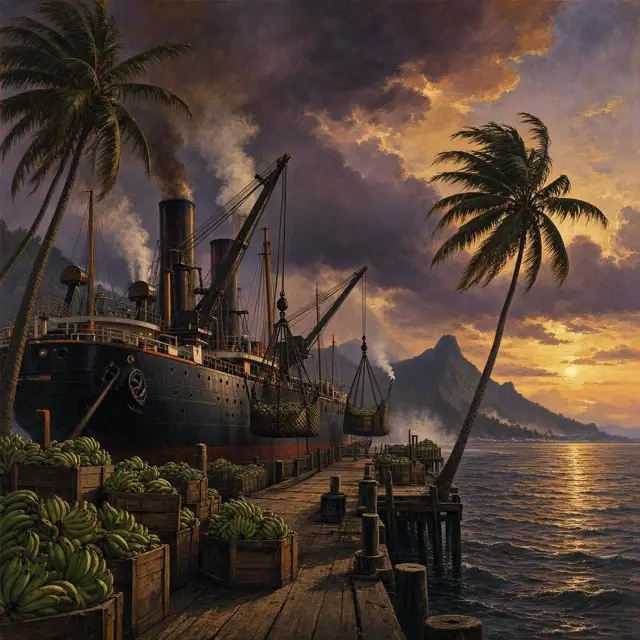
The archetype had a name: the United Fruit Company. By the 1930s it controlled 80 to 90% of the American banana trade and owned 1.4 million hectares — 3.5 million acres — of land across Central America and the Caribbean, making it the largest landowner in Guatemala. In Honduras its reach was so total that locals called it *El Pulpo* — The Octopus — because its tentacles wrapped around every part of society.
When politics inconvenienced the fruit business, politics changed. In 1911, banana magnate Sam Zemurray conspired with an ex-president and an American mercenary named Lee Christmas to overthrow Honduras's elected government; the coup succeeded the following year, installing a regime friendly to foreign business. The pattern — corporations selecting governments — is precisely what the term banana republic condemns.
When a Fruit Company Called the CIA
The most consequential episode came in Guatemala. In the early 1950s, elected President Jacobo Árbenz began expropriating unused United Fruit land to distribute to landless peasants. The company convinced US Presidents Truman and Eisenhower that Árbenz was secretly pro-Soviet — and in 1954 the CIA orchestrated a coup that toppled the democratic government and installed Colonel Carlos Castillo, who was assassinated three years later.
The aftershocks were generational: the coup helped trigger the Guatemalan Civil War, which ran for 36 years, from 1960 to 1996. Honduras, meanwhile, emerged from its era of engineered instability carrying roughly $4 billion in unpayable external debt. The banana republic was never just a colorful insult — it described a machine that consumed entire national histories.
The Term That Refuses to Retire
The economics behind the label persist. Five corporations — Chiquita, Dole, Del Monte, Noboa, and Fyffes — still control over three-quarters of the world banana market. Ecuador, today's largest exporter with over a third of international banana sales, actually breaks the old mold: its crop comes from more than five thousand small farmers rather than corporate plantations. The human costs linger too — for decades, plantation workers were exposed to a pesticide later linked to birth defects, cancer risk, and infertility.
As an insult, the phrase has gone global and domestic. Australia's own Treasurer warned in 1986 that his country risked becoming a banana republic; in 2023, Pakistan's Imran Khan declared his country had become one. Whenever institutions bend to money or chaos, someone reaches for O. Henry's two words — a century-old epithet, still in stock.