It Started as a Seating Chart
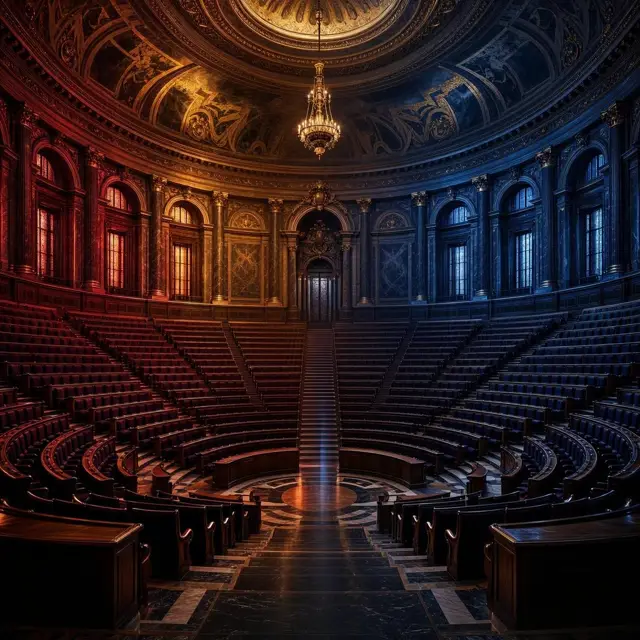
In 1789, as revolution engulfed France, members of the National Assembly faced a practical problem: where to sit. The answer accidentally invented modern political language. Supporters of the king gathered to the president's right; advocates of the revolution massed on his left. One nobleman, the Baron de Gauville, explained that those loyal to religion and the king took the right side simply "to avoid the shouts, oaths, and indecencies" of the opposing camp.
The arrangement stuck. When a new Legislative Assembly formed in 1791, "innovators" again sat left, "moderates" in the center, and "conscientious defenders of the constitution" on the right. A seating preference had hardened into an identity — one that would eventually organize political argument across the entire planet.
What Left and Right Actually Mean
Strip away the noise and the spectrum runs on one deep question: what should happen to social hierarchy? Broadly, the left opposes hierarchies and champions equality, reform, progress, and internationalism. The right favors established order, defending authority, tradition, duty, and nationalism. The French captured it elegantly: the left is "the party of movement", the right "the party of order".
Between them sit centrist and moderate positions, loyal to neither pole. And real people are messier than the line suggests — an individual can hold a left-wing stance on one issue and a right-wing stance on another, which is exactly why the simple spectrum is both irresistible and endlessly argued about.
A French Idea Conquers the World — Slowly
The vocabulary traveled at a crawl. Thomas Jefferson was referencing the Assembly's "coté droite" and "coté gauche" by 1823, but Britain only fully adopted left-and-right talk in the late 1930s, during debates over the Spanish Civil War. Through the 20th century the pair displaced older labels like "reds" and "the reaction".
And the words never mean quite the same thing twice. In Western Europe the divide runs chiefly through class and redistribution. Americans, a 2005 poll found, prefer saying "liberal" and "conservative". In China the compass flips entirely: Communist Party loyalists are the "left", while advocates of liberal democracy get labeled the "right". Even history plays tricks — classical liberalism, born on the left, is now generally filed on the right.
Is One Line Enough?
Political scientists have long protested that a single line cannot hold the world's ideologies. The Nolan Chart of 1969 proposed two axes instead — economic freedom and personal freedom — so a person could be libertarian on one and restrictive on the other. In 2006 Tony Blair argued the real modern divide is "open versus closed": attitudes toward globalization and social change, not the old economics.
Then there's the provocative horseshoe theory, which suggests the far left and far right curve toward each other, sharing authoritarian instincts — a claim as popular in debate as it is contested in academia. Post-communist Eastern Europe scrambles the map further, with economically left parties holding nationalist positions and economically right parties embracing internationalism. The two words born from a seating chart remain indispensable — and permanently imprecise.