Named After a Folded Piece of Paper
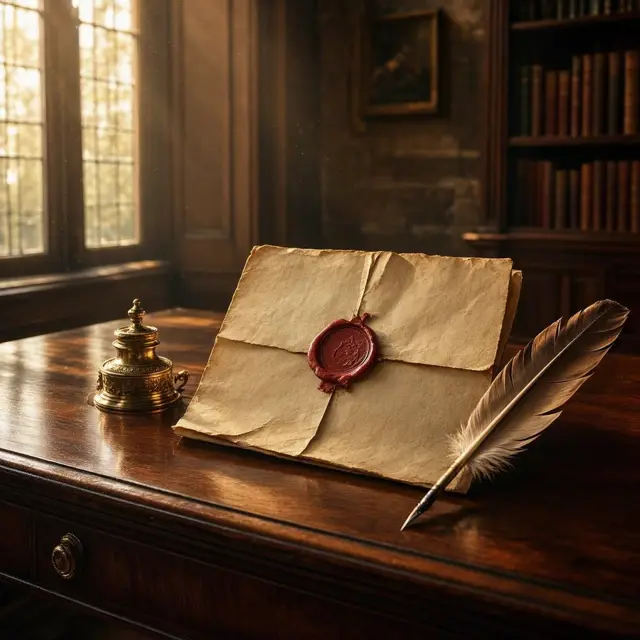
Before envelopes existed, rulers kept official papers private by folding them in two. Diplomacy comes from the 18th-century French word diplomate, built on the ancient Greek diplōma, which roughly means "an object folded in two". Rulers handed out folded documents that granted special privileges. Later the word covered all official papers, including agreements between governments, and so it became tied to relations between countries.
Today diplomacy means representatives of states and other institutions talking with each other to influence world events. It is the main tool of foreign policy. Treaties, alliances and agreements usually grow out of it. Most of the work is done by ambassadors and other accredited officials working from embassies and consulates.
Modern diplomatic methods grew largely out of 17th-century European customs, and the job became a true profession only in the early 20th century. In 1961, the Vienna Convention on Diplomatic Relations set out a shared framework, and most of the world's sovereign states have ratified it.
Peace Deals Written in Stone
Diplomacy is far older than embassies. Around 2100 BC, the Mesopotamian city-states of Lagash and Umma concluded peace treaties. In the 14th century BC, the rulers of Egypt exchanged the Amarna letters with the Amurru rulers of Canaan. They are some of the earliest known diplomatic records.
After the Battle of Kadesh in 1274 BC, Egypt and the Hittite Empire created one of the first known international peace treaties. Pieces of it still survive on stone tablets. Ancient Greek city-states sent an envoy for single tasks like war, peace or trade, but kept no permanent representatives abroad. Instead, they relied on a proxenos, a local citizen who had friendly ties with another city.
In ancient India, the Arthashastra, the oldest treatise on statecraft and diplomacy, advised envoys on how to behave at foreign courts. It listed four approaches to other states: conciliation, gifts, dissent and force. It also called war the last resort, because its outcome is always uncertain.
Golden Passports and a Line at the Great Wall
In 162 BC, China's Han dynasty and the powerful northern nomads known as the Xiongnu drafted a treaty with a very simple map. Everything north of the Great Wall belonged to the nomads. Everything south of it was for the Han. The treaty was renewed no fewer than nine times.
Centuries later, during the Song dynasty, ambassadors Shen Kuo and Su Song won border arguments with their Liao neighbors in a clever way. They used their knowledge of maps and dug through old court archives to prove where the rightful borders lay. In 1082, the Song and Vietnam's Lý dynasty agreed to swap back the lands each side had captured.
The Mongol Empire created something close to a modern diplomatic passport, called a paiza. It came in gold, silver or copper, depending on how important the envoy was. With one in hand, an envoy could ask any city, village or clan in the empire for food, transport and a place to stay.
When Ambassadors Threw Lavish Parties
Europe's first embassies appeared in the states of Northern Italy in the 13th century. Italy also started traditions still used today, like an ambassador presenting credentials to the head of state. Milan sent a representative to France in 1455 but refused to host French ones, fearing they would spy. Spain sent the first permanent representative, an ambassador to England, in 1487.
Between 1500 and 1700, the rules took shape. French replaced Latin as the language of diplomacy from about 1715. Ambassadors were nobles expected to keep large homes and host lavish parties. They were ranked by strict levels of precedence, which led to near-constant squabbling. Representatives of republics were ranked lowest.
Foreign ministries started tiny. In the 1780s, France had the largest one, with only about 70 full-time employees. Diplomats still call ministries by their addresses: the Quai d'Orsay in Paris, Itamaraty in Brasília and Foggy Bottom in Washington, D.C.
Bags No Border Guard Can Open
Diplomats have long enjoyed special protection, the root of modern diplomatic immunity. These rights took shape in Europe in the mid-17th century and were written down in the 1961 Vienna Convention, which protects diplomats from prosecution while on a mission. If a diplomat commits a serious crime, the host country can declare them persona non grata, an unwanted person.
Their mail is protected too. Diplomats can carry documents across borders without being searched, using a diplomatic bag, also called a diplomatic pouch. Some countries, including the United States, declare entire shipping containers to be diplomatic pouches, often to bring in building supplies.
Diplomacy and spying have always been close neighbors. The Byzantine Empire ran an office that looked after foreign envoys, yet it is called the first foreign intelligence agency. Today a military attaché openly tries to learn as much as possible about the host country's military, and is invited only to events the hosts allow, such as parades or air shows.