The 90 Percent Club
Around 90% of people on Earth are right-handed. Studies suggest about 10% are left-handed. True ambidexterity, equal skill in both hands, shows up in only about 1% of people. Most of us simply define our handedness by the hand we write with.
There is also mixed-handedness, where people switch hands depending on the task. It is about as common as being left-handed. People who train their weaker hand on purpose still tend to favor their original one, although children taught young can make the trained hand take over for those tasks.
The numbers shift a little between groups. A 1975 study of 7,688 American schoolchildren found 9.6% were left-handed: 10.5% of the boys and 8.7% of the girls. A huge review of 144 studies, covering 1,787,629 people, found that men are 23% more likely to be left-handed than women.
Genes, Wombs and Toddlers
Handedness runs in families, but not in a simple way. If both parents are left-handed, their child has only a 26% chance of being left-handed too. A study of twins from 25,732 families put the heritability of handedness at roughly 24%. Researchers now think at least 40 different spots in our DNA play a part.
Some of the genes involved help set up left-right differences in the body itself. Scientists suggest the same machinery may also shape the differences between the two sides of the brain, and handedness is one sign of that.
The choice starts surprisingly early. Researchers watching babies in the womb found that the hand they favored there was a very accurate predictor of handedness after birth. In a 2013 study, 39% of infants aged 6 to 14 months showed a hand preference. By 18 to 24 months, that jumped to 97%.
Lefty Kangaroos and Picky Wallabies
Humans are not the only ones with a favorite hand. Handedness has been found in amphibians, reptiles, birds and many mammals. Kangaroos and their close relatives mostly prefer their left hand for everyday tasks in the wild. That is unexpected, because these marsupials lack a corpus callosum, the thick bridge that links the two halves of the brain.
Red-necked wallabies are even pickier. They use their left hand for fine, careful tasks but their right hand for jobs that need strength. In dogs, horses and cats, females tend to be right-handed while males tend to favor the left.
Still, humans stand out. A study of 41 primate species found that people are outliers in both how strong and how right-leaning their hand bias is. Most other primates split evenly between lefties and righties. Scratch patterns on teeth suggest Neanderthals leaned right-handed, just like us.
The Lefty Edge in Sports
Left-handers have a real advantage in face-to-face sports, because their opponents are used to facing righties. The closer the players are, the bigger the effect. In fencing, about half the competitors are left-handed. In tennis, 40% of the seeded players are lefties. A left-hander is often called a southpaw, especially in baseball and boxing.
Baseball shows it clearly. In 2012, about 39% of Major League hitters and 28% of pitchers were left-handed. Fifteen of the top twenty career batting averages in league history belong to left-handed batters. A left-handed pitcher also faces first base, which gives him an edge when trying to pick off runners at first base.
Even bowling plays favorites. Lefties roll on the other side of the lane, where the oil pattern breaks down more slowly, so they need to adjust their shots less often. Sports where players do not face each other directly, like swimming, show no lefty boost at all.
A World Made for Righties
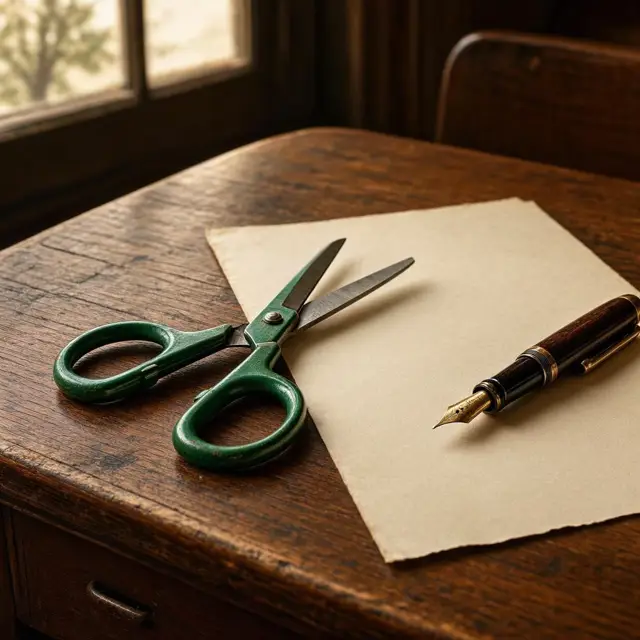
Many everyday tools are built for right-handers. Scissors, kitchen knives and garden tools can all feel awkward in a left hand. Writing from left to right with the left hand also tends to smear fresh ink. Old dip pens were the worst, because a left-hander had to push the pen, and it dug into the paper. Today, special fountain pen nibs are made for lefties.
In 1967, a company called Anything Left-Handed opened a shop in London's Soho. The shop closed in 2006, but the company still sells its products worldwide by mail order. Musicians adapt too. Jimi Hendrix simply reversed his strings and played his guitar "upside down".
Every August 13, lefties mark International Left-Handers Day, which started in 1992. In the UK in 2001, events included left-versus-right sports matches and a left-handed tea party. Right-handers were invited to try lefty tools to feel how awkward the wrong equipment can be.