Three and a Half Degrees From Trouble
Hypothermia is defined as a body core temperature below 35.0 °C. That is the whole margin. Normal human body temperature sits near 36.5–37.5 °C, held there by thermoregulation, so the gap between fine and failing is only a couple of degrees.
The symptoms follow the temperature down, in stages. In mild hypothermia there is shivering and mental confusion. In moderate hypothermia, shivering stops and the confusion deepens — which is the dangerous turn, because the body has given up its main way of generating heat.
In severe hypothermia there may be hallucinations, along with a sharply increased risk of the heart stopping. The word itself is plain Greek: *ypo*, meaning "under", and *thérmē*, meaning "heat". Its opposite is hyperthermia, where thermoregulation fails in the other direction.
The Cold Is Not Always the Cause
The obvious route in is exposure to cold weather or immersion in cold water. That is the classic case, and it is real.
But hypothermia can arise from any condition that reduces heat production or increases heat loss — which quietly widens the risk far beyond mountaineers and swimmers. Common contributors include alcohol intoxication, low blood sugar, anorexia, and advanced age.
That is why hypothermia is not only a wilderness problem. It kills at least 1,500 people a year in the United States, and it is more common in older people and in males. The body's own defences are the ones we recognise instinctively: shivering, moving about more, and putting on warmer clothing. Diagnosis comes either from symptoms in someone with obvious risk factors, or from directly measuring core temperature.
Why the Freezing Undress Themselves
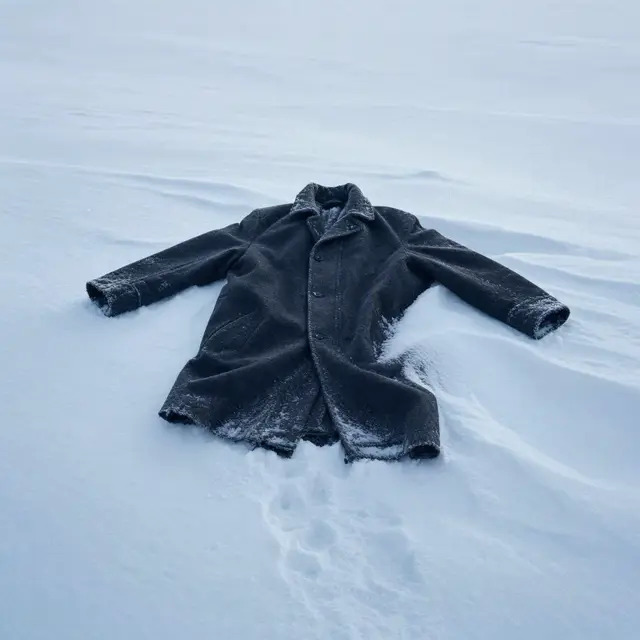
One symptom of severe hypothermia is genuinely eerie: paradoxical undressing, in which the victim removes their own clothing while freezing to death.
It has produced grim confusion at scenes where bodies are found stripped in the snow, appearing to have done the one thing guaranteed to kill them faster. It is a recognised feature of the condition's late stage, listed alongside hallucinations.
The practical lesson for anyone helping is less dramatic but more useful: people with moderate or severe hypothermia should be moved gently. A cold heart is dangerously irritable, and rough handling carries real risk. Treatment scales with severity — mild cases get warm drinks, warm clothing and voluntary physical activity; moderate cases get heating blankets and warmed intravenous fluids.
Nobody Is Dead Until Warm and Dead
Severe hypothermia is where the medicine turns remarkable. Treatment may involve extracorporeal membrane oxygenation (ECMO) or cardiopulmonary bypass — machines that take over circulating and oxygenating the blood. Where someone has no pulse, CPR is performed alongside these measures.
Rewarming is typically continued until the person's temperature is above 32 °C. If there is still no improvement at that point, or if blood potassium rises above 12 millimoles per litre at any time, resuscitation may be discontinued.
The survival stories are extraordinary. Survival after more than six hours of CPR has been described. Where ECMO or bypass is used, survival is around 50%. And one of the lowest documented body temperatures ever survived in accidental hypothermia is 12.7 °C, in a two-year-old Polish boy named Adam. Deep cold slows the body's need for oxygen so profoundly that the usual limits stop applying — which is why the cold that nearly kills can also be the thing that preserves.