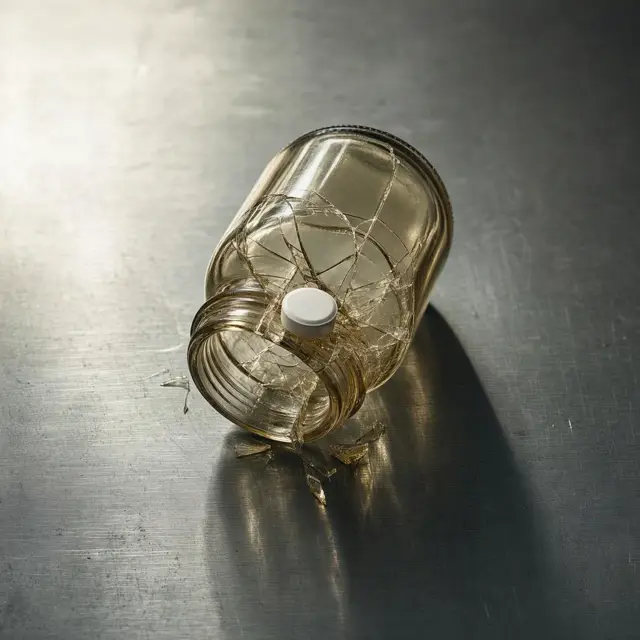
Sold Without a Prescription for Morning Sickness
Chemie Grünenthal synthesised thalidomide in 1952 and initially discarded it. The company took it up again and launched it in West Germany in 1957 under the brand name Contergan — as an over-the-counter drug, available without a prescription.
It was promoted for anxiety, trouble sleeping, "tension" and morning sickness, and marketed as a safer alternative to barbiturates, the sedatives then in common use. It was believed to be safe in pregnancy.
The scale of the error is difficult to overstate, because of one detail: a single dose of thalidomide, regardless of dosage, is enough to cause harm to a developing foetus. There was no safe amount and no safe margin. A drug sold beside aspirin, taken by pregnant women precisely because it eased the nausea of early pregnancy, was doing its damage in exactly the window when it was most likely to be taken.
A Window of Sixteen Days
Thalidomide is a teratogen — a substance that causes birth defects — and an extraordinarily precise one. The critical exposure window falls roughly between days 20 and 36 after fertilisation, and what went wrong depended on exactly which day.
Exposure around day 22 affected the ears and face. Day 24 affected the arms. Exposure up to day 28 could damage the legs. The resulting conditions included phocomelia, a malformation of the limbs, and amelia, the absence of legs or arms altogether.
Between the late 1950s and early 1960s, over 10,000 children in 46 countries were born with severe deformities. About 40% of them died around the time of birth. Those who survived lived with limb, eye, urinary tract and heart problems. Some estimates put the total number of infants severely harmed as high as 20,000.
The Reviewer Who Said No Six Times
The United States was largely spared, and the reason was one civil servant. Frances Oldham Kelsey, a reviewer at the FDA, refused to approve thalidomide despite six separate requests from the company Richardson-Merrell. She was not satisfied by the safety data.
She was proved right in the most brutal way possible. Widukind Lenz presented evidence linking the deformities to thalidomide at a paediatric conference in Düsseldorf on 18 November 1961, and the drug was withdrawn from European markets that same month, with exact timing varying by country.
Kelsey received the President's Award for Distinguished Federal Civilian Service from President Kennedy in 1962, and was inducted into the National Women's Hall of Fame in 2000. Her stubbornness is the reason the American figures are a footnote rather than a chapter — a rare case where a bureaucratic delay is the heroic act in the story.
The Disaster That Rewrote the Rulebook
The catastrophe forced governments to confront a gap they had left open: drugs could reach the public without meaningful proof of safety or effectiveness.
The legislative response came quickly and internationally:
- The Kefauver-Harris Amendment in the United States, 1962
- Directive 65/65/EEC in the European Community, 1965
- The Medicines Act in the United Kingdom, 1968
Together these mandated proof of efficacy — that a drug actually works — and comprehensive disclosure of side effects. Modern drug approval, as most countries now practise it, is in large part a monument built on this one failure.
There is a molecular postscript that makes the tragedy stranger. Thalidomide exists as a racemic mixture of two mirror-image forms called enantiomers: the (R)-form is the sedative, the (S)-form causes the birth defects. Manufacturing only the safe one would not have helped, because the body performs chiral inversion, converting each form into the other.
The Drug Came Back
In 1964, the Israeli physician Jacob Sheskin gave thalidomide to a leprosy patient despite the ban. The patient's erythema nodosum leprosum — a painful inflammatory complication of leprosy — improved dramatically. That observation launched clinical trials.
Thalidomide was approved in the United States in 1998 for erythema nodosum leprosum, and in 2006 for newly diagnosed multiple myeloma in combination with dexamethasone. It is used today for several cancers, graft-versus-host disease, and skin disorders, and appears on the World Health Organization's List of Essential Medicines. Common side effects include sleepiness, rash and dizziness; severe ones include tumor lysis syndrome, blood clots and peripheral neuropathy.
Control is now extremely tight: pregnancy tests, dual contraception, and restricted prescriber networks. Even so, Brazil recorded at least 100 cases of thalidomide embryopathy between 2005 and 2010 despite strict controls — proof that the risk has been contained rather than eliminated.