The Vitamin Your Skin Makes Itself
Most vitamins have to come from food. Vitamin D is the odd one out. When enough skin is exposed to the ultraviolet B part of sunlight, the deeper layers of the skin make it on their own. For most people, the skin makes more than the diet supplies. Roughly 80% comes from sunlight and only about 20% from food.
That is why some experts call the name a misnomer. Vitamin D acts less like a nutrient and more like the starting material for a hormone. The liver converts it first, and then the kidneys turn it into calcitriol, the active form. Calcitriol attaches to vitamin D receptors, which are found in cells across most organs.
Its best-known job is helping the gut absorb calcium. Normally, the body takes in 60 to 80% of the calcium in food. When blood levels of vitamin D drop below 30 nmol/L, that figure can fall to as low as 15%.
Lion Cubs and a Fishy Cure
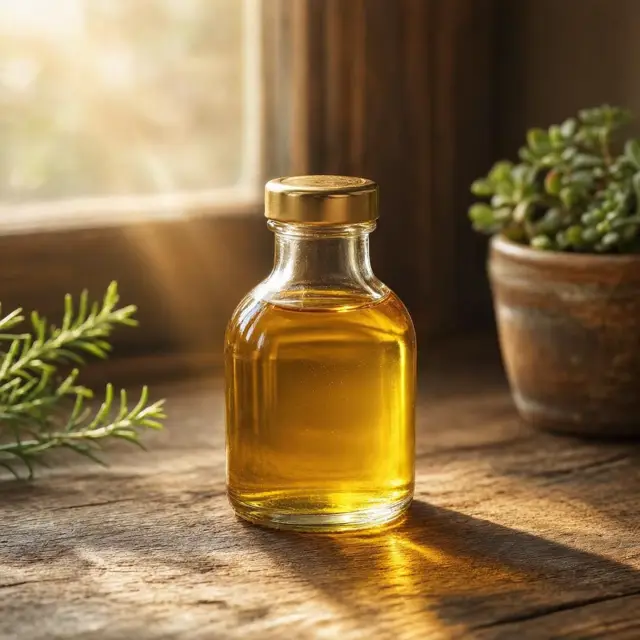
Long before anyone knew vitamin D existed, people used cod liver oil. In the 1800s it became a popular bottled medicine, taken a teaspoon a day. People in several European countries noticed that young children fed the oil did not develop rickets, a disease of soft, weak bones that bend as children start to walk.
In 1899, London surgeon John Bland-Sutton was asked to find out why litters of lion cubs at the London Zoo were suffering from rickets. He switched their diet from lean horse meat to goat with the bones in, plus cod liver oil. That solved the problem.
In 1922, American researcher Elmer McCollum tested cod liver oil in which vitamin A had been destroyed. It still cured sick dogs, so the cure was something new. He called it vitamin D because it was the fourth vitamin to be named. Adolf Windaus won the 1928 Nobel Prize in Chemistry for related work, and his associate Alfred Hess summed it up: "Light equals vitamin D."
Sunlight, Sheep's Wool and Mushrooms
Few foods naturally contain vitamin D. Fatty fish are the best natural source, though lean fish such as tuna are not. Beef liver, eggs and cheese have modest amounts. Cod liver oil holds about 450 IU per teaspoon.
Mushrooms are a fun exception. They provide vitamin D2, and treating them with UV light can greatly raise their content. Fish, meanwhile, cannot make vitamin D from sunlight at all. They get it through the food chain, starting with tiny plankton, and store large amounts in their livers and fat. Cats and dogs are practically unable to make it in their skin, so they rely on their food.
Factories copy the skin's trick. They shine UVB and UVC light on a compound called 7-dehydrocholesterol, then purify the result to get vitamin D3. That starting compound is extracted from lanolin, a waxy skin secretion found in sheep's wool. Vitamin D2 is made in a similar way, starting from a substance found in yeast.
A Sun Shield Older Than Animals
For at least 1.2 billion years, living things whose cells have a nucleus have been able to make 7-dehydrocholesterol. When sunlight hits this molecule, it turns into vitamin D. At first, the conversion simply helped prevent DNA damage. Phytoplankton in the ocean still make vitamin D today without using it to manage calcium.
Only about 500 million years ago, when animals began leaving the oceans for land, did the molecule take on a hormone role in controlling calcium. Its very first vitamin job, though, was helping control genes linked to immunity. Managing calcium for a bony skeleton came later, in land animals with backbones.
Human skin tells part of this story. Early humans near the equator had lots of melanin, a pigment that can dissipate more than 99.9% of the UV radiation it absorbs. When people migrated to northern parts of Asia and Europe some 50,000 to 80,000 years ago, weaker winter sunlight favored lighter skin, which makes vitamin D more efficiently.
Too Little, and Rarely Too Much
More than one billion people worldwide can be considered vitamin D deficient. Living far from the equator means short winter days, and blood levels at the end of winter can be one-third to half lower than at the end of summer.
In the early 1930s, the United States and countries in northern Europe began the fortification of milk with vitamin D. Along with advice to give babies some sunlight, this effectively ended the high rates of rickets. The idea caught on so well that vitamin D was added even to hot dogs. As of 2024, 15 countries require fortification and 10 more run voluntary programs.
Too much vitamin D is possible but rare. The toxic state, called hypervitaminosis D, usually comes from high-dose supplements or manufacturing errors. Sunlight alone cannot cause it, because the skin has a limited supply of the starting molecule and the kidneys switch to making an inactive form. Doses below 10,000 IU a day are not usually linked to toxicity.