A Party Trick for Nobles
Ballet did not begin in France, and it did not begin on a stage. It grew out of the courts of the Italian Renaissance in the 15th and 16th centuries, where the dancers were mostly noble amateurs rather than trained performers. Catherine de' Medici, as queen, helped carry it over to France, where it developed much further.
The early costumes tell you what these events were for. They were heavily decorated to impress the people watching, and they got in the way of actually moving. Performances happened in large chambers with the audience on three sides, closer to a party than a show.
The proscenium arch, used from 1618 onward, changed that. It put a frame between performers and audience and pushed them apart, which sounds like a loss but was not. From a distance, viewers could finally see and appreciate the technical feats the professionals were pulling off.
The word itself comes through French from the Italian balletto, a little dance.
The King Who Wrote the Rules
French court ballet peaked under Louis XIV, who danced himself and cared about the results. In 1661 he founded the Royal Dance Academy to set standards and certify teachers. In 1672 he put the composer Jean-Baptiste Lully in charge of the Paris Opera, and from that came the first professional ballet company, the Paris Opera Ballet.
Lully worked with the ballet master Pierre Beauchamp, and the two are credited with creating the five basic positions of the feet that dancers still learn first. By 1681, after years of training at the academy, the first ballerinas took the stage. This is why the vocabulary of ballet is French wherever in the world it is taught.
France then lost its lead. Ballet went into decline there after 1830 while Denmark, Italy and Russia kept building on it. Interest revived across Europe when Sergei Diaghilev brought the Ballets Russes west just before the First World War.
Four Ways to Dance It
Classical ballet is the version most people picture, built on traditional technique and a fixed vocabulary, with national schools in France, Italy, England and Russia. Swan Lake, The Sleeping Beauty and The Nutcracker come from this tradition.
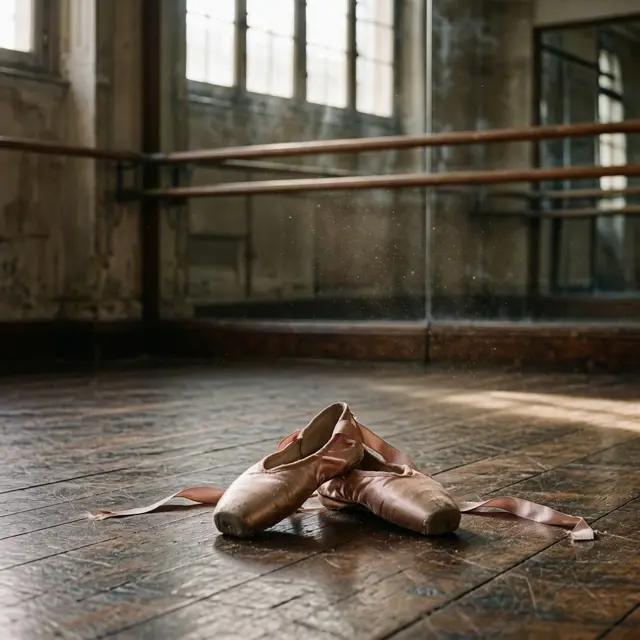
The Romantic era of the early to mid-19th century brought two lasting changes: pointe work, where dancers rise onto the tips of their toes, and the dominance of female dancers in long, soft skirts. La Sylphide of 1827 is widely counted as the first romantic ballet and Coppelia of 1870 as the last. Giselle, with choreography by Jules Perrot, is the era's most celebrated work.
Neoclassical ballet stripped things back, often with no plot, scenery or costumes to speak of. George Balanchine's Apollo of 1928 is usually named as the first.
Contemporary ballet is frequently performed barefoot and may include mime and acting. Dancers today are expected to handle all of it, and the knee-length tutu that arrived in the 20th century exists mainly so the audience can see precise footwork.
What the Career Actually Looks Like
The glamour on stage hides a difficult job. Professional dancers are generally not well paid and earn less than a typical worker. As of 2020, American dancers across ballet and other forms made an average of about 19 dollars an hour, with teaching paying somewhat better than performing. Choreographers earn more than dancers, and the musicians in the pit earn more than either, at roughly 30 dollars an hour.
The job outlook is not strong. Applicants vastly outnumber openings, and most of the available work is teaching in private dance schools rather than performing.
The body pays too. Teenage girls training in ballet are prone to stress fractures in the first rib. The repeated pointing of the foot makes ankle impingement common. A 2014 review of the research found that ballet dancers face a higher risk of several kinds of eating disorder than the general population, and intensive training has been linked to lower bone density in the arms.