Beekeeper, Boxer, Climber
Edmund Hillary was born in Auckland, New Zealand, on 20 July 1919. As a boy he was small and shy. He finished primary school two years early, then spent years commuting to Auckland Grammar School by bike and train, one hour and 40 minutes each way. He later grew to 188 cm and gained confidence through boxing.
At 16, a school trip to Mount Ruapehu got him hooked on the mountains. After two notably unsuccessful years studying mathematics and science at university, he gave up formal education in 1938.
Instead, he became an apiarist with his father and brother. They looked after 1,600 hives and handled thousands of heavy boxes of honeycomb, and he got 12 to 100 bee stings a day. He kept bees in summer and climbed in winter. In 1939 he made his first major climb, reaching the top of Mount Ollivier near Aoraki / Mount Cook.
Scouting the Road to Everest
During World War II, Hillary served as a navigator in the Royal New Zealand Air Force on Catalina flying boats. Back home, he kept climbing. In 1948 he and others went up the south ridge of Aoraki / Mount Cook, New Zealand's highest peak.
In 1951 he joined a British reconnaissance expedition to Everest led by Eric Shipton. Climbing partway up a nearby peak, Pumori, he and Shipton got the first clear view of a high valley called the Western Cwm. They identified what became the standard route to the summit from Nepal. A 1952 attempt on Cho Oyu followed, but it was abandoned.
For 1953, John Hunt took over as leader. Hillary had hoped to climb with his friend George Lowe, but Hunt paired him with Tenzing Norgay. So Hillary worked hard to build a working friendship with Tenzing. He later wrote that Tenzing had greater personal ambition than any Sherpa he had met.
Frozen Boots and the Final Climb
The 1953 expedition was huge: over 400 people, including 362 porters and 20 Sherpa guides, with 4,500 kg of baggage. Hillary forged a route through the dangerous Khumbu Icefall.
On 26 May, the first summit pair turned back when an oxygen system failed, just 91 metres short. Hillary and Tenzing got their chance. They pitched a tent at 8,500 metres, and the next morning Hillary found his boots frozen solid. He spent two hours warming them over a stove.
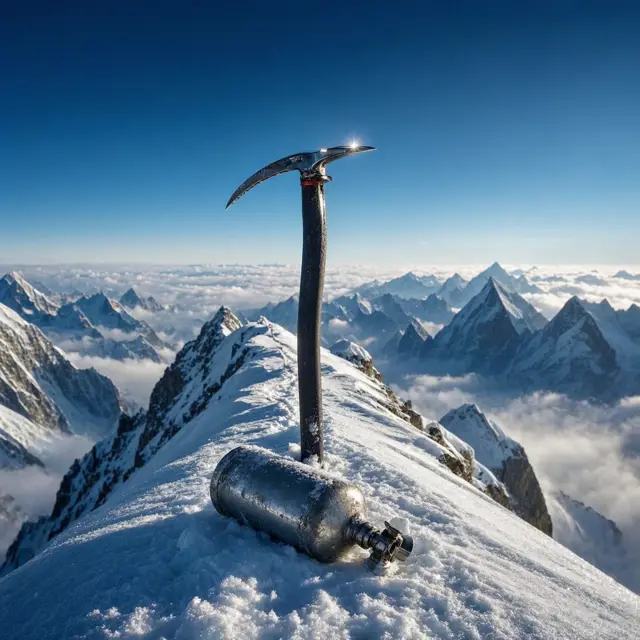
Carrying 14 kg packs, the two set off. The last obstacle was a 12-metre rock face, later called the Hillary Step. Hillary squeezed up a crack between the rock and the snow and chopped steps with his ice axe. At 11:30 am on 29 May 1953, they stood on the summit and stayed about 15 minutes. There is no photo of Hillary on top, because he simply declined to have his picture taken.
To Both Poles and Beyond
Hillary climbed ten more Himalayan peaks on later trips. He led the New Zealand part of the Commonwealth Trans-Antarctic Expedition and reached the South Pole on 4 January 1958. His team was the first to get there overland since Amundsen in 1911 and Scott in 1912, and the first ever to do it using motor vehicles.
In 1960 he organised the Silver Hut expedition with Griffith Pugh. Pugh showed that Everest could be climbed without oxygen after a long period of acclimatisation, living at 6,100 metres for six months.
In 1977 he led a jetboat trip called Ocean to Sky, from the mouth of the Ganges River to its source. Then in 1985 he flew with Neil Armstrong in a small ski plane and landed at the North Pole. That made Hillary the first person to stand at both poles and on the summit of Everest. Back in 1962, he even stumped the panel on the TV game show What's My Line?
Schools, Hospitals and a Range on Pluto
Hillary was also a philanthropist, and his biggest project was not a mountain. In 1960 he set up the Himalayan Trust to help the Sherpa people of Nepal, and he led it until 2008. His work is credited with building many schools and hospitals in this remote region. From 1985 to 1988 he also served as New Zealand's High Commissioner to India and Bangladesh, and as Ambassador to Nepal.
The honours piled up. Nepal made him the first foreign national to receive its honorary citizenship. Since 1992 his portrait has been on New Zealand's $5 note, making him the only living person who was not a current head of state ever to appear on a New Zealand banknote. He insisted the backdrop show Aoraki / Mount Cook, not Everest.
In 2008, Lukla Airport in Nepal was renamed Tenzing-Hillary Airport. And after the New Horizons mission found a mountain range on Pluto in 2015, it was named Hillary Montes.