The Tower Paris Once Hated
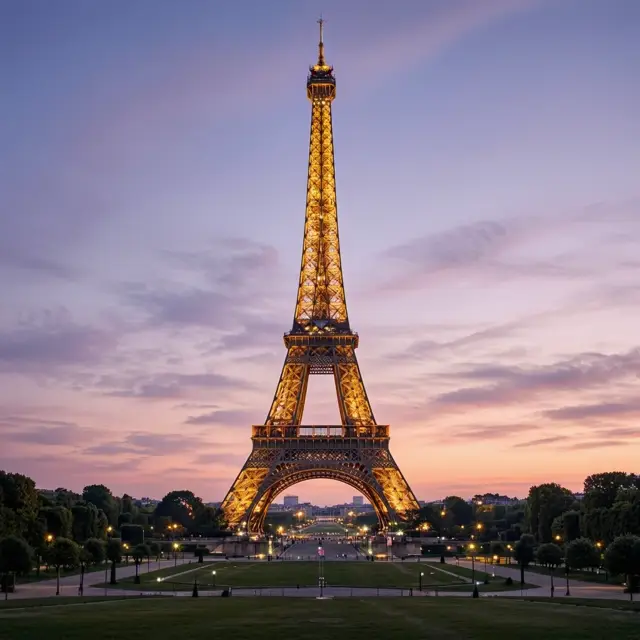
Today it is the symbol of Paris. But when it was being built, many of France's most famous artists wanted it stopped. In 1887, a group including the writer Guy de Maupassant and the architect Charles Garnier sent an angry letter to the government.
They called it a "useless and monstrous Eiffel Tower" and a "gigantic black smokestack" that would crush the beauty of Paris. Garnier later called it a "truly tragic street lamp".
Gustave Eiffel fired back by comparing it to the pyramids of Egypt. Why, he asked, would something admired in Egypt be ugly in Paris? Some critics changed their minds once it was finished. Maupassant, the story goes, ate lunch in the tower's restaurant every day, because it was the one place in Paris where he could not see it.
18,038 Pieces and 2.5 Million Rivets
The tower was built for the 1889 World's Fair, which marked 100 years since the French Revolution. The idea came from two engineers at Eiffel's company, Maurice Koechlin and Émile Nouguier, who sketched a great iron pylon in 1884.
Building it was a feat of planning. The drawing office made 1,700 general drawings and 3,629 detailed ones for 18,038 different parts. Rivet holes were placed to within 1 millimetre. No part was shaped on site: if a piece did not fit, it went back to the factory.
In all, the parts were joined with 2.5 million rivets. When finished, it was by far the tallest human-made structure in the world, a title it kept for 41 years.
Saved by the Radio
Here is the surprise: the Eiffel Tower was never meant to last. It was built as a temporary structure and was due to be taken down in 1909, when Eiffel's 20-year deal ran out.
What saved it was science. The tower turned out to be perfect for radio telegraphy, sending messages through the air without wires. From 1910, the Paris Observatory used it to send the time to ships up to 5,000 kilometres away.
The radio station soon proved its worth. In 1914, at the start of World War I, a transmitter in the tower jammed German radio messages, which helped the Allies win the First Battle of the Marne. The tower had earned its place for good.
An Iron Lady That Moves
Locals call it "La dame de fer", the Iron Lady, because it is made of wrought iron. The iron frame alone weighs 7,300 tonnes. Even so, the design is so light for its size that the air in a box around the tower weighs almost as much as the iron itself.
The tower is not perfectly still, either. On a sunny day, the side facing the sun warms and expands, so the top can lean away from the sun by up to 18 centimetres.
Keeping it standing takes steady care. Every 7 years, workers apply 60 tonnes of paint to stop it rusting, and it has been repainted at least 19 times. Today it stands 330 metres tall and welcomed almost 5.9 million visitors in 2022.