A Syrian Father and an Adoption Promise
The man who built Apple was the son of a Syrian father. Steve Jobs was born in San Francisco on 24 February 1955 to Joanne Schieble and Abdulfattah "John" Jandali, who was born in Syria into a wealthy Muslim family, studied at the American University of Beirut, and was pursuing a PhD at the University of Wisconsin.
Schieble's father opposed the relationship because of Jandali's faith. When she became pregnant, she arranged a closed adoption and asked that her son go to college graduates. A lawyer and his wife were chosen, but they withdrew after learning the baby was a boy.
Instead he went to Paul and Clara Jobs, a machinist and a bookkeeper without college degrees. Schieble initially refused to sign the papers. She changed her mind only after the couple promised to pay for their son's college education. Jobs later insisted he had been deeply loved by them.
The Dropout Who Took Calligraphy
Jobs enrolled at Reed College in 1972 and withdrew that same year. He did not leave, though. He kept attending by auditing classes, including a course on calligraphy taught by Robert Palladino.
He was broke. In a 2005 commencement speech at Stanford University, he recalled sleeping on the floor of friends' dorm rooms, returning Coke bottles for food money, and getting weekly free meals at the local Hare Krishna temple.
In 1974 he travelled through India seeking enlightenment, and he later studied Zen Buddhism. None of this looked like the start of a business career. Yet the taste he picked up in these years, especially for how things look, would show up again and again in the products he later championed.
Two Steves and a Mouse
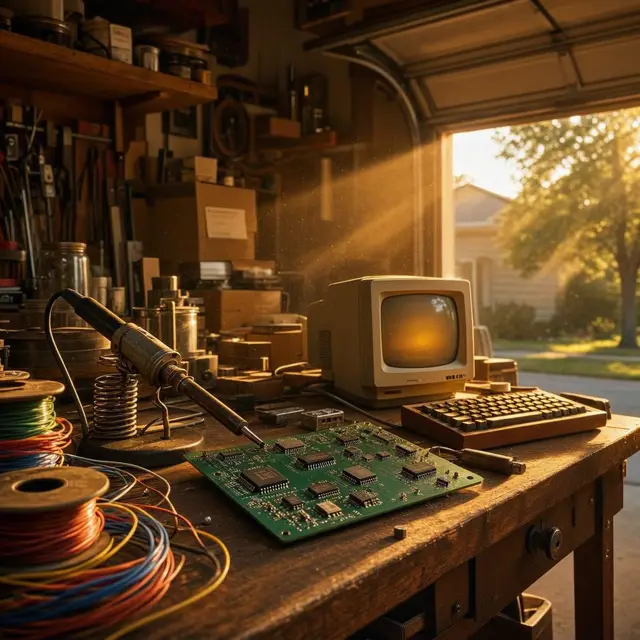
In 1976 Jobs co-founded Apple with Steve Wozniak to sell Wozniak's Apple I personal computer. A year later the Apple II made them famous and wealthy, becoming one of the first highly successful mass-produced microcomputers.
In 1979 Jobs saw the Xerox Alto, a computer driven by a mouse and a graphical user interface, and recognised its commercial potential. That led first to the Apple Lisa in 1983, which largely failed, and then to the breakthrough Macintosh 128K in 1984, the first mass-produced computer with a graphical interface.
The Macintosh went on to launch the desktop publishing industry in 1985 once it was paired with the Apple LaserWriter printer. Ordinary people could now design and print pages that previously needed professional typesetters.
Fired, Then a Detour Through Toy Story
In 1985, after a long power struggle with Apple's board and its then-CEO John Sculley, Jobs left the company he had co-founded. That same year he took some Apple employees with him and founded NeXT, which built computers for higher education and business.
In 1986 he bought the computer graphics division of Lucasfilm, which became the independent studio Pixar. Pixar produced *Toy Story* in 1995, the first computer-animated feature film, and went on to become a leading animation studio. Jobs remained its chairman and majority shareholder until 2007.
The NeXT years mattered more than they looked. NeXT's operating system, NeXTSTEP, led to Darwin, which is now the foundation of most of Apple's operating systems, including macOS on the Mac and iOS on the iPhone.
The Comeback That Reinvented the Phone
In 1997 Apple bought NeXT and Jobs returned as CEO. The company was on the verge of bankruptcy, and he is largely credited with reviving it. Working closely with British designer Jony Ive, he launched the "Think different" campaign and then a run of products: the iMac, iTunes, Mac OS X, the Apple Store, the iPod and the iTunes Store.
On 29 June 2007 Apple entered the phone business with the iPhone, a multi-touch phone that also worked as an iPod and, with its own mobile browser, changed how people used the internet on the go. The App Store and the iPad followed.
In 2003 Jobs was diagnosed with a pancreatic neuroendocrine tumour. He died on 5 October 2011. In 2022 he was posthumously awarded the Presidential Medal of Freedom. He holds over 450 patents, 141 of them granted after his death.