Ten Years, Two Thousand Artworks
Vincent van Gogh did not pick up painting until 1881, when he moved back in with his parents. He died in 1890. That is the entire career: just over a decade.
In that time he made about 2,100 artworks, including around 860 oil paintings. Most of them came in the final two years of his life.
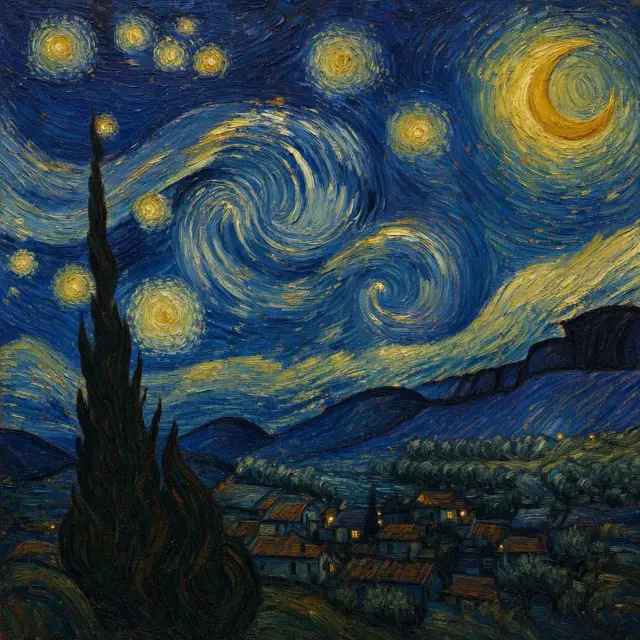
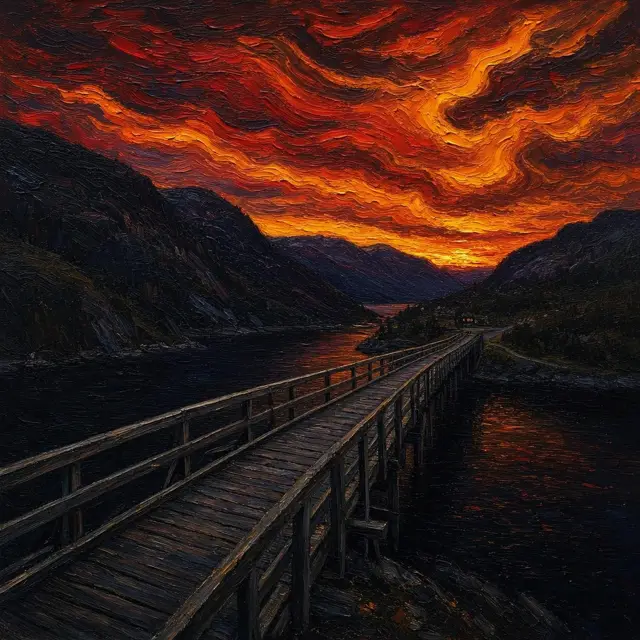
The work covers landscapes, still lifes, portraits and self-portraits, and it is instantly recognisable for two reasons: bold colour and dramatic, impulsive, expressive brushwork. That combination helped lay the foundations of modern art. Before all of this he had tried other lives entirely. He worked as an art dealer, travelled often, fell into depression after a transfer to London, turned to religion, and spent time as a Protestant missionary in southern Belgium.
The Brother Who Paid for Every Canvas
Van Gogh was born into an upper-middle-class family in Zundert. As a child he drew, and he was serious, quiet and thoughtful.
None of that made him a living. His younger brother Theo supported him financially, and the two kept up a long correspondence by letter that ran for years.
His earliest work gives almost no hint of what was coming. Those pieces were mostly still lifes and depictions of peasant labourers, with few signs of the vivid colour that would later define him. The shift began in 1886, when he moved to Paris and met members of the avant-garde, including Émile Bernard and Paul Gauguin, who were reacting against the Impressionist sensibility.
The Year the Colour Arrived
In Paris his palette started to brighten, but the style only became fully realised during his stay in Arles, in the south of France, in 1888.
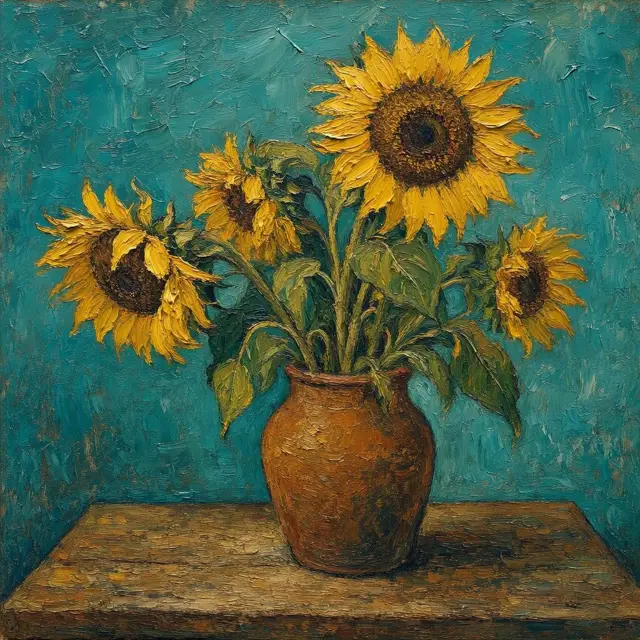
There he broadened his subject matter and began the series that made him famous: olive trees, wheat fields and sunflowers.
It was also where things fell apart. He suffered psychotic episodes and delusions, and though he worried about his own mental stability he neglected his physical health, did not eat properly, and drank heavily. His friendship with Gauguin ended after a confrontation involving a razor, during which, in a rage, he severed part of his own left ear. He spent time in psychiatric hospitals, including a period at Saint-Rémy.
Famous Only After He Was Gone
He discharged himself and moved to the Auberge Ravoux in Auvers-sur-Oise near Paris, where he came under the care of the homoeopathic doctor Paul Gachet. His depression continued. On 27 July 1890 he shot himself in the chest with a revolver, and he died from his injuries two days later. He was 37.
During his lifetime he was unsuccessful, and was widely considered a madman and a failure.
His reputation began to grow in the early 20th century, as elements of his painting style were taken up by the Fauves and the German Expressionists. Over the following decades he achieved critical, commercial and popular success on a huge scale, and he now exists in the public imagination as the quintessential misunderstood genius.