The Pilot Who Needed a Cushion
At flight school in the 1950s, Yuri Gagarin twice struggled to land his trainer jet and risked being thrown out. His commander gave him one more chance. His instructor handed him a cushion to sit on, which improved his view from the cockpit, and he landed just fine.
Being short turned out to be an advantage later. The Vostok capsule was so tight that candidates had to be no taller than 1.70 metres and weigh under 72 kg. Gagarin was 1.57 metres tall.
His road to the sky started humbly. Born in 1934 in the village of Klushino, he learned to read at a makeshift school using a discarded military manual. He loved maths and science and built model aeroplanes. At 16 he became an apprentice foundryman at a steel plant. Later, while studying tractors in Saratov, he learned to fly at a weekend flying club and earned extra money working at the docks on the Volga.
Chosen by His Own Rivals
From 154 short-listed pilots, doctors picked 29 candidates, and 20 were approved. Gagarin was in the first twelve, confirmed in March 1960. Training was intense. Fellow cosmonaut Alexei Leonov compared it to training for the Olympic Games. Each man made about 40 to 50 parachute jumps over land and water.
The tests pushed body and mind. Gagarin spun in a centrifuge to experience strong g-forces. He spent days alone in an anechoic chamber, cut off from all sound. A military doctor praised his 'fantastic memory', quick reactions and easy grasp of higher mathematics.
The most telling vote came from his peers. Asked to secretly name who, besides themselves, should fly first, all but three chose Gagarin. After a final two-day exam, a special commission ranked him the best candidate. On 8 April 1961 he was formally named as the pilot, with Gherman Titov as his backup.
108 Minutes That Opened the Space Age
On 12 April 1961, at 6:07 am UTC, Vostok 1 lifted off from Baikonur. Gagarin's call sign was Kedr, meaning Siberian pine or cedar. As the rocket fired, he said 'Poyekhali!', meaning 'Off we go!'. The phrase became a popular way to describe the start of the Space Age.
He made one orbit of Earth, and the whole flight took 108 minutes. In his report he said weightlessness felt as if he were hanging in straps. He even sang a song, 'The Motherland Hears, The Motherland Knows', during re-entry. He was promoted to major by a special order issued while he was still in space.
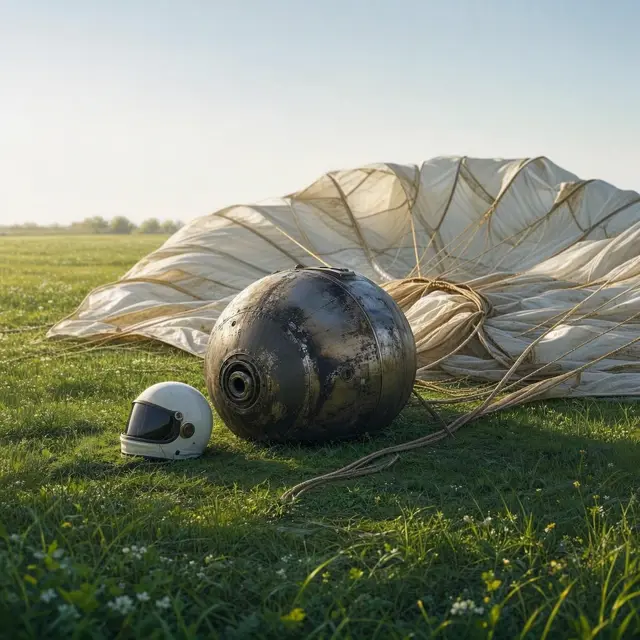
There was a twist at the end. At about 7,000 metres, he ejected from the capsule as planned and came down by parachute. Record rules then required pilots to land with their craft. The record body later changed its rules and certified his flight anyway.
A Smile the Whole World Knew
Gagarin became a worldwide celebrity. Newspapers everywhere printed his life story. At a press conference in Moscow, about 1,000 reporters came to hear him. He became known for his charismatic smile.
He toured around 30 countries. When he visited Manchester in 1961, it poured with rain. He refused an umbrella, kept the roof of his convertible open and stood up so the cheering crowds could see him.
Officials were so afraid of losing their national hero that they kept him away from further spaceflights. He became deputy training director for cosmonauts and worked on designs for a reusable spacecraft. In February 1968 he graduated with honours from an air force engineering academy, with a thesis on spaceplane design. Vostok 1 remained his only spaceflight. He died on 27 March 1968 when his training jet crashed, just a few weeks after that graduation.
Honoured From Moscow to the Moon
The date of his flight, 12 April, is celebrated as Cosmonautics Day in Russia and some other countries. Since 2000, people worldwide have marked it with Yuri's Night. In 2011, the United Nations declared it the International Day of Human Space Flight.
His name is even on the Moon. In 1970, a crater 262 km wide on the far side was named after him. During Apollo 11 in 1969, American astronauts Neil Armstrong and Buzz Aldrin left medals honouring him on the lunar surface. His hometown area was renamed too: the town of Gzhatsk became Gagarin.
Tributes come in every size. A hockey league named its championship trophy the Gagarin Cup. In 2019, an Italian artist painted his face on a twenty-storey building in Odintsovo, Russia, the largest portrait of him in the world. A statue of him stands outside the Royal Observatory in Greenwich, London.