Two People, One Ring, Fists Only
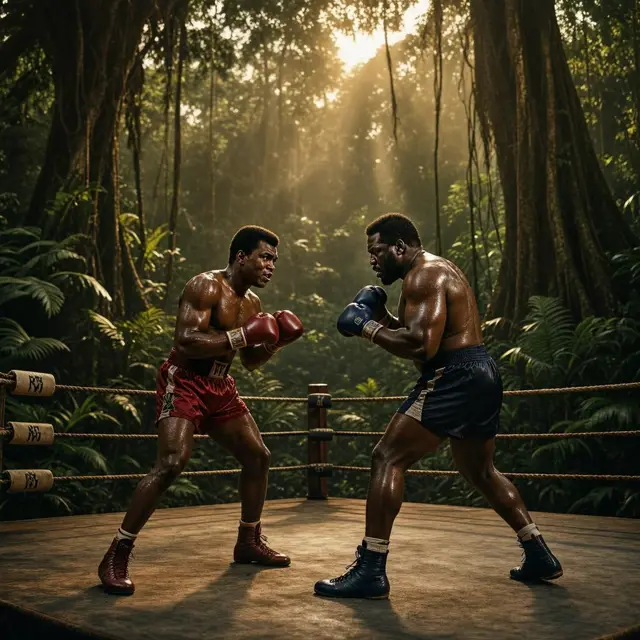
Boxing is a combat sport and martial art. It takes place in a boxing ring, and involves two opponents throwing punches at each other for a predetermined amount of time — usually wearing protective equipment such as gloves, hand wraps and mouthguards.
The word covers more than most people assume. While 'boxing' commonly refers to the Western style where only the fists are used, it has evolved differently across regions and cultures.
Today the term also refers to any striking-focused combat sport where two opponents fight using their fists, and which may also involve kicks, elbow strikes, knee strikes and headbutts depending on the rules. That includes bare-knuckle boxing, kickboxing, Muay Thai, Lethwei, savate and sanda. Boxing techniques have also been absorbed into many martial arts, military systems and other combat sports.
Older Than Almost Any Sport
Humans have engaged in hand-to-hand combat since the beginning of human history, so it is unclear exactly when boxing became a sport rather than simply a fight.
Some sources suggest prehistoric origins, dating as early as the 6th millennium BC in what is now Ethiopia. It is believed that when the Egyptians invaded Nubia, they adopted boxing from the local population and subsequently popularised it in Egypt. From there it spread to Greece, eastward to Mesopotamia, and northward to Rome.
The earliest visual evidence comes from Egypt and Sumer, both from the 3rd millennium, found in Sumerian carvings dating to the 3rd and 2nd millennium BC. The earliest evidence of boxing rules dates to Ancient Greece, when boxing was added to the Olympic games in 688 BC.
The Rules Are Only 150 Years Old
For a sport with roots that deep, the version people recognise is startlingly recent.
Boxing evolved through the prizefights of the 16th to 18th centuries, largely in Great Britain, into its modern forerunner in the mid-19th century — with the introduction of the Marquess of Queensberry Rules in 1867.
That document is what separates modern boxing from what came before: it is where gloves, timed rounds and the ten-count come from. So the sport is perhaps eight thousand years old, and the rulebook is roughly a hundred and sixty. Everything the audience thinks of as intrinsic to boxing — the bell, the corner, the count — is a Victorian addition to something far older.
How a Fight Is Won
A bout is overseen by a referee and consists of a series of 1–3 minute intervals called rounds.
A winner can be decided before the rounds are complete if the referee determines an opponent is unable to continue, disqualifies an opponent, or if the opponent is knocked out or quits. If the fight reaches the end of its final round with both opponents still standing, the winner is determined by the judges' scorecards — and equal scores mean a draw. In Olympic boxing a winner must be declared, so judges award the contest to one fighter on technical criteria.
Amateur boxing is part of both the Olympics and the Commonwealth Games and is standard in most international games. Professional boxing has its own world championships, governed by four separate bodies: the WBA, WBC, IBF and WBO — which is why the sport routinely has more than one champion in the same weight class.