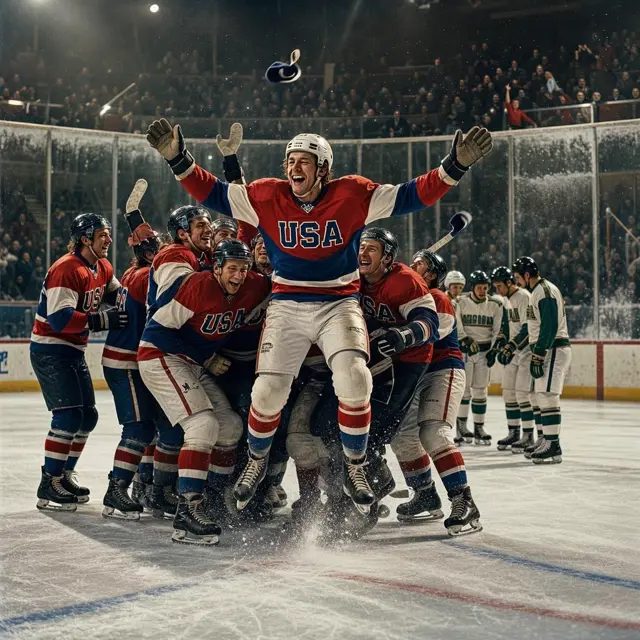
A Team of College Kids Against Seasoned Pros
In 1980, the Soviet Union's hockey team wasn't just good, it was basically unbeatable. They had won gold in five of the previous six Winter Olympics, and their players trained together year-round like professionals, even though Olympic rules technically banned pros. The Soviet government got around this by giving players cushy military or university titles so they could skate full-time without ever holding a real job.
The American team was the opposite story. Head coach Herb Brooks built his roster from amateur college players, picking 20 names out of 68 hopefuls after making them sit through a brutal 300-question psychological test. Only one player, Buzz Schneider, had ever been to the Olympics before. At an average age of 21, this was the youngest team the U.S. had ever sent to any Olympics.
The Blowout That Fooled the Soviets
Thirteen days before the Olympics, the U.S. team played an exhibition game against the Soviets at Madison Square Garden, and it was ugly. The Soviets won 10-3, a scoreline that matched exactly what everyone expected. Defenseman Jack O'Callahan tore up his knee in that game but stayed on the roster anyway, leaving the Americans with effectively only 19 healthy players heading into the tournament.
The lopsided score ended up backfiring on the Soviets. Their own coach, Viktor Tikhonov, later called the win "a very big problem," because it convinced his players the Americans weren't worth worrying about. That overconfidence would matter far more than anyone realized just two weeks later.
Twenty Minutes That Nobody Saw Coming
On February 22, 1980, the U.S. and Soviet teams met in the medal round, the stage where medals actually get decided after the earlier group games. Mark Johnson tied the first period at 2-2 with just one second showing on the clock. The Soviets pulled ahead 3-2 after the second period, and the game looked headed toward its expected ending.
Then the U.S. flipped the script. Johnson scored again on a power play, and captain Mike Eruzione fired an undefended shot past a screened Soviet goalie to make it 4-3 with exactly ten minutes left. Goaltender Jim Craig, only 22 years old, held that lead through a barrage of Soviet attacks, including one huge save with just 33 seconds remaining.
Do You Believe in Miracles?
As the clock wound down, ABC broadcaster Al Michaels delivered the line that would outlive the game itself: "Do you believe in miracles? Yes!" It became one of the most quoted calls in American sports history, replayed constantly in the decades since.
The win wasn't technically the gold medal itself. Two days later, the U.S. beat Finland 4-2 to clinch it, while the Soviets settled for silver after crushing Sweden 9-2. Still, everyone remembers the Soviet game as the real ending. Mark Johnson, the tournament's top scorer, was named MVP, and the whole team was named Sports Illustrated's Sportsmen of the Year for 1980.
How a Hockey Game Became a Congressional Honor
The Miracle on Ice never really stopped being famous. In 1999, Sports Illustrated named it the single greatest sports moment of the entire 20th century, and in 2008 the International Ice Hockey Federation crowned it the top hockey story of its first hundred years. Hollywood came calling too, from a 1981 TV movie to 2004's "Miracle" starring Kurt Russell, plus documentaries told from both the American and Soviet sides.
Of the 20 players on that roster, 13 went on to play in the NHL. Ken Morrow did something no one had done before: he won the Stanley Cup that same year, pairing Olympic gold with hockey's biggest club trophy in a single 1980. In 2025, 45 years after the game, the U.S. Congress awarded the entire team the Congressional Gold Medal.