A 5,300-Year-Old Craving
Chocolate is far older than any empire you learned about in school. The cacao tree was first used as a source of food in what is today Ecuador at least 5,300 years ago.
Mesoamerican civilizations, most famously the Maya and the Aztecs, turned cacao into a cornerstone of life. The beans were so valuable they served as currency and medicine, and the drink made from them was reserved for moments that mattered.
Forget the sweet cup you know. The original chocolate was a bitter beverage, flavored with vanilla, earflower, and chili peppers, and finished with a prized layer of foam raised by pouring the drink back and forth between containers. Even the word carries that heritage: chocolate likely derives from the Nawat term chikola:tl, though its exact meaning is still contested.
Europe's Secret Luxury Drink
The Spanish conquistador Hernan Cortes likely encountered chocolate at the court of the Aztec ruler Moctezuma II around 1520, but documented shipments of cocoa to Europe only appear from 1585.
Europeans quickly bent the drink to their own taste. They warmed it, sweetened it with sugar, and swapped in familiar spices. Religious orders helped carry it across the continent during the 17th century, from royal courts to fashionable drawing rooms.
For roughly three centuries, that is all chocolate was: a warm, expensive drink for the wealthy. Until the 19th century it remained an elite luxury product, and the idea of an affordable chocolate bar that anyone could buy simply did not exist.
The Press, the Bar, and the Factory
One machine changed everything. In 1828, Coenraad Johannes van Houten patented a hydraulic press that squeezed the fat, called cocoa butter, out of ground cacao, making mass-produced cocoa powder possible.
The innovations then came in a rush:
- In 1866, Fry's produced one of the first mass-manufactured chocolate bars.
- In the late 1800s, new mixing machines and the conching process made chocolate smooth instead of gritty.
- Modern milk chocolate emerged in the same era, softening the flavor for a mass audience.
The result was an industrial revolution in candy: a factory worker in 1890 could produce fifty times more chocolate than before. By the century's end, chocolate had completed its transformation from an aristocratic beverage into an affordable solid food eaten around the world.
From Bean to Bar
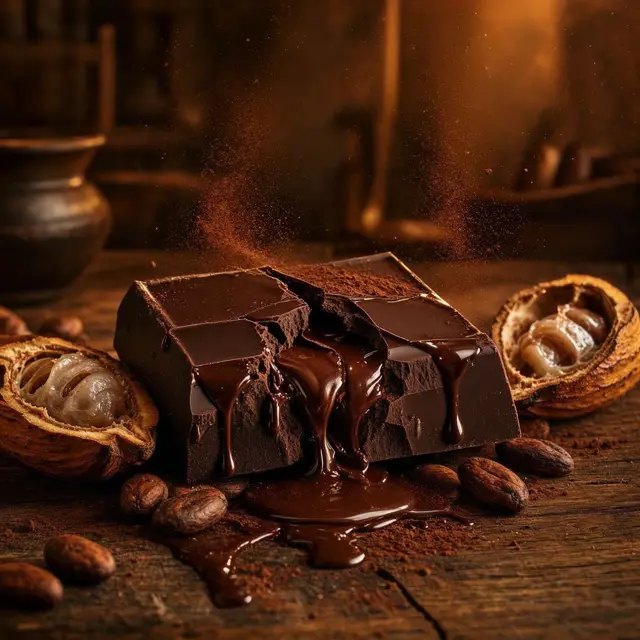
Every bar starts with a seed. Cocoa beans are fermented for up to seven days to develop flavor, then dried, cleaned, and roasted. The shells are removed to reveal nibs, which are ground into chocolate liquor, chocolate in its rough, unsweetened form.
From there the recipe decides the result: sugar makes dark chocolate, added milk makes milk chocolate, and combining only cocoa butter with milk produces white chocolate. Conching grinds the particles down to about 20 micrometers, and careful tempering gives a finished bar its glossy shine and clean snap.
Today the industry is enormous and uneven. West Africa grows about 60 percent of the world's cocoa, led by Ivory Coast and Ghana, and chocolate was already a 50-billion-dollar-a-year business as of 2009. Yet serious problems persist: as of 2017, approximately 2.1 million children were involved in cocoa farming in Ghana and Ivory Coast, a challenge the industry is still working to address.