The Formula Is Literally a Rulebook
The name confuses people, and the explanation is refreshingly boring: the formula in Formula One refers to the set of rules that every participating car must follow. Not a chemical formula, not a secret. A rulebook.
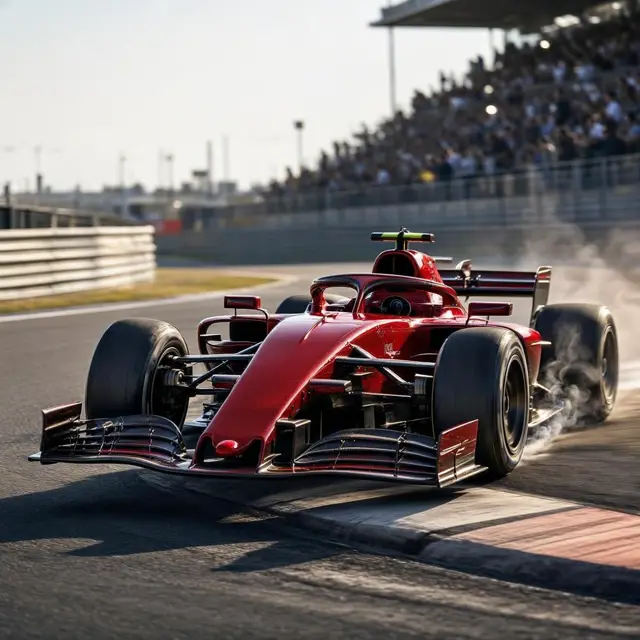
Formula One is the highest class of worldwide racing for open-wheel, single-seater cars, run by the Formula One Group and sanctioned by the FIA — the Fédération Internationale de l'Automobile. The championship has run since its inaugural season in 1950 and is generally considered the pinnacle of motorsport.
A season is a series of races called Grands Prix, held across multiple countries and continents on either purpose-built circuits or closed public roads used as street circuits. Two annual World Championships are decided on points: one for drivers, one for constructors — now effectively the teams. Entry is tightly gated: every driver needs a valid Super Licence, the highest class of racing licence the FIA issues, and races must be held on Grade One tracks, the highest circuit rating available.
Seventy-Six Years From Silverstone
The first world championship race took place on 13 May 1950 at Silverstone in the United Kingdom, won by Giuseppe Farina driving for Alfa Romeo.
The early benchmark was set by Juan Manuel Fangio, who won five titles — in 1951 and then 1954 through 1957. That record stood for 46 years, until Michael Schumacher took his sixth in 2003.
Today the record is shared. Schumacher and Lewis Hamilton hold seven Drivers' Championships each. Among constructors, Ferrari leads with 16 titles. As of 2025 the reigning drivers' champion is Lando Norris with McLaren-Mercedes, who also hold the constructors' title. The current grid runs 22 drivers across 11 constructors, powered by five engine manufacturers: Audi, Ferrari, Honda, Mercedes and Red Bull Ford, with Pirelli as the exclusive tyre supplier and 25 points going to a race winner.
Glued to the Road by Air
Formula One cars are the world's fastest regulated road-course racing cars, and the reason is not raw engine power. It is downforce.
As the car moves, its front and rear wings and its underbody tunnels push air upward, and the air pushes the car down in return. That artificial weight lets tyres grip far harder than physics would otherwise allow, producing the cornering speeds that define the sport. The faster the car goes, the harder it is pressed into the track.
The whole machine depends on the interplay of electronics, aerodynamics, suspension and tyres. Driver aids have been a running battle with the rulebook: traction control, launch control, automatic shifting and other electronic assistance were first banned in 1994, briefly reintroduced in 2001, then banned again in 2004 and once more in 2008. The recurring theme is straightforward — the sport keeps deciding the driver should be doing the difficult part.
The Weekend That Changed Everything
The 1994 San Marino Grand Prix at Imola remains the darkest weekend in the sport's history. Ayrton Senna died after crashing into a wall at the exit of the Tamburello curve. Roland Ratzenberger had been killed during qualifying the day before.
What followed is the part worth remembering. The response was not mourning alone but a sustained, obsessive overhaul of safety — and for 20 years, no driver died of on-track injuries in Formula One.
That run ended with Jules Bianchi, who crashed at the 2014 Japanese Grand Prix and died on 17 July 2015 from his injuries. Safety work continued in response, and the sport now runs cars fitted with protective structures around the cockpit. Two decades without a fatality in a sport that straps humans into carbon-fibre machines cornering at extreme speed is not luck; it is what happens when an industry treats every crash as a design problem to be solved.
The Money and the Map
Formula One is as much a financial contest as a sporting one, and the sport does not pretend otherwise.
The commercial rights are leased to Liberty Media Corporation, which acquired them in 2017 for an estimated $8 billion, taking over from British business magnate Bernie Ecclestone. The new ownership expanded the calendar by five Grands Prix: Miami, Las Vegas, Saudi Arabia, Qatar and the Dutch race.
Spending is capped — but only partly. The cost cap for the 2026 season stands at US$215 million, though the true cost of running a team routinely exceeds it because significant categories sit outside the cap. That gap is precisely why F1's financial and political fights get reported almost as heavily as the racing. Geographically the sport is far less global than its calendar suggests: the United Kingdom is the hub, with six of the eleven teams based there.