It Started With a Stolen Bicycle
One of the greatest boxing careers in history began with a stolen bike. A 12-year-old boy in Louisville, Kentucky, named Cassius Clay, was furious that a thief had taken his bicycle. He told a police officer he was going to beat up the thief.
The officer, Joe E. Martin, also happened to coach boxing. He told the boy he had better learn how to fight first. That was the start.
The boy was a natural. As an amateur, he won 100 fights and lost only 8. At just 18, he won the gold medal in the light heavyweight division at the 1960 Olympics in Rome, and turned professional that same year.
"I Shook Up the World"
In 1964, the young fighter faced Sonny Liston, a feared heavyweight champion. Almost nobody gave him a chance. He was an 8 to 1 underdog.
He did not act like one. Before the fight, he mocked Liston nonstop, calling him "the big ugly bear". In the ring, his speed made Liston miss again and again. Liston did not come out for the seventh round.
At 22, Clay was the new champion. He rushed to the reporters and shouted, "I am the greatest! I shook up the world." That same year, he called his birth name a "slave name" and changed it to Muhammad Ali.
The Fight He Chose Outside the Ring
In 1967, Ali was called up to join the US Army during the Vietnam War. He refused, citing his religious beliefs and his opposition to the war. "I ain't got no quarrel with them Vietcong," he said.
The price was huge. He was found guilty of draft evasion, stripped of his titles and banned from boxing. He could not fight for nearly four years, during what should have been his best years as an athlete.
Ali stayed out of prison while he appealed, and in 1971 the US Supreme Court overturned his conviction. His stand made him a hero to many young people of the 1960s and a powerful symbol of pride for African Americans during the civil rights movement.
Three Epic Wars With Joe Frazier
Ali's comeback led to one of sport's great rivalries. In 1971, he met Joe Frazier in a bout so hyped it was called the Fight of the Century. It was shown in 36 countries. Frazier won, handing Ali his first loss as a professional.
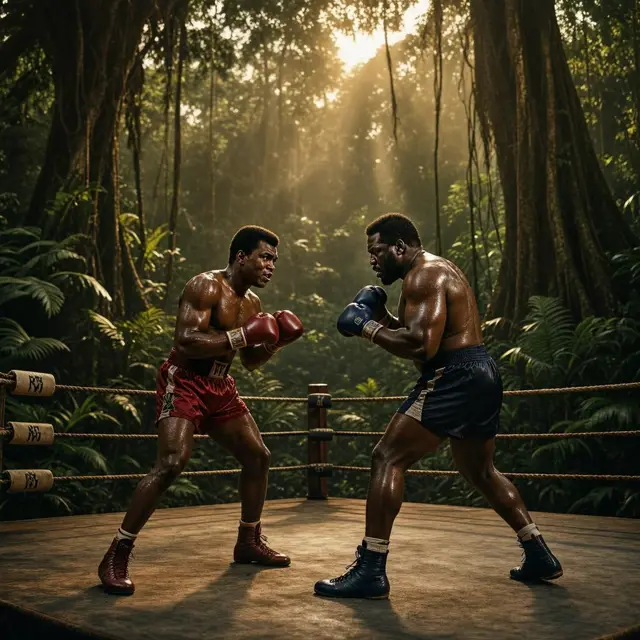
In 1974, Ali won back the title against George Foreman in the famous Rumble in the Jungle. He leaned on the ropes and let Foreman tire himself out, a trick later called the rope-a-dope.
The third Ali and Frazier fight, the Thrilla in Manila in 1975, was fought in heat close to 38 °C. Frazier's trainer stopped it before the final round. An exhausted Ali later said it was "the closest thing to dying that I know".
The Greatest, With Words Too
At a time when most boxers let their managers talk, Ali did all the talking himself. He often spoke in rhymes and even predicted which round he would knock his opponent out in. Many see him as an early pioneer of hip-hop.
He also had a sense of humour about himself. After failing an army entry test because of his dyslexia, he joked, "I said I was the greatest, not the smartest!"
Ali released two spoken word albums, both nominated for Grammy Awards. In 1996, he lit the torch at the Atlanta Olympics. In 1999, Sports Illustrated named him Sportsman of the Century and the BBC named him Sports Personality of the Century.