Racing on Bones
Speed skating began over a thousand years ago in northern Europe, especially in Scandinavia and the Netherlands. People added bones to their shoes and used them to travel on frozen rivers, canals and lakes. In Norway, King Eystein I later bragged about his skill at racing on bone skates, which were called "ice legs".
The big leap came in 1592, when a Scotsman designed a skate with an iron blade. Iron blades helped skating and speed skating spread. By 1642, the first known skating club had formed in Edinburgh. In 1763, the first speed skating race known in any detail was held on the Fens in England, for a prize of 20 guineas.
Women raced early too. In February 1805, 130 women competed on a frozen canal in Heerenveen in the Netherlands, in front of a crowd reported at 10,000 or more. The winner was Trijntje Pieters Westra, a twenty-year-old farmer's daughter. Later, North Americans developed the all-steel blade.
The First Winter Sport Federation
Speed skating got organised early. Norwegian clubs hosted races from 1863, and races in Christiania drew crowds in the tens of thousands. In 1889, a club in Amsterdam held an event it called a world championship, with skaters from Russia, the United States, the United Kingdom and the Netherlands.
In 1892, 15 national representatives met in Scheveningen and founded what is now the International Skating Union. It was the first international federation for any winter sport. It also made the 400-metre track the standard, along with the main championship distances of 500, 1500, 5000 and 10,000 metres.
Skaters raced in pairs, each in their own lane, and switched lanes every lap so both covered the same distance. This is what is now known as long track speed skating. In the Netherlands, a famous natural ice race called the Elfstedentocht runs only when the ice is good enough. It has been held just 15 times in nearly 100 years since 1909.
Olympic Drama on Ice
Speed skating joined the Olympic programme at Chamonix in 1924. Charles Jewtraw of Lake Placid won the first gold medal, though several Norwegians claimed Oskar Olsen had clocked a better time. Timing on the 500 metres stayed a headache until electronic clocks arrived in the 1960s.
Finland's Clas Thunberg won the 1500 metres, the 5000 metres and the allround title in 1924. It was the first and only time an allround Olympic gold medal has been awarded in speed skating.
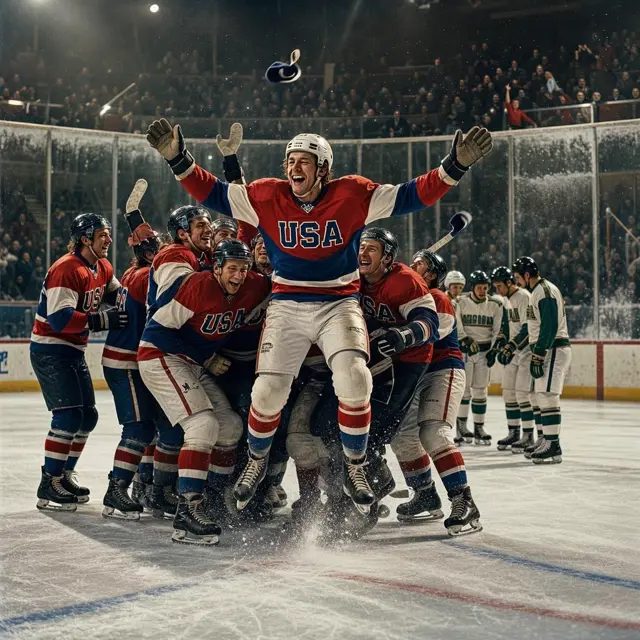
In 1932, the Olympic races were held pack-style, as was common in North America, and Americans won all four gold medals. Thunberg stayed home in protest. At the World Championships right after the Games, without the American champions, Norwegians won every distance. Several countries asked that mass-start races never return to the Olympics. Yet they did come back as short track, which became an Olympic sport in 1992.
The Skate With a Hinge
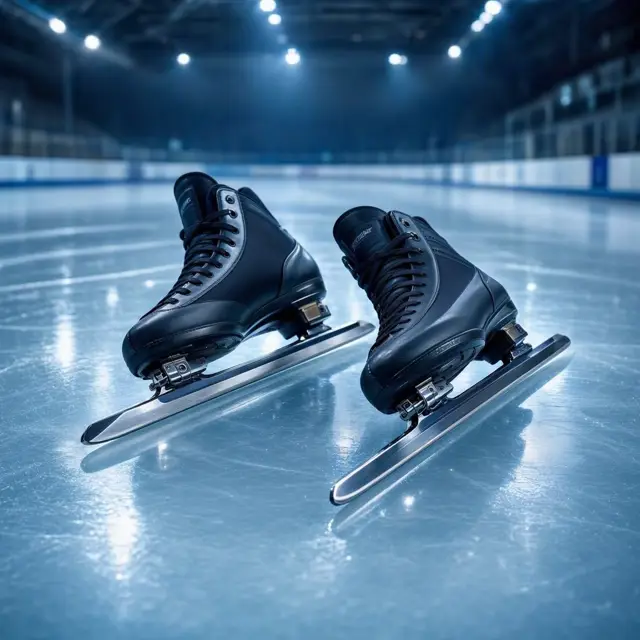
Long track skaters use a clever design called the clap skate. The blade is joined to the boot by a hinge at the front. On every stroke, the heel of the boot lifts away from the blade, using a spring mechanism at the front. This keeps the blade on the ice longer and makes each push longer.
Speed skates are very different from hockey or figure skates. They are cut off at the ankle and built more like a shoe than a boot. The blades are 30 to 45 centimetres long.
Better ice and gear made skaters much faster. Artificial ice arrived at the 1960 Olympics, and more aerodynamic suits were developed. Swiss skater Franz Krienbühl, who finished 8th in the Olympic 10,000 metres at the age of 46, led the way on suit design. From 1971 to 2009, the average speed in the men's 1500 metres rose from 45 to 52 kilometres per hour.
Short Track Chaos and Team Chases
Short track races are held on a 111-metre oval, about the size of an ice hockey rink. Two to six skaters race at once, and falls are not uncommon. Skaters wear helmets, neck guards and cut-proof Kevlar suits for protection from other skaters' blades. Many add smooth ceramic or carbon fibre tips to their left glove to reduce friction when their hand touches the ice on the corners.
Short track is newer, but it is growing faster than long track, largely because it can be held on an ice hockey rink.
Then there is the team pursuit. Two teams of three start on opposite sides of the track and chase each other. A team's time is taken when its third skater crosses the line. In the Olympic format, if one team catches the other, it wins on the spot and the rest of the race is not skated. The event joined the Olympics in 2006.