One Race to Rule Them All
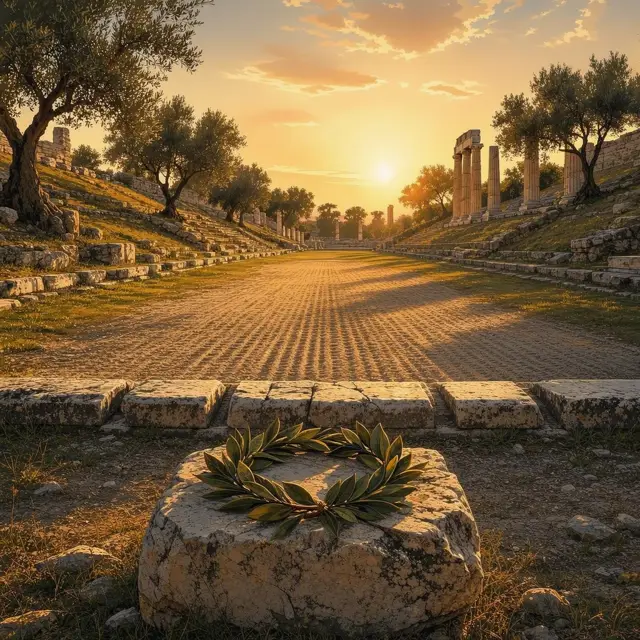
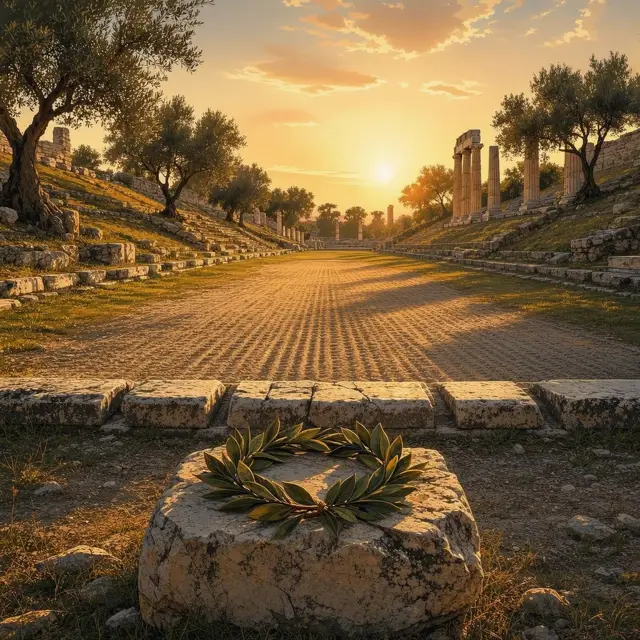
The ancient Olympic Games were held at Olympia in Greece, traditionally dated to 776 BC, every four years in honor of Zeus. For the first thirteen games, the only event was the stadion — a straight sprint of just over 192 meters.
More events were added over time, including a two-lap diaulos, the long-distance dolichos, and the five-event pentathlon. Each four-year gap between games, the Olympiad, even became a way to count the years.
Why They Competed Nude
Athletes famously competed naked. According to Pausanias, a runner named Orsippus won the stadion in 720 BC after losing his loincloth — having found that running without the perizoma was easier.
Combat sports were brutal. Boxing arrived in 688 BC, and the no-holds-barred pankration allowed nearly everything but biting and eye-gouging. One pankratiast, Arrhichion, died at the very moment his opponent gave up — and was declared the posthumous winner in 564 BC.
The Truce of the Games
Before each games, officials declared the ekecheiria, the Olympic truce, so athletes and pilgrims could travel safely. It was taken seriously: Sparta was once fined 2,000 minae for breaking it.
Winners weren't always who you'd expect. Cynisca of Sparta became the first female Olympic victor — as the owner of a winning chariot team, since victory went to the owner, not the driver.
Powerful Egos and a Long Goodbye
The games drew the powerful and the proud. Emperor Nero competed in AD 67, was thrown from his chariot, yet was still declared the winner on the logic that he would have won had he finished.
Officially the last games came in AD 393, but a bronze plaque found in 1994 shows an international games continued until at least AD 385. Presiding over it all were the Hellanodikai, judges who verified each competitor's Greek origins.