When Tug of War Was an Olympic Sport
The game you may remember from school sports day was once an Olympic sport. Tug of war was part of the Summer Olympics from 1900 to 1920. It has not been included since, but it is still part of the World Games.
Today, the sport has its own world body, the Tug of War International Federation. It runs World Championships for national teams, both indoors and outdoors, plus a similar contest for clubs. As of 2008, 53 countries belonged to it, including India, Switzerland, South Africa and the United States.
Even the name has a history. The phrase "tug of war" first meant any fierce, decisive struggle. Only in the 19th century did it come to mean two teams pulling on a rope. Before that, English speakers often called the game "French and English".
Ancient Roots From China to Greece
Nobody knows exactly where tug of war began, but it was played in ancient Egypt, Greece, India, China and Cambodia. In China, a military commander in the State of Chu used a version called "hook pulling" to train warriors. Later, during the Tang dynasty, Emperor Xuanzong held giant games with ropes up to 167 meters long and more than 500 people on each end. Each side even had its own drummers.
The ancient Greeks had several versions. In one, players may have held hands instead of a rope, which made it much harder.
In India, a stone carving on the famous Sun Temple of Konark, dating back to the 12th century, clearly shows a game in progress. Much later, the game spread through French chateau gardens and Britain in the 16th and 17th centuries.
The Rules of a Proper Pull
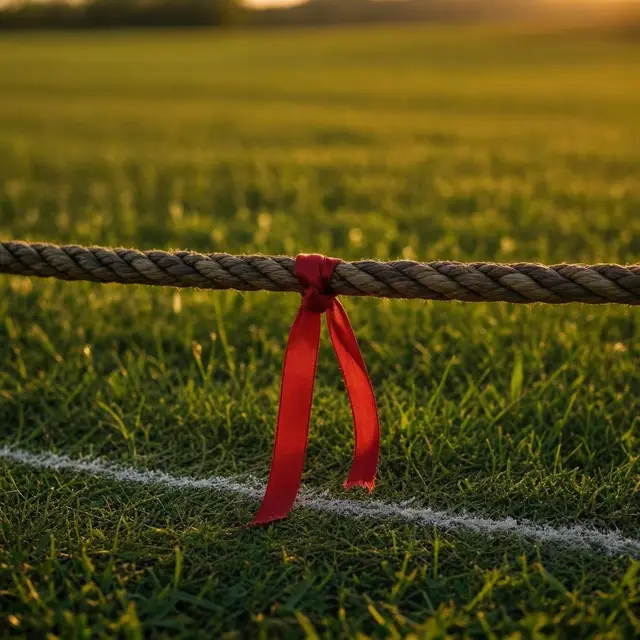
In official matches, two teams of eight face off. Each team's total body weight must stay under a limit for its class. The rope is about 11 cm around and must have no knots. It has a center line and two markers, each 4 meters from the center. A team wins by pulling the marker nearest the other side across the center line.
There are strict rules. Lowering your elbow below your knee, called locking, is a foul. So is touching the ground for too long. The rope must also pass under your arms.
Strength is not everything. A person called a driver walks beside the team, calling when to hold firm and when to pull. Body weight matters too. Heavier pullers get more static friction with the ground, so their feet do not slide.
Giant Ropes and Festival Traditions
Around the world, tug of war is more than a sport. In Japan, it is a staple of school sports festivals and a traditional part of harvest-time celebrations. At the Sendai Great Tug of War, around 3,000 men pull a rope 365 meters long. In Naha, in the Ryukyu Islands, the festival rope is over 200 meters long and weighs more than 40 tons.
In Korea, a version called juldarigi uses two huge rice-straw ropes joined by a peg. East and West sides of a village compete, and the contest is often rigged so the West wins. In Myanmar, tug of war is an old seasonal custom linked to the coming of the rains.
In the United States, two towns in Illinois and Iowa have pulled a rope across the Mississippi River every August since 1987.
Why a Snapping Rope Is So Dangerous
Tug of war looks harmless, but big contests can be risky. When both teams pull hard, the rope stretches and stores a large amount of potential energy. If the rope breaks, that energy is released all at once.
The broken ends then whip back at great speed. This is called snapback, and it can cause serious injuries. The same danger is studied on ships, where heavy mooring ropes can also snap under strain. People standing near the front of either team face the highest risk.
Amateur organizers often underestimate these forces. That is why specially engineered tug of war ropes exist that can safely handle the strain. Looping or wrapping the rope around a hand or wrist is also one of the main causes of serious harm.