More Water Than Seven Rivers Combined
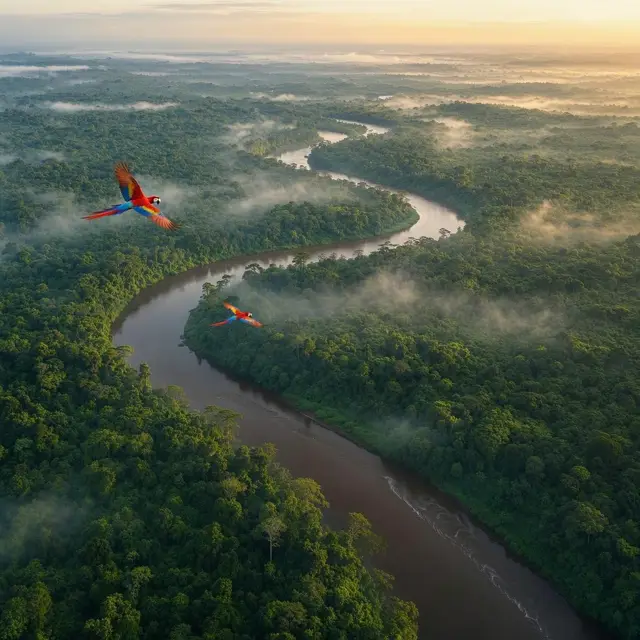
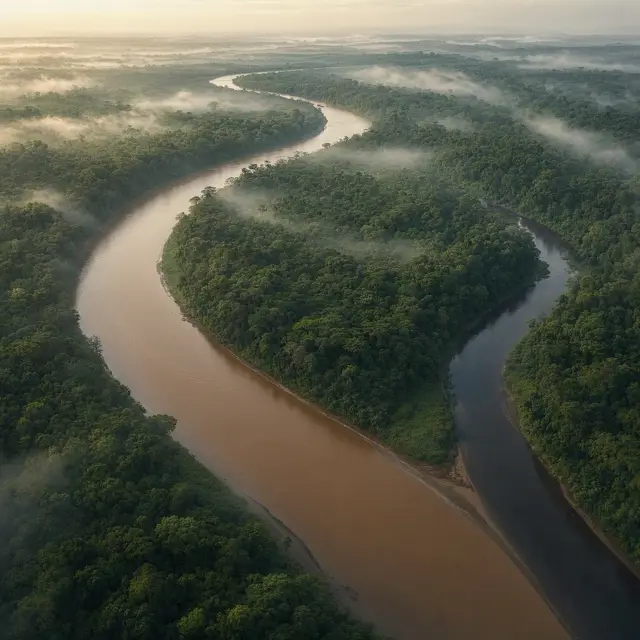
The Amazon pours out about 215,000 to 230,000 cubic meters of water every second. That is more than the next seven largest independent rivers combined. On its own, it supplies about 20% of all the river water that flows into the world's oceans.
Its drainage basin, the land that feeds it, covers about 7,000,000 square kilometers. That is the largest in the world. Even the part inside Brazil alone is bigger than any other river's basin. Two of the ten biggest rivers on Earth by flow are just tributaries of the Amazon.
Here is the strangest part. When the Amazon first enters Brazil, it carries only one-fifth of the water it will finally pour into the Atlantic. Yet even at that point, it already carries more water than any other river in the world.
A River That Once Ran Backwards
Geological studies suggest that for millions of years, the Amazon flowed the other way, from east to west. Then the Andes Mountains formed. They blocked its path to the Pacific Ocean, and the river switched direction toward its current mouth in the Atlantic.
That mouth is huge, but nobody fully agrees on how huge. If you count the Pará river and the ocean coast of Marajó island, the estuary is some 325 km wide. A stricter measurement still gives over 180 km. Marajó itself is the world's largest combined river and sea island.
The first documented European to sail up the river was the Spanish explorer Vicente Yáñez Pinzón, in March 1500. He saw its fresh water pushing out into the ocean. So he named it Río Santa María del Mar Dulce, later shortened to Mar Dulce, which means “sweet sea.”
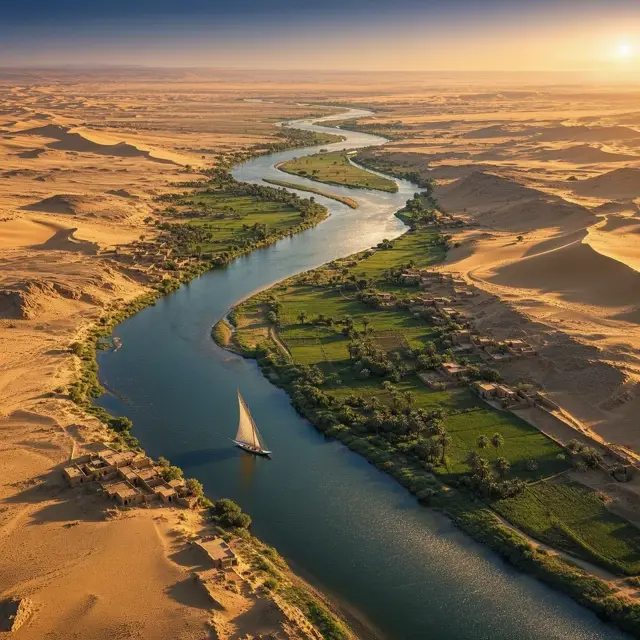
The Long Fight With the Nile
Is the Amazon the longest river on Earth? Experts have argued about this for many years. The traditional answer puts it second, behind the Nile. But reported lengths for the Amazon range from 6,275 km to 6,992 km, and it is often said to be “at least” 6,400 km long.
Measuring a river is harder than it sounds. The result depends on where you place the source and the mouth, the scale of the map, and the method used. In 2008, Brazil's space research institute claimed the Amazon was 140 km longer than the Nile, at 6,992 km.
A peer-reviewed study in 2009 disagreed. Using satellite images and trips to the source regions, it gave the Nile 7,088 km and the Amazon 6,575 km. The Encyclopædia Britannica says the Amazon's final length is still open to debate. Meanwhile, a 2014 study moved its farthest source to the headwaters of the Mantaro River in Peru.
No Bridges, and a Wave That Runs Upstream
Not a single bridge crosses the full width of the Amazon. It is not that the river is too wide. For most of its length, engineers could bridge it easily. The river simply runs through rainforest with very few roads or cities, so people usually cross by ferry.
Instead, the river itself works as the road. Large ocean ships can sail 1,500 km upriver to Manaus. Smaller ocean vessels can reach Iquitos in Peru, 3,600 km from the sea. The river is deep too, averaging 20 to 50 m in its lowest section and reaching 100 m in places.
Once a year, the Atlantic pushes back. At high tide in late northern winter, incoming ocean water is funneled into the delta. This creates a tidal bore called the pororoca. Its leading wave can be up to 7.6 m high and can travel up to 800 km inland.
Pink Dolphins and Giant Fish
The Amazon is home to the boto, or Amazon river dolphin. It is the largest river dolphin in the world, growing up to 2.6 m long. Young botos are gray, but they turn pink and then white as they grow up. They use echolocation to find their way and hunt in the river's tricky depths.
The river also shelters the Amazonian manatee, a plant-eater that never goes into salt water. It is home to the giant otter too, nicknamed the “river wolf.” The otter is one of South America's top meat-eaters, but hunting and habitat loss have cut its numbers sharply.
Then there are the fish. More than 5,600 species were known by 2011, and about fifty new ones are found every year. The arapaima can grow to 4.6 m long. There are 30 to 60 kinds of piranha. Bull sharks have even been reported 4,000 km upriver at Iquitos.