A Desert Wider Than a Continent's Third
The Sahara covers 9.2 million square kilometers, about 31 percent of the entire African continent. That makes it the largest hot desert in the world, and the third-largest desert overall, beaten only by the cold deserts of Antarctica and the northern Arctic.
Its name is beautifully blunt. "Sahara" comes from the Arabic word sahra, which simply means "desert".
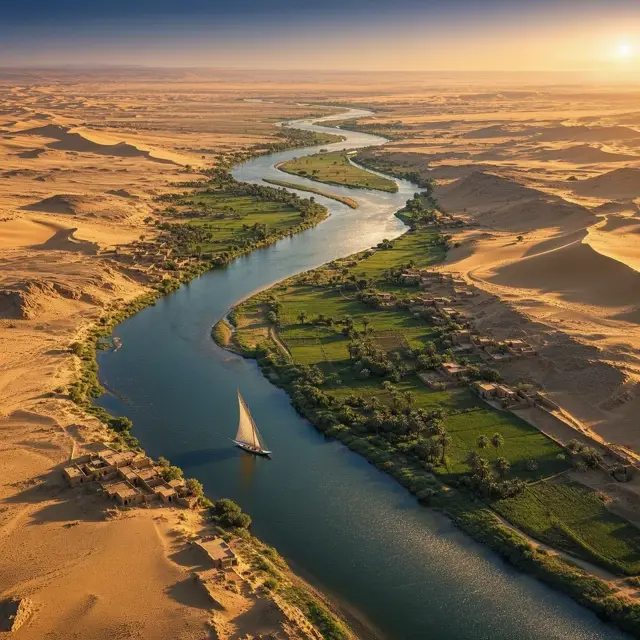
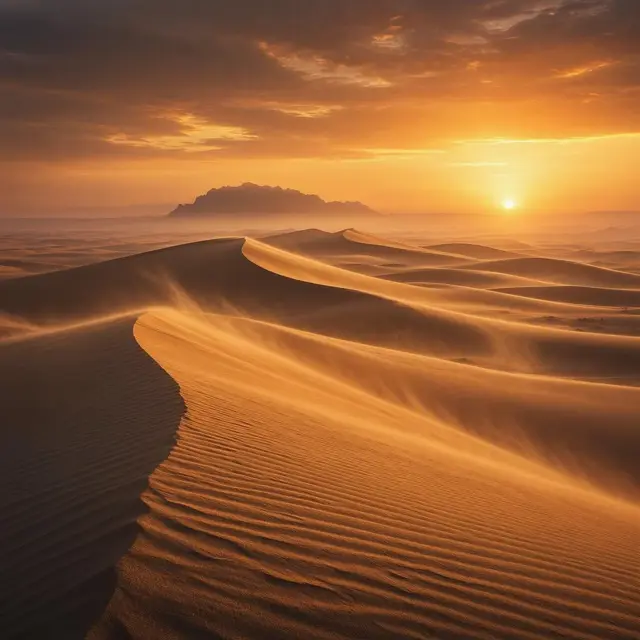
The scale is hard to grasp. The Sahara stretches from the Red Sea in the east to the Atlantic Ocean in the west, and from the Mediterranean coast in the north down to the Sahel, the belt of semi-arid savanna that marks its southern edge. Inside it lie rocky plateaus, gravel plains, salt flats, and vast sand seas where dunes rise higher than 180 meters.
When the Sahara Was Green
The Sahara has a secret: it has not always been a desert, and it will not stay one. For several hundred thousand years, the region has swung between desert and grassland in a roughly 20,000-year cycle driven by the precession of Earth's axis, the slow wobble that shifts the position of the North African monsoon.
During its humid phases, the "green Sahara" carried rivers, lakes, and abundant wildlife. More than 30,000 petroglyphs of river animals such as crocodiles have been found, carved by people who lived where almost nothing lives now. Lake Mega-Chad, a giant ancestor of today's Lake Chad, once spread across 350,000 square kilometers.
The last green phase ended around 4200 BCE, and the land slowly dried into the desert we know. Scientists predict the Sahara will turn green again in about 15,000 years.
A Land of Brutal Extremes
Most of the Sahara receives less than 20 millimeters of rain a year, and its hyperarid core gets virtually none. The heat is world-class: Bou Bernous in Algeria holds the world's highest mean monthly maximum temperature at 47 degrees Celsius, and sand surfaces can reach 80 degrees, with an extreme of 83.5 degrees recorded at Port Sudan.
Yet the desert swings hard the other way. Nights can be 13 to 20 degrees cooler than the days, and snow has fallen on the Algerian town of Ain Sefra twice in living memory, in February 1979 and December 2016.
The landscape is not all dunes either. Mountain ranges like the Ahaggar, Tibesti, and Air rise from the sands, crowned by Emi Koussi, a shield volcano in Chad. And with over 4,000 hours of sunshine a year in its eastern reaches, the Sahara holds enormous potential for solar energy.
Life Finds a Way
Roughly 2.5 million people live in the Sahara, clustered in oases and scattered settlements. Among them are the Tuareg, nomads who have traditionally crossed the desert on dromedary camels, heirs to cultures that stretch back to the tall Kiffian hunters of 10,000 years ago.
The animals are just as tough. The fennec fox radiates heat through its oversized ears. The addax antelope can survive nearly a year in the desert without drinking. The critically endangered Saharan cheetah still hunts here, with fewer than 250 mature individuals remaining.
The prize for extreme living goes to the Saharan silver ant. The surface is so hot that the ant stays active outside its nest for only about ten minutes per day, sprinting out in the worst heat to scavenge the bodies of less heat-proof creatures before it, too, must retreat.