A Mountain Wall Down a Whole Continent
Picture a wall of mountains running down the entire western edge of South America. That is the Andes, the longest continental mountain range in the world. It stretches about 8,900 kilometres and passes through seven countries: Argentina, Chile, Bolivia, Peru, Ecuador, Colombia and Venezuela.
The range is 200 to 700 kilometres wide, and its average height is about 4,000 metres. No mountain range outside Asia is higher. Tucked between its ridges is the Altiplano, the second highest plateau in the world after the Tibetan Plateau.
The name probably comes from the Quechua word anti, meaning "east". Another idea links it to anta, an older Aymara word for copper. The Spanish word cordillera, used for the whole chain, comes from cordel, meaning "rope". It fits: on a map, the Andes look like a rope laid along a continent.
The Summit Farthest From Earth's Center
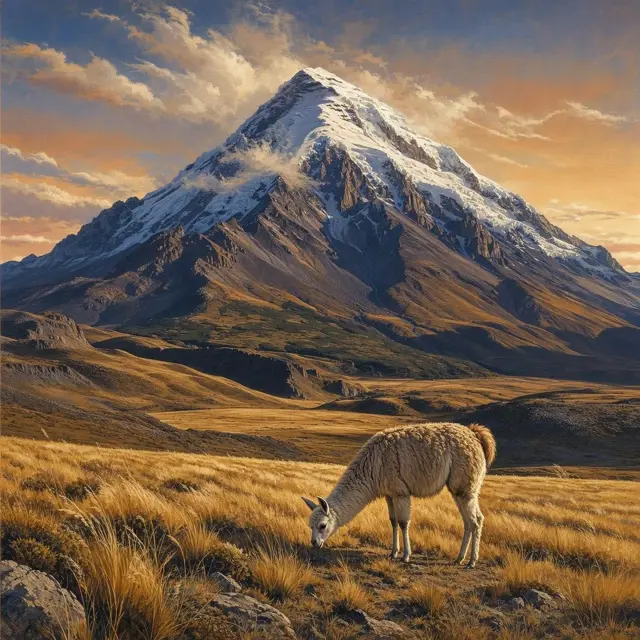
The tallest peak in the Andes is Aconcagua in Argentina, at about 6,961 metres. But the most surprising summit is Chimborazo in Ecuador. Its peak is farther from the center of the Earth than any other spot on the planet's surface.
How? The Earth spins, and that spin makes it fatter around the middle. This equatorial bulge lifts Chimborazo farther from the center than any other summit, even though Aconcagua stands taller above sea level.
The Andes also hold the world's highest volcanoes. Ojos del Salado, on the border of Chile and Argentina, rises to 6,893 metres. People live remarkably high here too. La Paz, Bolivia's seat of government, is the highest capital city in the world at about 3,650 metres. Parts of its neighbouring city, El Alto, reach 4,200 metres.
Mountains Pushed Up by Moving Plates
The Andes are still being built. Off the west coast, the Nazca Plate slides beneath the South American Plate. This process, called subduction, squeezes the edge of the continent and pushes the mountains up.
The Andes sit on the Pacific Ring of Fire, so the same forces also shake the ground and feed volcanoes. Active volcanoes are spread across four separate volcanic zones, with quiet gaps between them. The 1960 Valdivia earthquake in Chile measured 9.5, and as of 2024 it was the strongest ever recorded on seismometers.
The climate helped too. The Andes created a dry rain shadow along the Chilean coast. Starved of sediment, the sinking plate lost its well-greased surface, and that sped up the uplift. And the story may not stop at the continent's tip. Across the 1,000-kilometre Drake Passage, the mountains of the Antarctic Peninsula appear to continue the chain.
Llamas, Condors and a Lot of Frogs
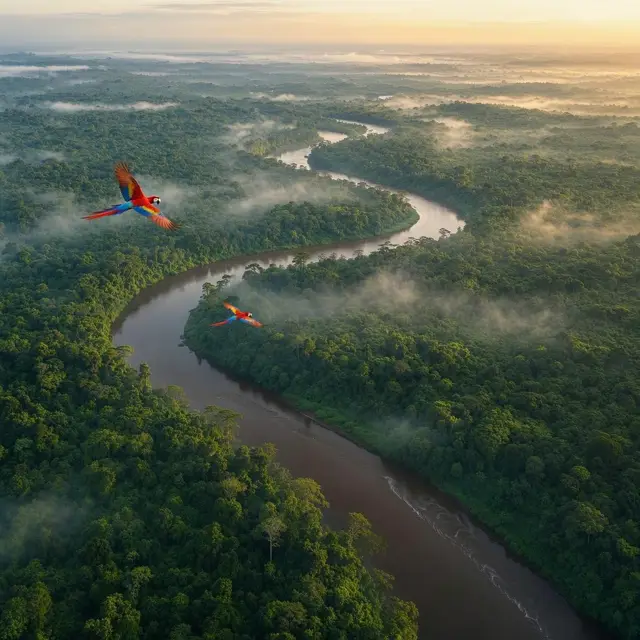
The Andes are the most important region in the world for amphibians. Almost 1,000 species live there, and roughly two thirds are endemic, found nowhere else. Add almost 600 mammal species, more than 1,700 bird species and about 30,000 kinds of plants.
On the high plains, wild vicuñas and guanacos roam. Their tame relatives, the llama and the alpaca, are kept for meat and wool and as pack animals. In mountain villages that cars can barely reach, llamas and alpacas still carry loads, though less than before.
The Andean condor is the largest bird of its kind in the Western Hemisphere. Some hummingbirds live above 4,000 metres. Lake Titicaca is home to a grebe that cannot fly and a rare water frog found only there. In the misty cloud forests, look for the spectacled bear and the mountain tapir.
Roads, Terraces and a Mountain of Silver
In the 15th century the Inca Empire spread across the central Andes. Its government built roads and aqueducts, and some of these still exist today. One famous Inca site, Machu Picchu, stayed hidden on a peak where the Andes drop toward the Amazon.
People here have farmed the steep slopes with irrigation for over 6,000 years. Terracing, cutting flat steps into hillsides, became widespread under the Incas. The potato, one of the region's most important crops, also came from the Andes.
Then there is the metal. Potosí, in today's Bolivia, was one of the main silver mines of the Spanish Empire. Its silver was so famous that the Río de la Plata and Argentina take their names from it. Today Chile and Peru are the world's top two copper producers. And Argentina, Bolivia and Chile hold the three largest lithium reserves on Earth.