Weather Stations That Never Saw Rain
Imagine a weather station that has never recorded a single drop of rain. In the Atacama Desert, some really haven't. Evidence also suggests parts of the desert may have gone without significant rainfall from 1570 to 1971, about four centuries of dry weather.
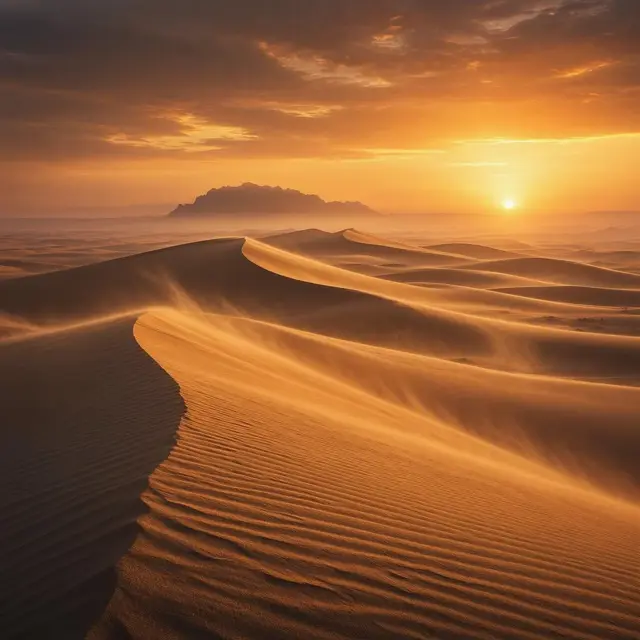
The Atacama stretches along a 1,600-kilometer strip of northern Chile, and it is the driest non-polar desert in the world. It averages about 15 millimeters of rain a year, and some spots get only 1 to 3 millimeters. It is so dry that many mountains taller than 6,000 meters have no glaciers at all.
The cause is a double wall. The desert sits between the Andes and the Chilean Coast Range, and both block moist air from the Pacific and the Atlantic. This creates a two-sided rain shadow. Oddly, it is not a scorching place. Temperatures stay mild all year, and the missing rain, not heat, is what makes it extreme.
A Desert With a Surprisingly Wet Past
The Atacama may be the oldest desert on Earth. Its extreme dryness goes back at least to the Middle Miocene, and it is linked to cold ocean currents that began running along South America's west coast after a sea passage near Antarctica opened about 33 million years ago. Layers of evaporites suggest some parts have been dry for 200 million years. British scientists have suggested some river beds have been dry for 120,000 years.
But there is a twist. In northern Chile, researchers found a fossil of a Late Miocene capybara, a semiaquatic animal, along with tiny plant traces from palm trees called phytoliths. The finds are about 8.8 million years old. They point to a much wetter time, with freshwater rivers, coastal wetlands and palm tree canopies.
Even in recent centuries the desert looked different. A large flat area called Pampa del Tamarugal was once a woodland. Then silver and saltpeter mining in the 18th and 19th centuries needed firewood, and the trees were cut down.
Earth's Practice Field for Mars
About 100 kilometers south of the city of Antofagasta, at around 3,000 meters up, the soil has been compared to that of Mars. The land looks so otherworldly that it has been used to film Mars scenes, most notably for the 2004 TV series Space Odyssey: Voyage to the Planets.
It goes deeper than looks. In 2003, researchers repeated the life-detection tests used by the Viking 1 and Viking 2 Mars landers on soil from the Yungay area. They found no signs of life. The region may be unique on Earth in this way, and NASA now uses it to test instruments for future Mars missions. In 2014, an even drier site called María Elena South was reported, making it a better Mars stand-in.
There is more. In 2008, the Phoenix Mars Lander found salts called perchlorates on Mars. The same salts appear in the Atacama, where related nitrate deposits have contained organic material. And in 2023, scientists reported a 'dark microbiome' of unfamiliar microorganisms living in the desert.
The Best Seat in the House for Stars
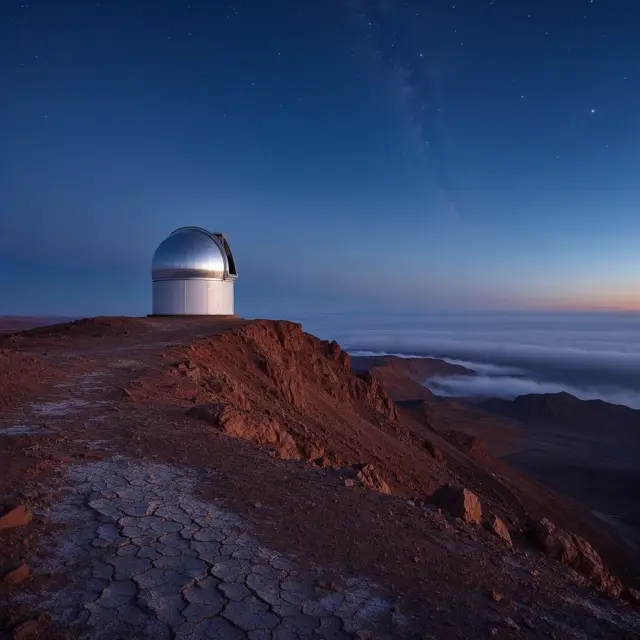
The Atacama's emptiness is a gift for astronomers. It is high, dry and almost cloudless, and it is free from the light pollution and radio noise of big cities. The desert gets more than 200 cloudless nights a year, and hundreds of thousands of stars can be seen through a telescope.
So the telescopes moved in. The European Southern Observatory runs three major observatories here: La Silla, Paranal, home of the Very Large Telescope, and Llano de Chajnantor. Chajnantor hosts the Atacama Large Millimeter Array, or ALMA, a radio telescope built by European countries, Japan, the United States, Canada and Chile. It officially opened on 3 October 2011.
A fourth site, Cerro Armazones, will be home to the Extremely Large Telescope, and building work there started in June 2014. The Carnegie Institution for Science also runs Las Campanas Observatory in the south of the desert. There is even a specially built hotel reserved just for astronomers and scientists.
Life That Drinks the Fog
Some parts of the Atacama are so dry that no plant or animal can survive. Yet in some places a sea fog called the camanchaca rolls in and brings just enough moisture for algae, lichens and even cacti. Over 500 plant species have been gathered within the desert's borders.
The real survivor is the llareta, which grows between 3,000 and 5,000 meters up. It forms a dense cushion like a pillow, some 3 to 4 meters thick, that holds on to the day's heat to cope with cold evenings. It grows only about 1.5 centimeters a year, so many llaretas are over 3,000 years old. In wet years, such as 2015, the desert even bursts into flower between September and November.
Animals find ways too. Humboldt penguins live on the coast all year, nesting on desert cliffs above the ocean. Andean flamingos live on high salt flats, while guanacos and vicuñas graze where melting snow waters the grass.