A Continent That Is Also a Country
Australia is made up of the mainland of a whole continent, plus the island of Tasmania and many smaller islands. It is the sixth-largest country in the world, yet the mainland is the smallest continent, so it is sometimes called the "island continent".
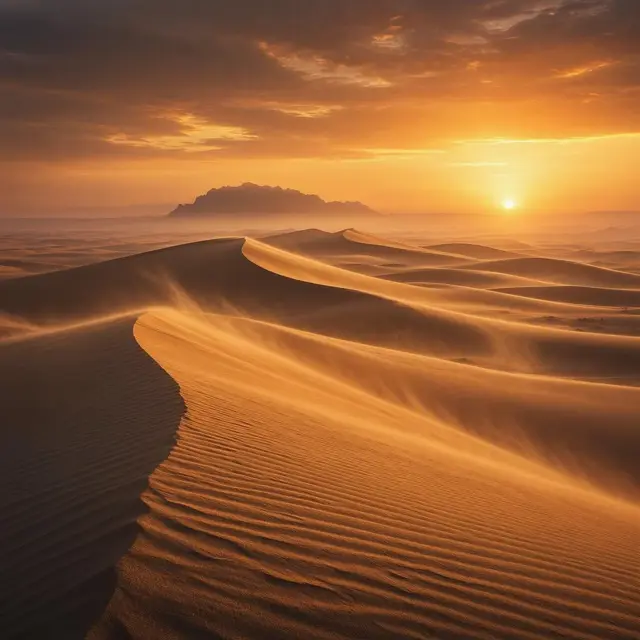
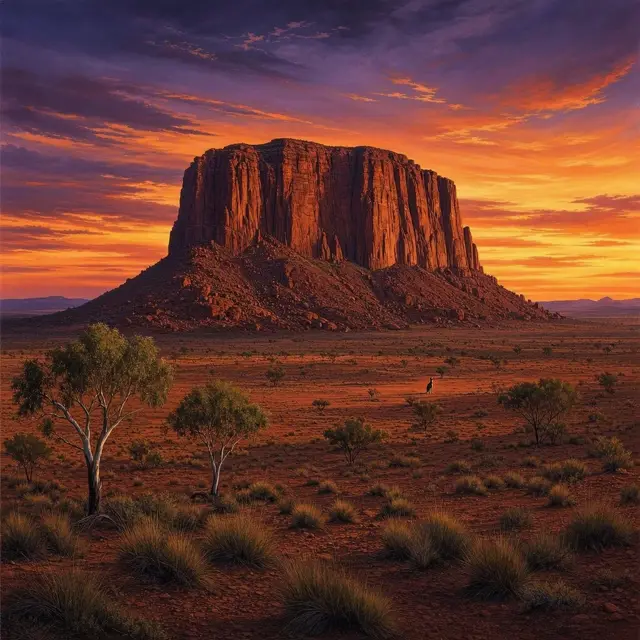
It is also remarkably flat and dry. Australia is the flattest and driest inhabited continent on Earth. Its average height is just 325 metres, compared with 870 metres for all continents. About 70% of the land is arid or semi-arid, and about 18% is desert.
Its rivers are the slowest to reach the sea of any continent. Off the north-east coast lies the Great Barrier Reef, the world's largest coral reef, stretching more than 2,300 kilometres.
The Unknown Southern Land
The name comes from Latin. For centuries, map makers imagined a huge continent in the south, which they called Terra Australis Incognita, meaning "unknown southern land".
When Dutch sailors mapped much of the coast in the 17th century, they called it New Holland. The name Australia was made popular by the explorer Matthew Flinders, who sailed all the way around the continent in 1803. It was officially recommended in 1817 and adopted by the British Admiralty in 1824.
Today, Australians have their own nicknames for home, including "Oz", "Straya" and "Down Under". The country became a single nation, the Commonwealth of Australia, when its separate colonies joined together in 1901.
One of the Oldest Living Cultures
People have lived in Australia for a very long time. The ancestors of Aboriginal Australians began arriving from Southeast Asia 50,000 to 65,000 years ago, crossing land bridges and short stretches of sea.
The oldest human remains found in Australia, at Lake Mungo, are about 42,000 years old. Aboriginal Australian culture is one of the oldest continuous cultures on Earth. By the time British settlers arrived in 1788, Aboriginal Australians spoke more than 250 different languages.
Their cultures were, and remain, deeply connected to the land. Some groups managed the landscape with controlled burning, known as fire-stick farming, and some farmed fish. In the north, local groups even traded with visiting fishermen from what is now Indonesia.
Kangaroos, Koalas and Unknown Species
Australia's long isolation from other continents created wildlife found nowhere else. It is one of only 17 megadiverse countries. About 94% of its amphibians, 93% of its reptiles and 69% of its mammals exist only there.
It is also the kingdom of the marsupials, mammals that carry their young in a pouch. About two thirds of the world's 330 marsupial species live in Australia, including kangaroos, wallabies and koalas. Koalas eat almost nothing but eucalyptus leaves.
And there is still so much to find. Around 168,000 species have been named, but scientists estimate that 70% of Australia's species have not yet been discovered. Fewer than 10% of its fungi and insects have names.
A Nation Hugging the Coast
For such a huge country, Australia has few people, almost 29 million. Its average population density is just 3.5 people per square kilometre, one of the lowest in the world.
But most people live close together. About 95% of Australians live within 100 kilometres of the coast, compared with a world average of 39%. Sydney and Melbourne each have more than five million people. The capital, though, is Canberra.
Australia is also a nation of newcomers. Immigrants make up about 30% of the population, the highest share among major Western nations. It ranks highly for quality of life, health and education.