The Most Efficient Machine You Own
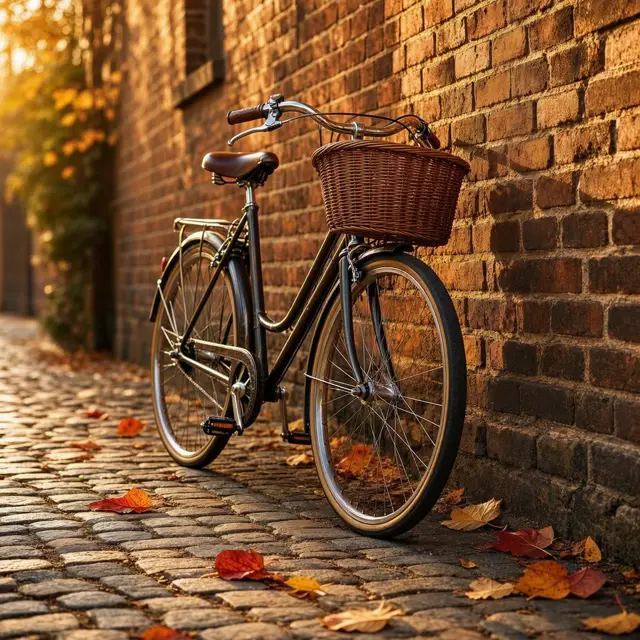
Of all the ways people move themselves around, none beats the bicycle. It is the most efficient human-powered way to travel, measured by how much energy a person uses to cover a distance.
The machine itself wastes almost nothing. Up to 99% of the energy you push into the pedals reaches the wheels. Riding at about 16 to 24 kilometres per hour takes only about the same power as walking.
The real enemy is the air. Air drag rises sharply with speed, and a rider sitting upright causes about 75% of it. Tuck in low, or cover the bike in a smooth shell called a fairing, and you go much faster. In 2016, a streamlined bicycle set a record of over 92 kilometres per hour on flat ground.
A Shape That Hardly Changed
The bicycle was invented in Europe in the 19th century. The word first appeared in English print in 1868, describing "bysicles and trysicles" in Paris. Before that, it was used in French in 1828 for a two-wheeled horse-drawn carriage.
The basic design we ride today, the safety bicycle with a chain driving the back wheel, arrived around 1885. Remarkably, its overall shape has barely changed since, even as materials and details improved.
By the early 21st century, there were more than 1 billion bicycles in the world. Over 60% of them are now made in China. In some places, they are still the main way people get around.
The Bike That Built the Car
The bicycle did more than get people from place to place. It helped launch the car industry. Several key parts of the car were first invented for bicycles, including ball bearings, air-filled pneumatic tyres, chain-driven gears and wire-spoked wheels.
Some bicycle makers became famous carmakers. J. K. Starley's bicycle company became the Rover Cycle Company in the late 1890s, and later the Rover Company when it started making cars.
Today, bicycles are also a big part of city life in many places, helping to cut traffic and pollution. In the Netherlands, every train station offers free bicycle parking. In 2011, Italy even sold more bicycles, 1.75 million, than new cars.
The Freedom Machine
In the late 1800s, the bicycle changed life for women. As safety bicycles became cheaper and easier to ride, many women gained a kind of personal freedom they had never had before.
The bike even changed fashion. The cycling craze of the 1890s pushed for "rational dress", helping women move away from corsets and ankle-length skirts toward the then shocking bloomers.
Campaigners for women's rights called it a "freedom machine". In 1896, the American campaigner Susan B. Anthony said the bicycle had "done more to emancipate woman than any one thing in the world". She added that a woman on a bicycle gets "a feeling of self-reliance and independence the moment she takes her seat".