The Worm That Broke Machines It Never Touched Online
In 2009, something strange started happening at Iran's Natanz nuclear facility. Centrifuges spinning uranium gas kept failing, one after another, for no clear reason. Technicians replaced the damaged parts. It kept happening anyway. Nobody suspected a computer virus, because the centrifuges sat behind an air gap, completely disconnected from the internet.
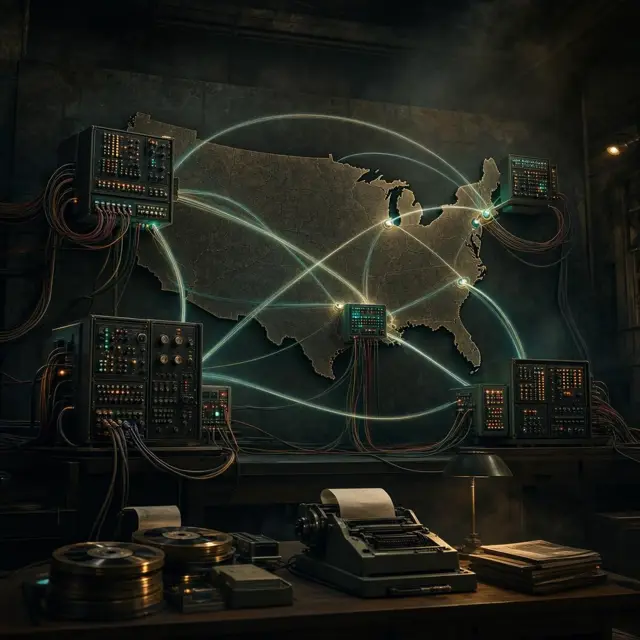
The culprit was Stuxnet, a computer worm that crossed that air gap anyway. It hitched a ride on a USB flash drive, carried in by someone who had no idea what they were plugging in. Once inside, it hunted for one specific kind of industrial equipment, and when it found it, it quietly went to work sabotaging machinery spinning faster than a jet engine.
How a USB Stick Beat an Air Gap
Stuxnet didn't need to trick anyone into clicking a link. It carried four separate zero-day exploits, security flaws nobody in the world knew about yet, bundled into a single piece of malware. Researchers had never seen that many used at once. Using even one zero-day exploit is considered rare and valuable among hackers; Stuxnet burned through four of them like they were nothing.
To look trustworthy to Windows, the worm carried digital certificates stolen from two real technology companies based in Taiwan. That let its rootkit install itself deep inside the operating system without triggering a single security warning. From there, it could quietly spread between machines on the same private network, waiting for the right target to appear.
It Only Woke Up for One Machine on Earth
Most malware infects everything it touches. Stuxnet was different. It spread to hundreds of thousands of computers around the world, yet it stayed completely dormant on almost all of them. It was checking for one very specific setup: Siemens programmable logic controllers, the small industrial computers that run factory machinery, connected to frequency converters from just two manufacturers, one Finnish and one Iranian.
When Stuxnet found that exact equipment, it checked the spin speed of the motors those converters controlled. Only motors spinning between roughly 807 and 1,210 cycles per second, the precise range used by gas centrifuges enriching uranium, were worth attacking. One researcher later called it a marksman's job. Everywhere else in the world, the code simply sat there, doing nothing at all.
Speeding Up, Slowing Down, Tearing Itself Apart
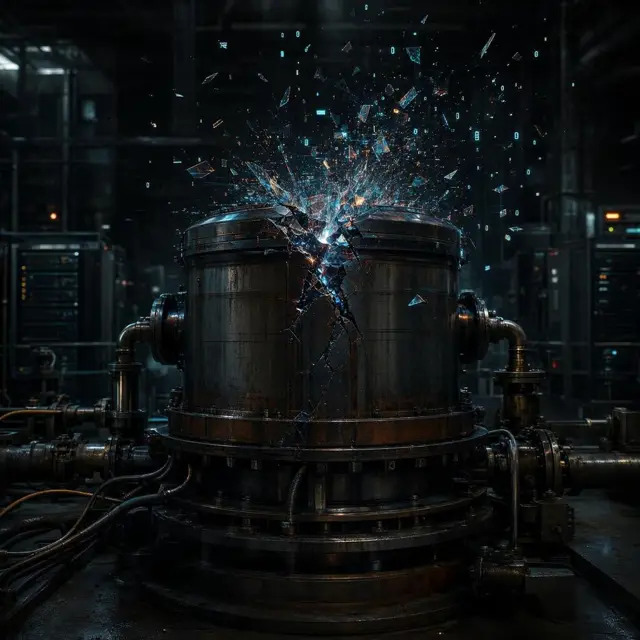
Once Stuxnet confirmed it had found a real centrifuge, it didn't just shut the machine off, that would have been too obvious. Instead, it secretly changed the frequency feeding the motor, pushing it up to roughly 1,410 Hz, then down to just 2 Hz, then back up to 1,064 Hz. Each wild swing stressed the spinning rotor in ways it was never built to handle.
Meanwhile, the worm fed fake, perfectly normal-looking sensor readings back to the control room, so operators watching their screens saw nothing wrong while equipment quietly destroyed itself. Investigators estimate the attack destroyed somewhere between 900 and 1,000 centrifuges, roughly a fifth of Iran's operating capacity at the time.
Malware With Its Own Self-Destruct Date
For something built to sabotage nuclear equipment, Stuxnet was oddly careful. It was coded to stop spreading once it had infected three additional computers from any single machine, limiting how far it could travel. It even carried a built-in expiration date, June 24, 2012, after which it was designed to erase itself completely.
Multiple news organizations later reported that Stuxnet was part of Operation Olympic Games, a cyberweapons program reportedly run jointly by the United States and Israel, started under one president and expanded under the next. Leaked documents and later disclosures reportedly tied the two countries together on its development. No government has ever formally admitted building it.
The Escape Nobody Planned
Stuxnet was never supposed to leave Natanz. Investigators believe a programming error in one update let it escape anyway, reportedly after an engineer connected an infected laptop to the internet at home. From there, it spread to more than 200,000 computers worldwide, though fewer than 1,000 machines were ever physically affected.
Oddly, the real-world payoff of the sabotage campaign is still debated today. Iran's uranium enrichment capacity reportedly grew during 2010, with centrifuges performing far better than the year before, the same year Stuxnet was supposedly causing the most damage. Whether that means the attack fell short, was quietly minimized, or simply bought a temporary delay is still argued over.