A Seed, Not a Bean
Coffee is a beverage brewed from roasted, ground coffee beans. Dark-coloured and bitter, it has a stimulating effect on humans due to its caffeine content — though decaffeinated coffee is also commercially available, alongside various coffee substitutes.
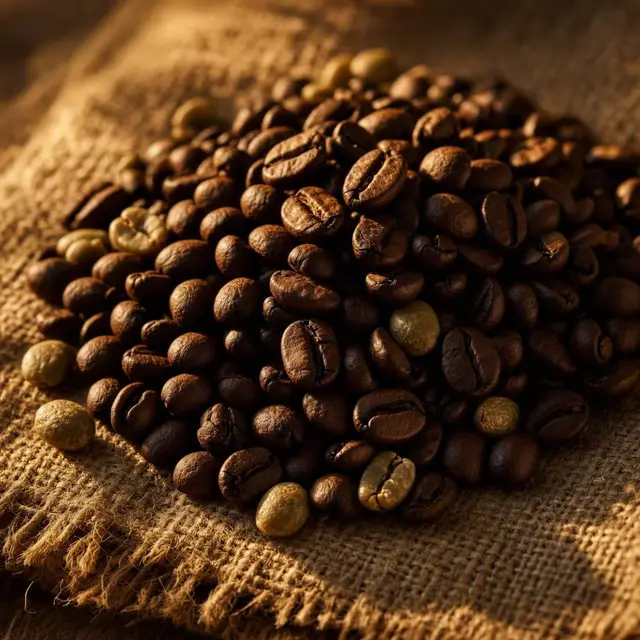
The "beans" are not beans. Production begins when the seeds are separated from coffee cherries, the fruits of the Coffea plant, producing unroasted green coffee beans. Those are roasted, then ground into fine particles.
Brewing is simply steeping those grounds in hot water before filtering them out. Everything after that is presentation: espresso, French press, caffè latte, canned coffee, hot or iced, with sugar, substitutes, milk or cream added to change the flavour. One agricultural seed, one extraction method, and an enormous amount of ritual built on top.
From Sufi Yemen to the World
Though coffee is now a global commodity, its history is tied to food traditions around the Red Sea.
The earliest reports of coffee drinking concern the plant's use among the Sufis of Yemen, in southern Arabia, in the middle of the 15th century. Its first documented role was in religious practice — mystics using it to stay awake through night-long devotions.
Yemen kept the trade for two centuries: up to the end of the 17th century, most of the world's coffee was imported from Yemen. As popularity grew, cultivation spread — to Java in the 17th century, and to the Americas from the 18th. That expansion is why coffee is now grown far from where it was first drunk, and why the countries that dominate production today had no historical connection to it at all.
Two Species, Seventy Countries
Nearly all the coffee in the world comes from two bean types: *C. arabica* and *C. robusta*.
Coffee plants are cultivated in over 70 countries, primarily in the equatorial regions of the Americas, Southeast Asia, the Indian subcontinent and Africa — a belt around the middle of the planet where the altitude and climate suit the plant.
Green, unroasted coffee is traded as an agricultural commodity, priced on global markets rather than by the people who grew it. In 2023, Brazil was the leading grower, producing 31% of the world's total, followed by Vietnam. Nearly a third of all coffee on Earth comes from a single country.
Half a Trillion Dollars, and Poor Farmers
The global coffee industry was worth US$495.50 billion in 2023.
Set directly against that figure is the uncomfortable one. While coffee sales reach billions of dollars annually worldwide, coffee farmers disproportionately live in poverty. The value accumulates overwhelmingly in roasting, branding and retail — the stages furthest from the plant.
The environmental record draws criticism too. Critics of the industry point to its negative impact on the environment, including clearing of land for coffee growing and water use. Both problems share a cause: demand at half-a-trillion-dollar scale has to be met by land and water somewhere, and that somewhere is the equatorial belt, in the same countries whose growers see least of the money.