The Most Amazing Nose on Earth
An elephant's trunk is its nose and upper lip joined together. It holds up to 150,000 separate bundles of muscle, with no bone at all. That makes it almost endlessly flexible.
It is also both strong and gentle. A trunk can lift up to 350 kilograms, yet it is precise enough to crack a peanut shell without breaking the seed inside. It can reach things 7 metres high and dig for water under sand.
The trunk is a powerful tool for water too. It can suck in air almost 30 times faster than a human sneeze, and an adult Asian elephant's trunk can hold 8.5 litres of water. When swimming, elephants even use it as a snorkel. Its sense of smell may be four times stronger than a bloodhound's.
Giants That Cannot Jump
Elephants are the largest living land animals. There are three living species: the African bush elephant, the African forest elephant and the Asian elephant. Their extinct relatives include mammoths.
Their bodies are built to carry huge weight. Their legs stand straight under the body like pillars, and soft cushion pads under their round feet help spread the load and soften each step. They can even stand for long periods without getting tired.
But all that weight has a cost. Elephants cannot trot, gallop or jump. Their fastest pace, about 25 kilometres per hour, is a kind of fast walk. Surprisingly, they are strong swimmers, able to swim for up to six hours and cover as much as 48 kilometres.
Tusks, Teeth and Keeping Cool
An elephant's tusks are really giant front teeth. They keep growing about 17 centimetres a year and are used for digging, moving things and fighting. Like people who are right- or left-handed, elephants usually favour one tusk, which wears down more.
Their chewing teeth work in an unusual way. New teeth grow at the back of the mouth and push the old ones forward and out. The last set, usually the sixth, arrives in their early 40s and must last the rest of their life.
Keeping cool is a constant challenge. Elephants only have sweat glands between their toes. Their huge ears help release heat, and they take mud baths, then blow dust over their skin to form a protective crust against sun and insects.
Families Led by Grandmothers
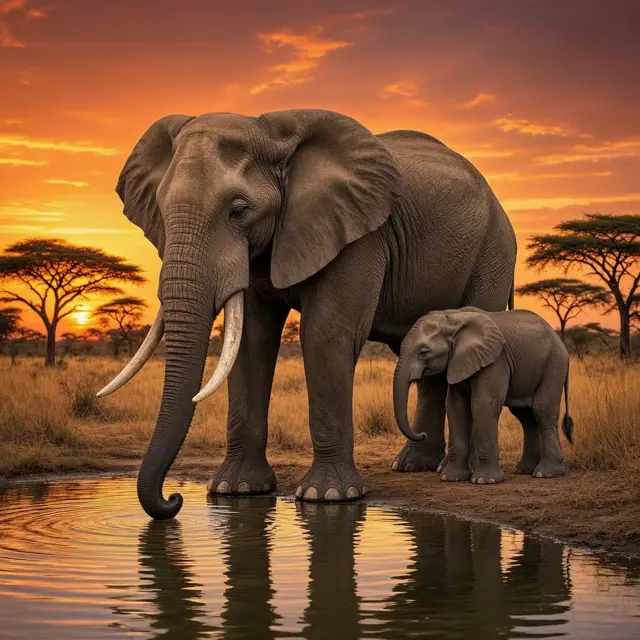
Elephants live in close family groups. The females stay together for life, and each group is led by a matriarch, usually the oldest female. Males leave their family when they grow up and may live alone or with other males.
Babies are the centre of attention. A pregnancy lasts one and a half to two years, and a newborn calf weighs about 120 kilograms. The whole herd gathers around a new calf, touching it gently with their trunks, and in some families, other young females help look after it.
Elephants also talk over long distances. They make deep rumbles, some too low for humans to hear, called infrasound. These calls can travel for many kilometres, and stomping sends vibrations through the ground that other elephants may pick up as far as 32 kilometres away.
Mirrors, Memories and Mourning
Elephants are among the most intelligent animals on the planet. They can recognise themselves in a mirror, a sign of self-awareness seen only in a few other animals, such as some apes and dolphins.
They use tools too. One Asian elephant was seen trimming branches to use as a fly swatter. The idea that elephants have excellent memories may be true, as they seem to build lasting mental maps of their surroundings.
Most moving of all, elephants are drawn to the bones of their own kind, even ones that are not related to them. A dying or dead elephant may get attention and help from others. Scientists still debate what elephants feel, but these behaviours have been read as a sign of concern.