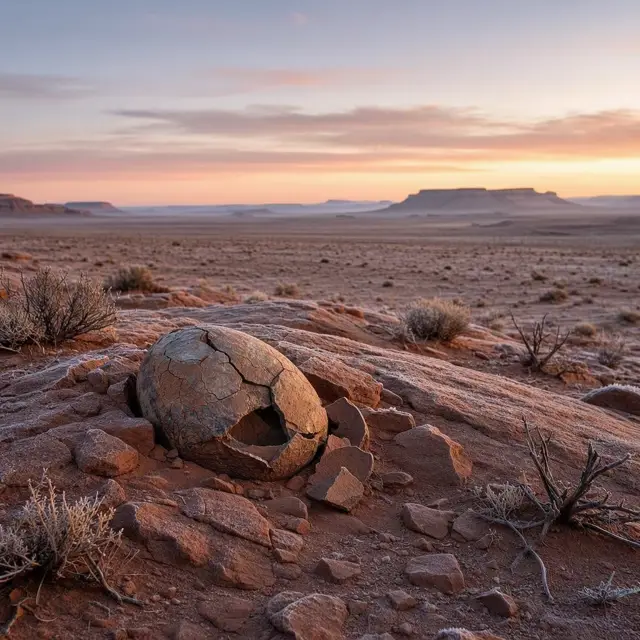
A Desert Made Mostly of Rock
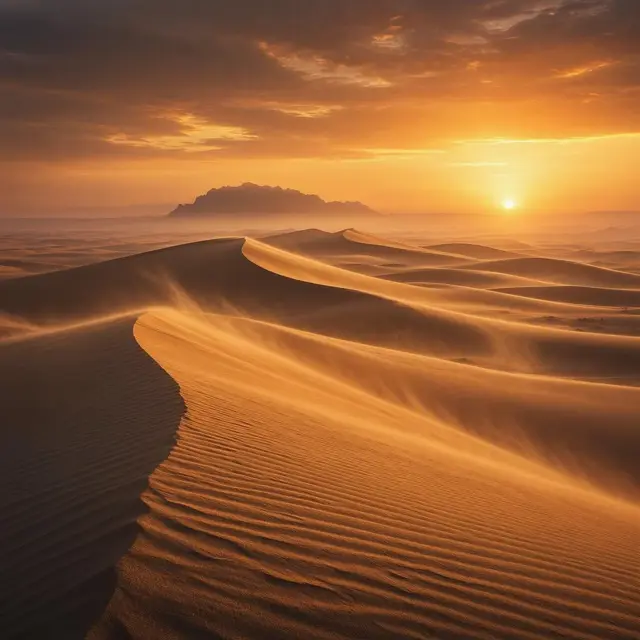
Picture a desert and you probably see golden sand dunes. The Gobi breaks that picture. Much of it is not sandy at all, and looks more like exposed bare rock. Even its name hints at this. It comes from the Mongolian word Gov', meaning dryland, while the borrowed Chinese term gēbì means a rocky semi-desert rather than a sandy one.
The Gobi covers southern Mongolia and North China, and it is the sixth-largest desert in the world. It stretches 1,600 km from southwest to northeast and 800 km from north to south. Its area is about 1,295,000 square kilometres.
Mountains frame it on almost every side, from the Altay ranges in the north to the ranges that form the northern edge of the Tibetan Plateau in the south. Some geographers even treat its western part, the Tarim basin, as a separate desert called the Taklamakan.
Frost on the Dunes
Here is a twist: the Gobi gets frost, and sometimes even snow on its dunes. It is a cold desert. One reason is that it lies quite far north. Another is height. It sits on a plateau roughly 910 to 1,520 metres above sea level, and higher ground means colder air.
The swings are wild. Winter can drop to minus 40 °C, while summer can reach 45 °C. Even within a single day, the temperature can change by as much as 35 °C. Average winter lows sit around minus 21 °C, and summer highs around 27 °C.
The Gobi gets about 194 mm of rain a year, mostly in summer. Extra moisture arrives in winter, when the wind blows snow in from the Siberian Steppes. Spring and early summer bring icy dust storms and snowstorms, and the far north stays too cold and dry for many plants to grow.
Where the First Dinosaur Eggs Turned Up
The Gobi is the source of many important fossil finds. Among them were the first dinosaur eggs. In 1923, twenty-six of them were uncovered, and they averaged 23 centimetres in length.
Diggers have also worked in the Nemegt Basin, in the northwestern Gobi in Mongolia. This area is known for its fossil treasures, including early mammals, dinosaur eggs, and stone tools some 100,000 years old.
People found ways to live here too. Starting around 8,000 years ago, the Gobi went through a warm, wet phase. By about 7,500 years ago, lakes in the western Gobi reached their highest levels, with meadow plants growing around them. People used the oases heavily, leaving behind milling stones, axes and pottery. Later the land dried out again, and between about 3,500 and 3,000 years ago fewer people lived there. Prehistoric petroglyphs were found in southern Mongolia in 1997.
Camels, Gazelles and 30 Kinds of Lizard
For a place this harsh, the Gobi is busy with life. Some animals here are unique, including black-tailed gazelles, marbled polecats, wild Bactrian camels, Mongolian wild asses and sandplovers. Snow leopards, Gobi bears and wolves drop by now and then.
Lizards do especially well. About 30 species live along the Gobi's southern Mongolian border. The most common plants are shrubs built to survive drought, such as gray sagebrush, plus low grasses like needle grass. One wild onion, called taana, is the main food of many herd animals.
Herders know this land well. Mongols call parts of it a gobi, meaning a land of thin plants that suits camels better than cows. If herds stay small and keep moving, it can also feed horses, sheep and goats. The plants there are woody and fragrant, and Gobi mutton is said to be the most aromatic in the world.
A Desert on the Move
The Gobi is not standing still. It is growing through desertification, fastest on its southern edge into China. There, about 3,600 square kilometres of grassland are overtaken every year. Dust storms became more frequent between 1996 and 2016, hurting farming in China.
Most of the spread is blamed on people. Cutting down forests, overgrazing and using up water supplies all play a part, along with climate change. In Mongolia, goats raised by herders for cashmere wool have worn down grasslands. Livestock and off-road vehicles also trample the fragile ground.
There is some good news. In some areas, the spread has slowed or even reversed. China's Three-North Shelter Forest Program, nicknamed the Green Great Wall, began in 1978 and is set to run through 2050. Its goal is to plant aspen and other fast-growing trees across some 36.5 million hectares in 12 provinces. Several large nature reserves also protect the region, including Gobi Gurvansaikhan National Park.