A Biologist's Word, Borrowed
An Internet meme is a cultural item — an idea, behaviour or style — that spreads across the Internet, now primarily through social media.
The word did not begin online. Richard Dawkins introduced meme in his 1976 book *The Selfish Gene*, to describe a conceptual unit of cultural transmission, analogous to — and deliberately sounding like — the gene in biology. His point was that ideas replicate, mutate and compete for survival in much the way genes do.
The internet-specific term came later. Mike Godwin coined Internet meme in 1993, describing how memes proliferated through early online communities: message boards, Usenet groups and email. A concept invented to explain culture in general turned out to describe one specific network with uncanny precision.
Why They Behave the Way They Do
Memes manifest in many formats — images, videos including GIFs, and other viral content. But the recognisable behaviour comes from four key characteristics:
- A tendency to be parodied
- Use of intertextuality, referencing other works and other memes
- Viral dissemination
- Continual evolution
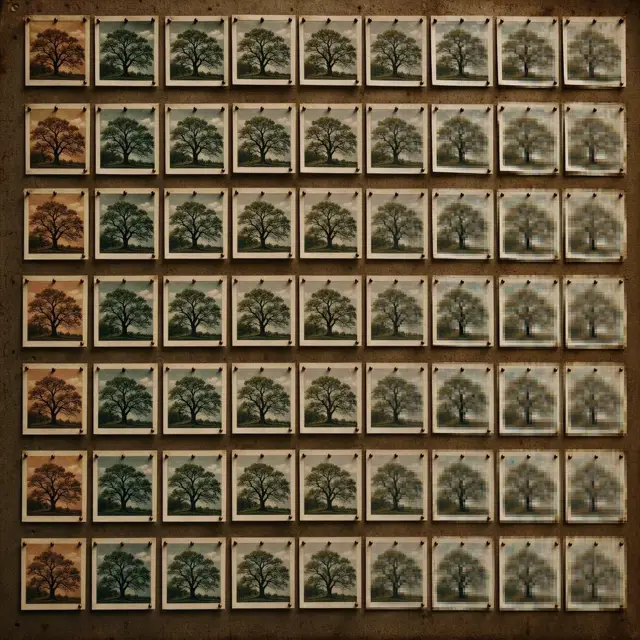
That last pair explains why memes feel alive in a way most media does not. A film is finished when it is released; a meme is a starting position. Each person who reposts it can alter it, and the alterations that get copied are the ones that survive — which is precisely the mechanism Dawkins was describing.
Intertextuality is also why memes are so hard to explain to anyone outside the context. A meme frequently means nothing on its own, because its meaning lives in what it is quoting.
From Message Boards to TikTok
The platforms shaped the form. The emergence of YouTube, Twitter, Facebook and Instagram further diversified memes and accelerated their spread.
Newer genres followed the newer platforms. Dank and surrealist memes are among the more recent, alongside formats like short-form video popularised by Vine and TikTok.
And the vocabulary has turned notably sour. Newer internet memes — specifically those of low quality — are often classified as brain rot or AI slop. That is a striking development for a medium barely thirty years old: it has generated its own internal terms of contempt, distinguishing memes made by people who mean something from content generated in bulk to farm attention.
Studied, Monetised, Litigated
Memes are now recognised as a significant aspect of Internet culture and are the subject of academic research — no longer only a thing that happens, but a thing that is formally studied.
Their reach across serious domains is broader than their frivolous reputation suggests. They appear across marketing, economics, finance, politics, social movements, religion and healthcare — carrying arguments in fields where the stakes are money, belief and public health.
There is a legal edge too. Memes are often viewed as falling under fair use protection, since parody and commentary are typically protected. But their incorporation of material from pre-existing works can still result in copyright disputes — the same intertextuality that makes a meme legible is what puts it in reach of the law.