Not Four Islands, but 14,125
Ask most people how many islands make up Japan and they will name a handful. The real number is 14,125. The five main ones, from north to south, are Hokkaido, Honshu, Shikoku, Kyushu and Okinawa, and together they stretch more than 3,000 kilometres along the coast of Asia.
All those islands give Japan the sixth-longest coastline in the world, at almost 30,000 kilometres. Yet most of the land is hard to live on. About two thirds of it is forest, and much of it is steep and mountainous.
So people crowd into the flatter coastal areas. That is why Japanese cities feel so packed, even though large parts of the country are quiet green hills.
The Land of the Rising Sun
Japanese people call their country Nihon or Nippon. It is written with two characters, 日本, which mean "sun origin". That is where the famous nickname, the Land of the Rising Sun, comes from.
The English word "Japan" took a long road to reach us. It came from Chinese ways of saying those same characters. In the 13th century, the traveller Marco Polo wrote the name down as Cipangu. Later, Portuguese traders picked up a Malay version, Japang, and carried it to Europe in the early 1500s.
The first English spelling, in a book from 1577, was Giapan. People have lived on the islands for about 38,000 years, and clay pots from the ancient Jōmon culture are among the oldest pottery ever found.
Living on the Ring of Fire
Japan sits on the Pacific Ring of Fire, a huge belt around the Pacific Ocean where the Earth's plates grind against each other. That makes the country very prone to earthquakes, tsunami and volcanic eruptions.
The country has 111 active volcanoes. Destructive earthquakes, often followed by a tsunami, strike several times each century. The 2011 Tōhoku earthquake was the strongest in Japan's recorded history, and the tsunami it caused led to the Fukushima nuclear disaster.
Further back, the 1923 Tokyo earthquake killed more than 140,000 people. In the 2016 World Risk Index, Japan ranked 17th in the world for natural disaster risk. Even so, the country's rugged land also gives it a much-loved tradition: bathing in natural hot springs, known as onsen.
The Country That Closed Its Doors
For centuries, Japan was ruled by warriors. From 1185, military leaders called shōgun held real power, backed by the famous samurai class. The emperor stayed on the throne, but the shōgun ran the country.
In 1639, the Tokugawa shogunate did something remarkable. It brought in sakoku, which means "closed country". Contact with the outside world was strictly limited for more than two centuries, with a small Dutch trading post in Nagasaki as one of the few windows to the West.
This long quiet stretch, the Edo period, lasted until 1868. It was not frozen in time, though. Roads and waterways grew, and Osaka rice traders even created early forms of banking, insurance and futures contracts.
Bullet Trains, Godzilla and Long Lives
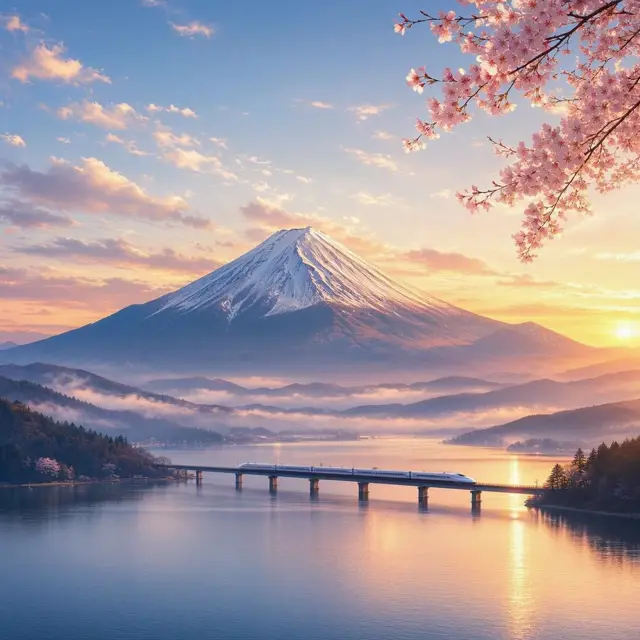
Modern Japan punches far above its size. It has the world's fourth-largest economy, and its high-speed Shinkansen bullet trains are famous for being safe and on time.
Its culture has spread everywhere. Godzilla, first brought to the screen by Ishirō Honda, launched the longest-running film franchise in history. Japanese comics, called manga, and animated films and shows, called anime, are now loved around the world.
The food is just as famous. Sushi and ramen are national favourites, but so is Japanese curry, which arrived from British India. And people in Japan live long lives. In 2020, life expectancy at birth was 85 years, the highest in the world.