A Desert Named for Thirst
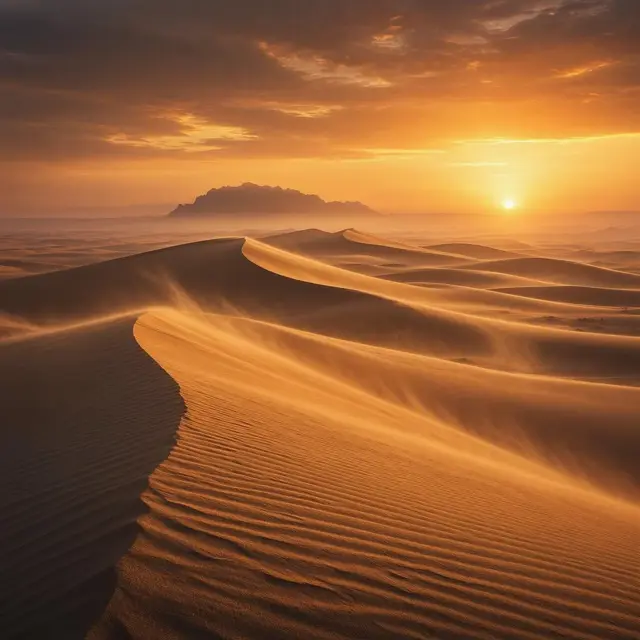
The word Kalahari comes from the Tswana word Kgala, meaning "the great thirst", or Kgalagadi, meaning "a waterless place". The name fits. Huge stretches are covered in red sand with no permanent surface water at all.
The Kalahari covers about 900,000 square kilometres, including much of Botswana and parts of Namibia and South Africa. The wider Kalahari Basin is even bigger, at over 2.5 million square kilometres, reaching into Angola, Zambia and Zimbabwe.
Here is the twist. Strictly speaking, most of the Kalahari is not a true desert. It is a sandy savanna with too much ground cover to qualify. After good rains it offers huge areas of excellent grazing. It supports far more animals and plants than a true desert like the Namib to its west. The main patch with little ground cover lies in the southwest, where the land is a true semi-desert.
When Hippos Lived Here
The Kalahari was not always dry. Fossils of plants and animals from Gcwihaba Cave in northwestern Botswana show the area had more plants and permanent water between roughly 30,000 and 11,000 years ago. Back then it likely supported antelopes, elephants and even hippos.
Sediment cores and pollen records show that giant lakes and rivers once covered much of today's desert. One of these, called a paleolake, was the ancient Lake Makgadikgadi. It may have spread across as much as 120,000 square kilometres before it drained or dried out some 10,000 years ago.
As the climate shifted, rain fell less and the water evaporated faster, slowly turning the land into the dry place it is today. Signs of the wetter past remain. In ancient times there was enough moisture for farming, with dikes and dams collecting water. They are now filled with sediment, but you can still spot them on Google Earth.
Frost, Heat and a Hidden Lake
The Kalahari sits high up, mostly between 800 and 1,200 metres above sea level. That height keeps it cooler than the Sahara. Winter frost is common from June to August, and the average temperature of the warmest month never goes above 29 degrees Celsius anywhere in the Kalahari.
Single days can still get scorching. In 2012, Twee Rivieren Rest Camp hit 44.8 degrees Celsius. The driest and sunniest parts soak up over 4,000 hours of sunshine a year, and the dry season lasts eight months or more.
The real surprise lies underground. Huge water reserves sit beneath parts of the Kalahari. Dragon's Breath Cave holds the largest documented underground lake that is not under ice. Above ground, the Okavango is the only permanent river. It flows into a delta in the northwest, forming marshes rich in wildlife, while dry valleys and salt pan flats fill with water only in the rainy season.
Lions, Horned Melons and Flamingos
The Kalahari is home to some of Africa's most famous hunters: lions, cheetahs, African leopards, spotted and brown hyenas, and African wild dogs. Wildebeest, springbok and gemsbok roam its grasslands, along with Cape porcupines and ostriches.
The skies are busy too. The secretarybird, the martial eagle and the giant eagle owl share the air with falcons, kestrels and kites. And in the rainy season, something unexpected happens at the Makgadikgadi Pans in Botswana. Tens of thousands of flamingos arrive to visit these seasonal wetlands.
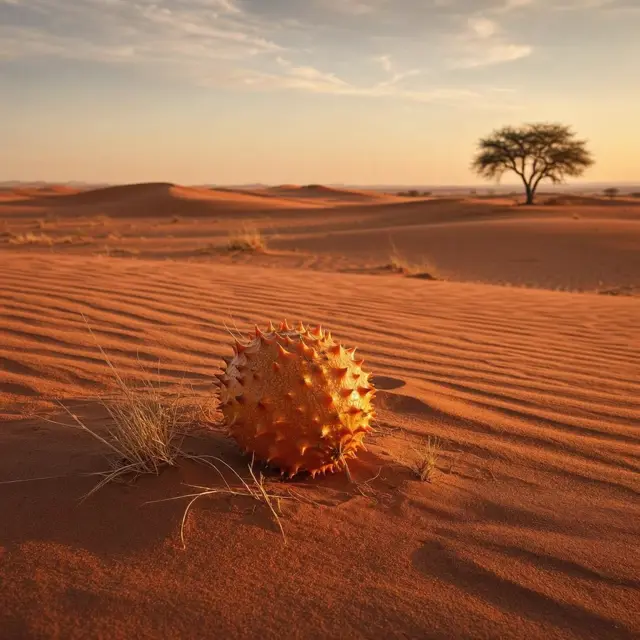
The plant life has its own star. The kiwano, also called the horned melon or jelly melon, is endemic to a region of the Kalahari, though nobody knows exactly which part. Acacia trees dot the land, including the camelthorn and the shepherd's tree. In the north and east, dry forests cover more than 300,000 square kilometres.
Experts at Finding Water
The San people have lived in the Kalahari for 20,000 years as hunter-gatherer communities. They hunt wild game with bows and arrows and gather berries, melons, nuts and insects.
Their most impressive skill is finding water in a place named for thirst. The San get most of the water they need from plant roots and desert melons found on or under the ground. They often store water in the empty shells of ostrich eggs.
Their homes are built entirely from local materials. The frame is made of branches, and the roof is covered with long grass. Many of their hunting and gathering methods echo those of people who lived long before written history. Today the San share the Kalahari with Tswana, Kgalagadi and Herero communities, and the city of Windhoek sits within the wider Kalahari Basin.