Four Jobs Every Currency Has to Do
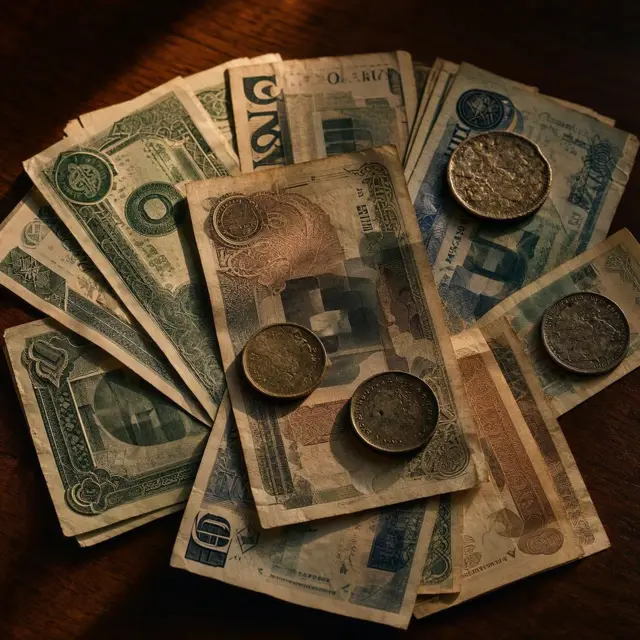
Money is any item or verifiable record that is generally accepted as payment for goods and services, and for repaying debts such as taxes, within a particular country or socio-economic context.
Notice what that definition does not say. It does not say coins. It does not say notes. It says any item or verifiable record, which is why so many different things have served as money across history.
What separates money from everything else is a set of functions. It works as a medium of exchange, a unit of account, a store of value, and sometimes a standard of deferred payment. Anything that reliably does those jobs is money, whatever it happens to be made of.
The Day Money Stopped Being Worth Anything by Itself
Historically, money was an emergent market phenomenon, and it possessed intrinsic value as a commodity. The thing used as money was itself worth something.
That is no longer true. Nearly all contemporary money systems are based on unbacked fiat money, which has no use value at all. The paper is just paper.
So where does the value come from? Social convention. Its worth is derived from a shared agreement, formalised when a government or regulatory entity declares it legal tender. That declaration is the whole foundation, and it is far less solid than a lump of gold, yet in practice it works better.
The Sentence Printed on the Dollar
Legal tender is a specific legal status, not a general compliment. It means the currency must be accepted as a form of payment within the boundaries of the country.
In the case of the United States dollar, that obligation is stated directly on the note itself: it must be accepted for all debts, public and private.
That single sentence is doing an enormous amount of work. It converts a piece of printed paper with no use value into something that everyone in a country of hundreds of millions of people will accept without hesitation, because the law guarantees that everyone else will accept it too.
Most Money Was Never Printed
A country's money supply is not the pile of cash sitting in wallets and tills. That is only the first part of it.
The money supply comprises all the currency in circulation, meaning banknotes and coins currently issued, plus, depending on which definition you use, one or more types of bank money: the balances held in checking accounts, savings accounts and other kinds of bank account.
Bank money exists as entries on the books of financial institutions. It can be converted into physical notes or used directly for cashless payment. And here is the part that surprises people: in developed countries, bank money forms by far the largest part of broad money. Most of the money around you was never printed at all.