A Bakery, a Gale and a Mayor Who Waited
Just after midnight on Sunday 2 September 1666, a fire broke out at Thomas Farriner's bakery in Pudding Lane. Neighbours tried to put it out. After an hour, local constables decided the houses next door should be pulled down to stop it spreading.
The owners protested, so the Lord Mayor, Sir Thomas Bloodworth, was called to give permission. He refused. Most of the houses were rented, he said, and the owners could not be found. Then he left.
That delay mattered. By morning, a strong east wind had turned the fire into a monster. The diarist Samuel Pepys watched from the Tower of London as an estimated 300 houses burned. He rushed to the King and told him that unless houses were pulled down, nothing could stop the fire. The King ordered demolitions, but it was already too late.
A City Built Like Kindling
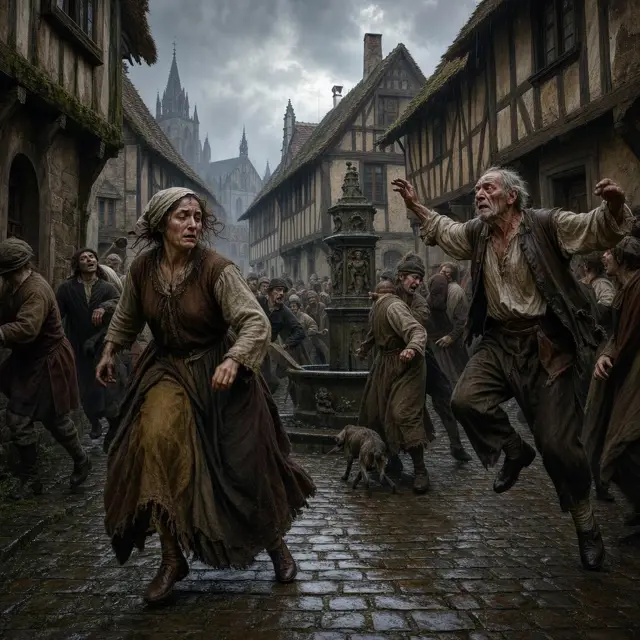
London in the 1660s was a fire waiting to happen. The old City was a maze of narrow, winding alleys. Wood and thatch had been banned for centuries, but people kept using them because they were cheap.
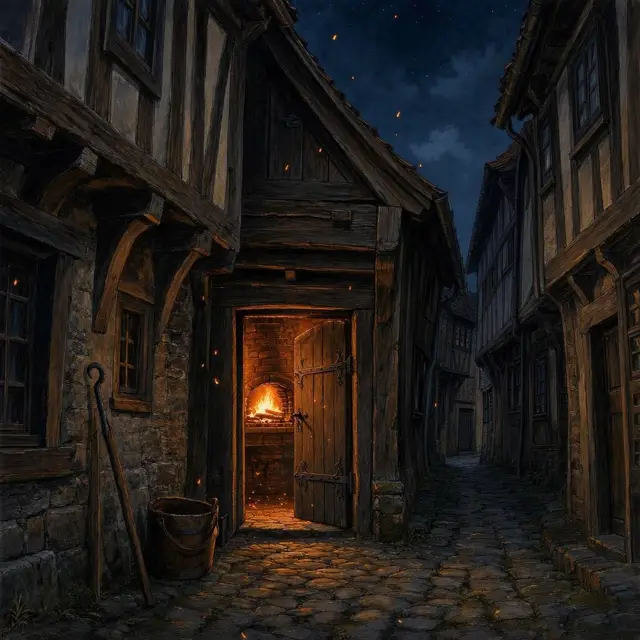
The houses made it worse. Their upper floors, called a jetty, stuck out further and further over the street. At the top, houses on opposite sides almost touched. Flames could simply step across. In 1661 King Charles II banned these overhanging floors. Almost nobody listened.
The riverfront was the worst spot of all. Its warehouses were packed with tar, pitch, hemp and flax. Black powder was stored in homes and shops, much of it left over from the English Civil War. Even escape was hard. The old Roman wall around the City had only eight narrow gates.
Leather Buckets Against a Firestorm
Firefighting in 1666 relied on two things: water and knocking buildings down. By law, ladders, leather buckets, axes and a firehook for pulling down houses had to be kept ready. The main idea was to clear a firebreak so the flames had nothing left to eat.
Water should have helped. Elm pipes carried water to 30,000 houses. But the fire reached the water wheels under London Bridge and burned them, cutting off the supply. London also owned a few fire engines. Some had no wheels, and several fell into the Thames while crews tried to fill them.
By Sunday afternoon the fire had become a firestorm that made its own weather. Hot air rushed upward between the tall, close houses, a kind of chimney effect, pulling strong winds in at street level and feeding the flames even more.
Four Days That Emptied the City
On Monday the fire reached the bankers of Lombard Street, who rushed to save their gold coins before they melted. Everyone wanted a cart. Renting one had cost a couple of shillings the week before. On Monday it could cost £40, roughly £133,000 in 2021 money.
The King put his brother James, Duke of York, in charge. James set up command posts around the fire. On Tuesday the flames still jumped the River Fleet. Then two things turned the battle. The wind dropped on Tuesday evening, and soldiers at the Tower of London blew up houses with gunpowder to make wide firebreaks.
By Wednesday the Great Fire was over, though coal kept burning in cellars for two months. Around 13,200 houses and many landmark buildings were destroyed. Only a few deaths were officially recorded, though some historians think the real number was higher.
How London Learned to Build With Brick
Big dreamers jumped in straight away. Christopher Wren, John Evelyn and Robert Hooke all drew bold new plans based on a grid. None was used. People needed homes quickly, so London was rebuilt on its old medieval street plan, which still exists today.
The new city was safer, though. A law in 1666 banned wood from the outside of buildings. Streets got wider, and houses were built of brick and stone. A special Fire Court settled disputes between tenants and landlords, usually within a single day.
The fire also created a new business. The first fire insurance companies appeared, starting with Nicholas Barbon's Fire Office. They charged less to insure brick homes than wooden ones and hired their own firemen. In 1832 the insurers merged their crews into one unit that later became the London Fire Brigade.