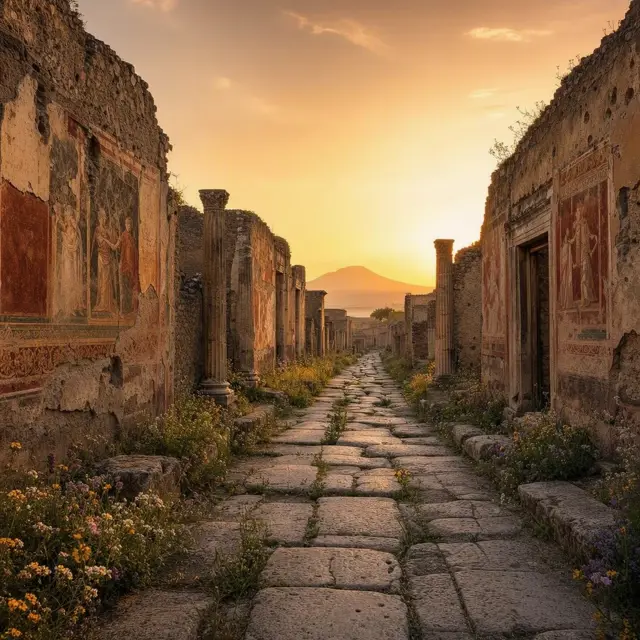
Two Days That Stopped Time
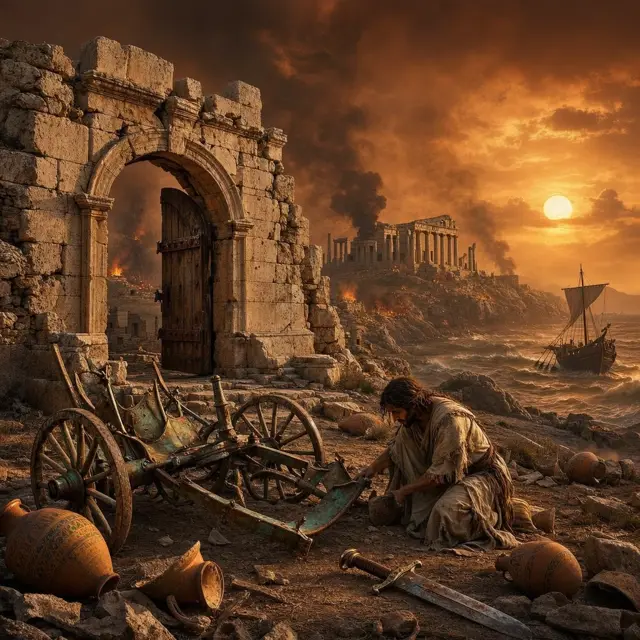
In 79 AD, Mount Vesuvius detonated above the Bay of Naples and buried the wealthy Roman city of Pompeii under 4 to 6 meters of volcanic ash and pumice. The eruption lasted two days — and its first 18 hours, a rain of pumice stones, actually allowed most of the city's 10,000 to 20,000 residents to flee.
For those who stayed, the end was not what people imagine. A 2010 study overturned the old suffocation story: the killer was heat. Ground-hugging avalanches of scorching gas and rock — pyroclastic flows at temperatures of at least 250°C — caused instant death, even inside shelter.
We know the day partly through a teenager's letters: Pliny the Younger watched from across the bay and later wrote the only eyewitness account, while his uncle, commanding the Roman fleet, died attempting rescues. Volcanologists still call such eruptions "Plinian" in his honor.
Even the Date Was Wrong for Centuries
For hundreds of years, everyone "knew" Vesuvius erupted in August — that's how Pliny's account was read. The city itself disagreed. Excavators kept finding victims in heavier clothing than an Italian August warrants, autumn vegetables in the shops, mature chestnuts nearby, and sealed jars of fermenting wine — the work of a completed harvest.
The clincher was money: coins found in the ash carried imperial titles that were not minted before mid-September. In 2022, a collaborative study settled it — the eruption occurred on October 24–25, in autumn.
It is a perfect Pompeii story: a city so well preserved that it can correct the historical record about its own death, two thousand years after the fact.
The City the Ash Kept Safe
The ash that killed Pompeii also immortalized it. Sealed in an airless, moisture-free tomb, the city survived as a complete snapshot of Roman life: 31+ bakeries with their ovens, nearly 100 thermopolia — Roman snack bars — luxurious villas, baths with heated walls, temples, theatres, and an amphitheatre from 70 BC praised as a model of crowd design.
Its walls even preserve Roman voices. Thousands of graffiti record the casual, everyday Vulgar Latin people actually spoke — a language mostly lost from formal literature.
Most haunting are the people themselves. Bodies buried in ash decayed and left voids; from 1863, excavation director Giuseppe Fiorelli poured plaster into these cavities, recreating victims in their final poses. Modern teams use clear resin instead, preserving the bones within for study.
Still Being Discovered
Pompeii vanished so completely that an architect who struck its walls in 1592 kept the find secret. Real excavation began in 1748, and the city wasn't even identified until 1763, when diggers finally found an inscription naming it. What followed was messy — looting, haphazard digging, even World War II bomb damage — until systematic archaeology matured on this very site.
The discoveries refuse to stop. Recent years alone produced a ceremonial chariot, a thermopolium with meals still in its jars, frescoes of Helen of Troy, and a shrine painted deep blue.
Today Pompeii is a UNESCO World Heritage Site — "the only archaeological site in the world that provides a complete picture of an ancient Roman city" — drawing about 2.5 million visitors a year, now managed with daily ticket caps to protect a city that has already died once.