The Summer London Could Not Breathe
In June 1858, London baked. Temperatures in the shade averaged 34 to 36 °C and reached 48 °C in the sun. A long dry spell made the River Thames drop. As the water fell, raw waste from the city's sewers was left sitting on its banks.
The smell was overwhelming. Queen Victoria and Prince Albert set off on a pleasure cruise on the river, but they returned to shore within a few minutes. The press soon gave the event a name that stuck: the Great Stink.
Writers lined up to describe it. Charles Dickens had already called the Thames "a deadly sewer" where there should be "a fine, fresh river". The Illustrated London News made a sharper point. Britain, it said, could reach the farthest ends of the earth and spread its name to every part of the world, yet it could not clean the River Thames.
How a River Became a Sewer
The trouble had been building for years. By 1856 London had around 200,000 cesspits and 360 sewers, many in poor repair. Then two changes made things far worse. Flushing toilets arrived, and the city grew from just under one million people to three million. More water pushed more waste into the old sewers, and much of it flowed straight into the Thames. Factories and slaughterhouses added their own waste on top.
In 1855 the scientist Michael Faraday ran a simple test. He dropped pieces of white paper into the river to see how murky it was. Near the bridges, he saw dirt rolling up in clouds so thick they showed at the surface. His verdict was blunt: the whole river was a real sewer.
In 1857 the government even poured chalk lime and other chemicals into the water to ease the stench. It was not enough.
When Parliament Held Its Nose
Parliament could not escape the river. Curtains on the river side of the building were soaked in lime chloride to block the smell. It did not work. Members began to discuss moving the business of government to Oxford or St Albans.
One newspaper described Benjamin Disraeli leaving a committee room with a pile of papers in one hand and a handkerchief pressed to his nose. Another member complained that nobody could use the Committee Rooms or the Library. Meanwhile, men spread 200 to 250 tons of lime near the sewer mouths and on the riverbank, at a cost of £1,500 a week.
The smell finally forced action. On 15 June, Disraeli brought in a bill to clean up the Thames, and it became law on 2 August. It let the Metropolitan Board of Works, which ran London's sewers, borrow £3 million for new sewers. The Times said Parliament had been all but compelled to act by the force of sheer stench.
Bazalgette's Hidden Network
The engineer Joseph Bazalgette had a plan ready. Instead of dumping waste into the Thames in the middle of London, his sewers would carry it east to outfalls beyond the city. Work began in 1859 and lasted until 1875.
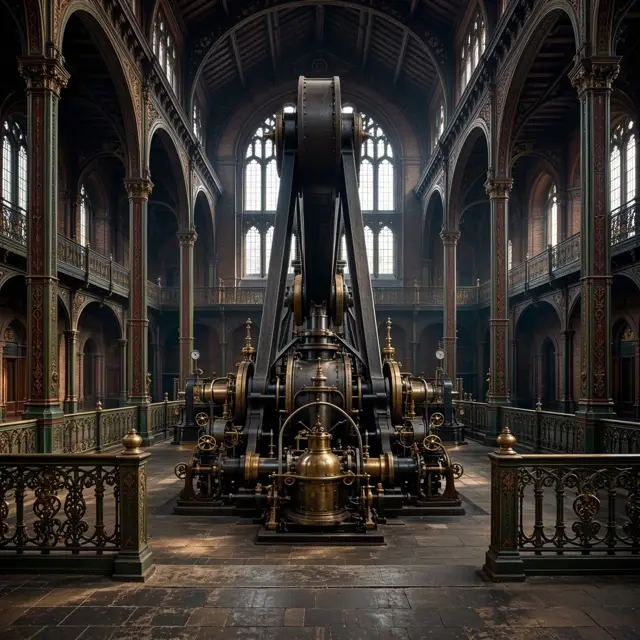
The scale was huge. About 1,800 km of street sewers fed into 132 km of main sewers. Four hundred draftsmen worked on the plans for the first phase alone. Most of the system ran on gravity, sloping gently east. Parts of London lie below the high-water mark, so pumping stations lifted waste from low sewers into higher ones. At Crossness, four giant beam engines did the lifting. They were named Victoria, Prince Consort, Albert Edward and Alexandra.
Bazalgette also built three riverside embankments, the Victoria, Chelsea and Albert, with sewers running inside them. They won back over 21 hectares of land from the Thames. The whole job used 318 million bricks and cost about £6.5 million.
Why the Smell Mattered
At the time, most people believed in the miasma theory. It said diseases spread through bad air, such as the smell of sewage. Many feared the stink itself would spread cholera, which had already struck London three times since 1831. A doctor named John Snow argued that cholera really spread through dirty water, but few paid attention.
The new sewers helped settle the debate. In 1866 cholera broke out again, but mostly in a part of the East End not yet linked to Bazalgette's system. A water company there had let sewage reach its drinking water. After that, people accepted that cholera was carried by water, not by bad air. It was the last outbreak of the disease in London.
Bazalgette's sewers still work today. In 2015 the network served up to eight million people a day. One historian said he probably did more good, and saved more lives, than any single Victorian official.