The Black Suit Was a Stage Costume
Picture a ninja and you probably see someone dressed head to toe in black. That look was largely born in the theater. In plays of the Edo period, ninja wore black to copy the kuroko, stagehands whom the audience was meant to ignore. Their shuriken were a stage choice too, meant to contrast with the swords of the samurai on stage.
Real ninja dressed very differently. In peacetime they usually wore work clothes like those of farmers, dyed dark indigo. For night missions they probably wore mountain or farm work clothes that were likely dark brown, not black, because brown blended better into the dark. Those clothes would have stood out in daylight, so they were not worn during the day.
And the biggest myth? There is little evidence that ninja were assassins at all. They were spies and infiltrators. To slip into enemy ground, they often disguised themselves as merchants or traveling entertainers.
Peasant Warriors From the Hills of Iga
The best-known ninja clans came from two neighboring areas of Japan: Iga Province and the nearby Kōka district, later written Kōga. During the unrest of the Sengoku period, local jizamurai, or peasant-warriors, formed leagues called ikki to defend themselves. They became known for their military activities nearby and sold their services as spies and mercenaries. The remote, hard-to-reach mountains around Iga may have helped them stay secret.
Between 1485 and 1581, lords actively hired these professionals. Iga men were especially wanted for siege work, including night attacks and ambushes. The ninja families even had ranks. A jōnin, or 'upper person', led the group and hired out its members. A chūnin, or 'middle person', assisted him. A genin, or 'lower person', was the field agent who carried out the actual missions.
People had colorful names for them, too. Regional nicknames included kusa, meaning 'grass', and nokizaru, meaning 'macaque on the roof'. The word shinobi itself means 'to steal away; to hide'.
Fake Lanterns and Stubborn Contractors
Spying was the ninja's main job, but when they sabotaged, fire was their favorite tool. In 1541, men from the Iga clans slipped into Kasagi castle in secret, set fire to buildings in several places and captured its inner sections.
The cleverest trick came in 1558. A chūnin captain led 48 ninja against Sawayama Castle. His men stole a lantern that carried the enemy's family crest and made copies of it. Holding these fake lanterns, they were simply let in without a fight. Once inside, they set the castle on fire.
Ninja were true mercenaries. In 1561, the same lord who had hired Iga ninja a few years earlier became their target, when a rival hired three of them to burn his fortress in Maibara. The hired men refused to take orders. They told the commanders, outsiders to the region, that they could not possibly understand ninja tactics, and threatened to quit unless they could use their own plan. The fire was eventually set, and the fortress fell.
Silent Sandals Versus Squeaky Floors
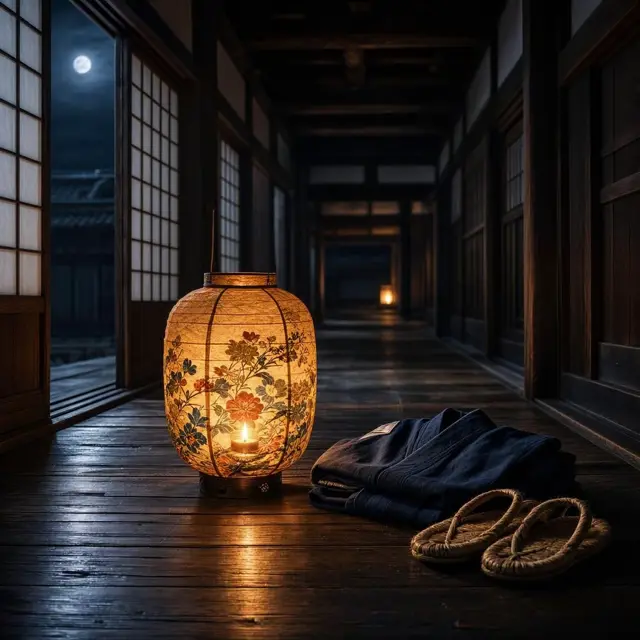
Ninja wrote down their know-how. The most famous manual, the Bansenshūkai, dates from 1676. Its original source lists 48 points of ninja skill, such as how to make makibishi from bamboo, how to make footwear that makes no sound, and how to listen for small sounds. In 2022, Kōka city announced that a handwritten copy from 1748 had been found in a warehouse. It even suggests attaching layers of cotton to the bottom of straw sandals to stay quiet while sneaking around.
At the site of the 1590 Siege of Odawara, archaeologists uncovered flat throwing stones, likely early versions of the shuriken, and clay caltrops.
Castle owners fought back with clever design. Castles had winding routes to the inner compound, watched from blind spots and holes in the walls. Nijō Castle in Kyoto has long 'nightingale' floors, called uguisu-bari, resting on metal hinges that squeak loudly when anyone walks on them. Gravel grounds gave early warning of intruders, and trip wires were tied to alarm bells.
What Ninja Did When the Wars Ended
Some great ninja stories come from the end of their era. During a siege in 1600, a ninja slipped past the defenders and planted the attacking army's flag high on the front gate. At the siege of Hara Castle in 1637-1638, Kōga men would steal up to the castle every night and go inside as they pleased. They measured the depth of the moat, the height of the wall and even the shape of the loopholes, and they obtained secret passwords. These accounts are the last mention of ninja in war.
Peace put many of them out of work. Lords still hired ninja as bodyguards and spies, and for fire patrol. Others found new careers as doctors, medicine sellers, merchants, martial artists and even fireworks makers.
Today, ninja are a serious subject. Mie University founded the world's first ninja research center in 2017 and opened a master's course in 2018. Only about three students enroll each year, and they must be able to read historical ninja documents.