A Temple to Every Subject
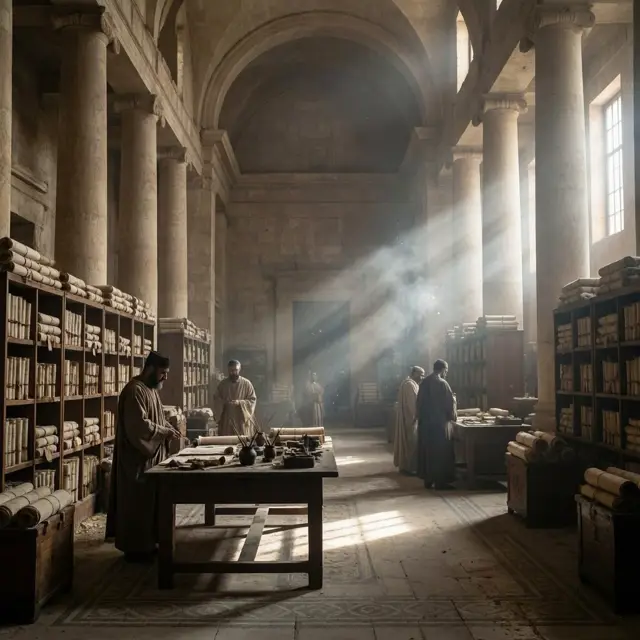
The Library of Alexandria was one of the ancient world's largest libraries, part of a research institution called the Mouseion — a place dedicated to the Muses. It was likely established under Ptolemy II Philadelphus (285–246 BC).
Its collection of papyrus scrolls is estimated at anywhere from 40,000 to 700,000 — perhaps the equivalent of around 100,000 books, an astonishing concentration of knowledge for the time.
Knowledge by Any Means
The Ptolemies acquired texts aggressively. Royal agents bought books by any author on any subject, and works found aboard ships entering the harbor were seized and copied.
Ptolemy III once put up fifteen talents of precious metal as a guarantee to borrow the original plays of Aeschylus, Sophocles, and Euripides from Athens — then kept the originals and returned copies.
The Minds Inside
The library's scholars changed history. Zenodotus, the first known head librarian, was the first person known to organize information alphabetically. Callimachus compiled the Pinakes, a 120-book catalogue sometimes called the world's first library catalog.
And Eratosthenes calculated the circumference of the Earth around 194 BC — a measurement off by less than a few hundred kilometers.
A Slow Fade, Not a Single Fire
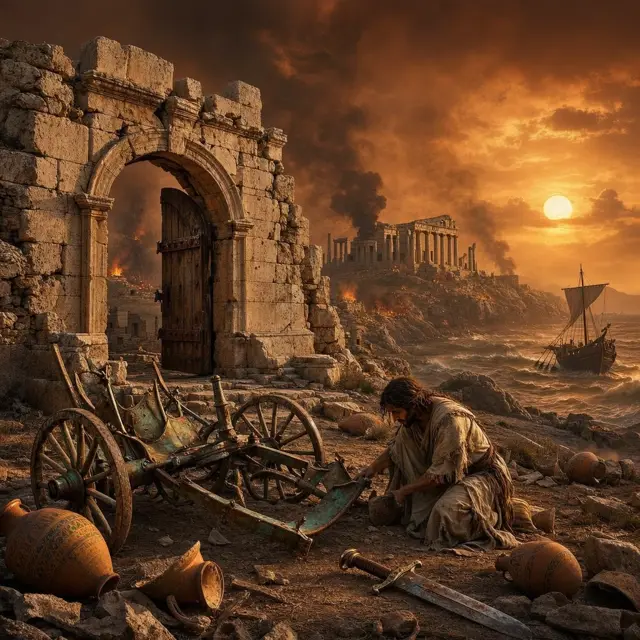
Despite the legend of one dramatic blaze, the library declined gradually over centuries. Julius Caesar's fire in 48 BC reportedly destroyed 40,000 scrolls, and Ptolemy VIII expelled foreign scholars in 145 BC, scattering Alexandria's learning.
The emperor Aurelian damaged the library's quarter around 272 AD, and the daughter library at the Serapeum was demolished in 391 AD. Knowledge that took centuries to gather slipped away piece by piece.