The Road That Was Not a Road
Start with the correction, because it is more interesting than the myth. Despite the popular imagination, the Silk Road was never a single east-west route linking China to the Mediterranean. It was a network of routes.
The name itself is modern, coined only in the late 19th century. Some historians now prefer Silk Routes, on the grounds that it better describes the intricate web of land and sea paths connecting Central, East, South, Southeast and West Asia, along with East Africa and Southern Europe.
And the man everyone pictures on it never used the phrase. Marco Polo, endlessly linked to the Silk Road, travelled during a period of Mongol-enabled ease of movement and never called it that — because nobody did for another six hundred years. The network was active from the second century BCE until the mid-15th century, spanning over 6,400 km on land.
One Envoy, and a Wall Extended to Protect It
The network began with the expansion of the Han dynasty (202 BCE – 220 CE) into Central Asia around 114 BCE, through the missions and explorations of the Chinese imperial envoy Zhang Qian, which brought the region under unified control.
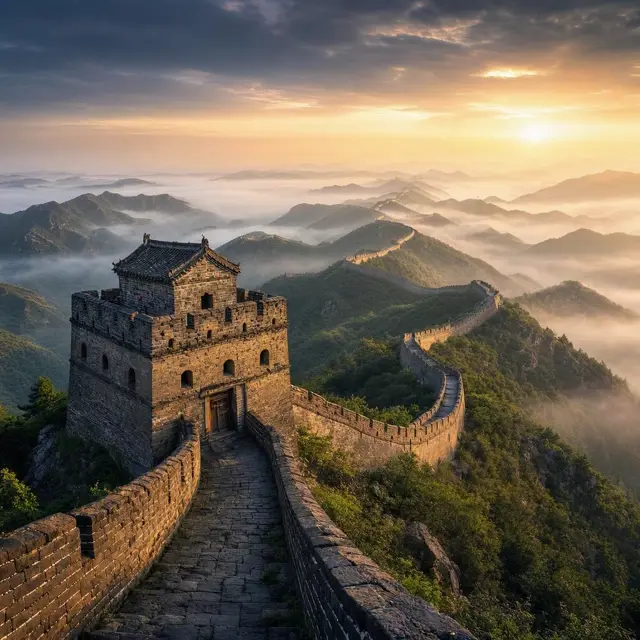
What happened next says a great deal about how much the trade mattered. The Chinese took such interest in the security of their goods that they extended the Great Wall of China to protect the trade route. A wall usually built to keep people out was lengthened to keep commerce safe.
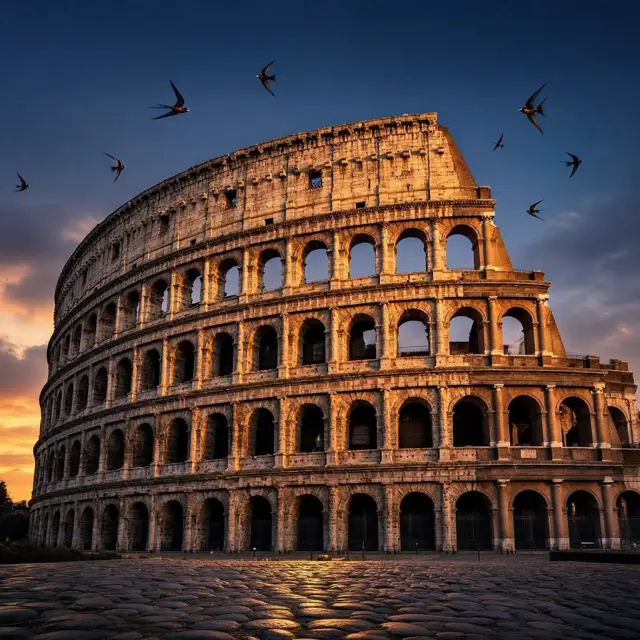
The rest of the chain assembled itself around that. The Parthian Empire provided the vital bridge connecting the network to the Mediterranean, while the rise of the Roman Empire established the western terminus. By the first century CE, Chinese silk was widely sought after in Rome, Egypt and Greece — the name comes from that single lucrative textile, produced primarily in China.
Nobody Went the Whole Way
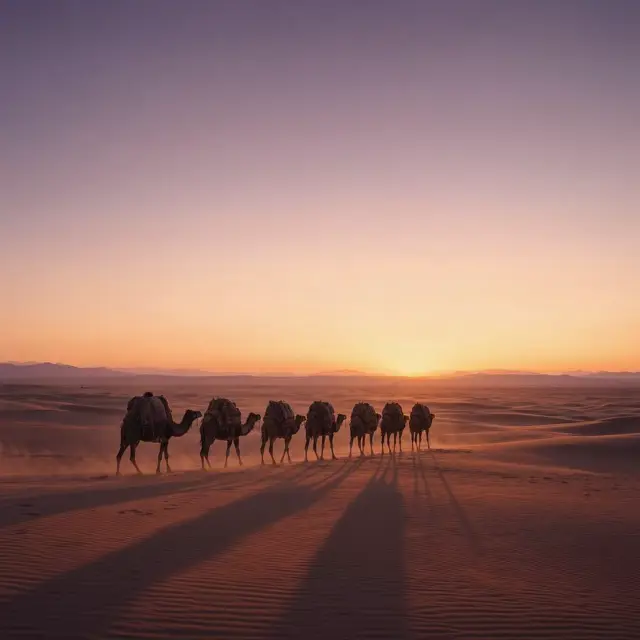
The romantic image is a caravan crossing a continent. The reality was far more piecemeal, and far more human.
The network was highly decentralised, and security was sparse. Travellers faced constant threats of banditry and nomadic raiders, plus long expanses of inhospitable terrain. So few individuals travelled the entire length. Instead, goods moved through a succession of middlemen based at stopping points along the way — each handling one leg, each taking a cut.
The goods themselves ran in both directions. Eastern exports included silk, tea, dyes, perfumes and porcelain. Western exports included horses, camels, honey, wine and gold. And beyond luxuries, the network carried things that changed history outright: the spread of paper and gunpowder greatly affected the trajectory of political history across Eurasia and beyond.
Ideas and Plague Travelled Too
Trade routes carry more than cargo. The Silk Road facilitated an unprecedented exchange of religious — especially Buddhist — philosophical and scientific thought, much of it syncretised by the societies it passed through, blended into local belief rather than adopted whole.
It also carried disease. Plague spread along the Silk Road, possibly contributing to the Black Death.
The end came from competition rather than collapse. From 1453 onward, the Ottoman Empire began competing with other gunpowder empires for control of the overland routes, which pushed European powers to look for alternatives — and that search became the Age of Discovery, European colonialism, and a further intensification of globalization. The name refuses to die: several 21st-century infrastructure projects are branded the New Silk Road, including the Eurasian Land Bridge and China's Belt and Road Initiative. UNESCO designated the Chang'an-Tianshan corridor a World Heritage Site in 2014, and the Zarafshan-Karakum Corridor in 2023.