An Outburst Over Lunch
One day in 1950, physicist Enrico Fermi was walking to lunch at Los Alamos with colleagues Emil Konopinski, Edward Teller, and Herbert York. The conversation drifted through flying saucers and faster-than-light travel, then moved on. Partway through the meal, Fermi suddenly blurted out his question. Konopinski remembered it as: "But where is everybody?"
Everyone at the table understood instantly that he meant extraterrestrial life — and burst out laughing. York recalled that Fermi then ran quick calculations on the odds of Earth-like planets, the emergence of life, and the rise of technology, and reached an unsettling conclusion: we ought to have been visited long ago, and many times over. The question was so simple a child could ask it, yet nobody had a good answer. Nobody has one still.
The Numbers That Make It Hurt
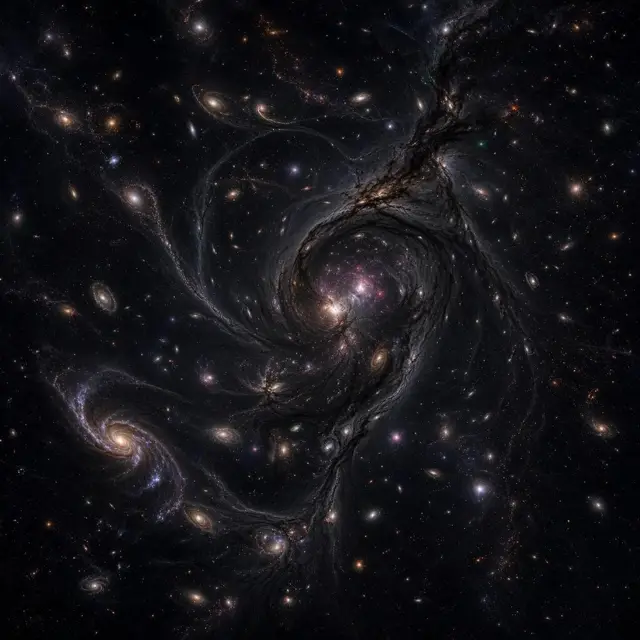
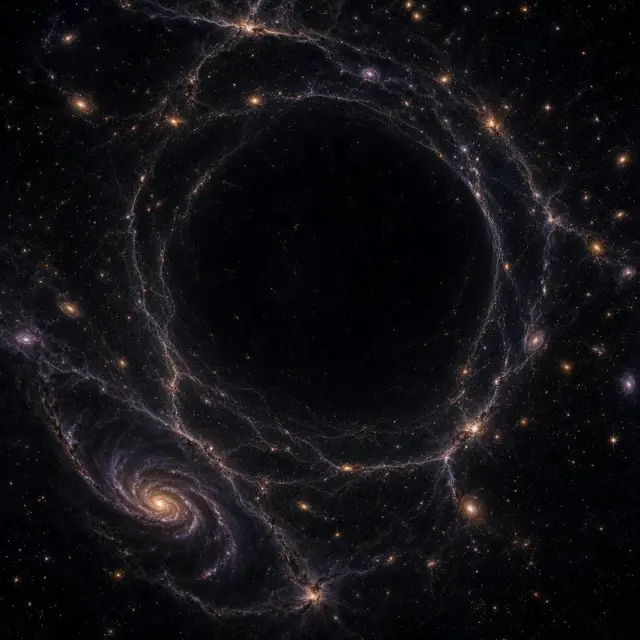
The paradox is powered by scale. The Milky Way alone contains 200 to 400 billion stars; the observable universe holds some 70 sextillion — a 7 followed by 22 zeros. Astronomers now estimate that on average every star hosts around 0.5 to 1 potentially habitable planet. And the universe has had 13.8 billion years to work with.
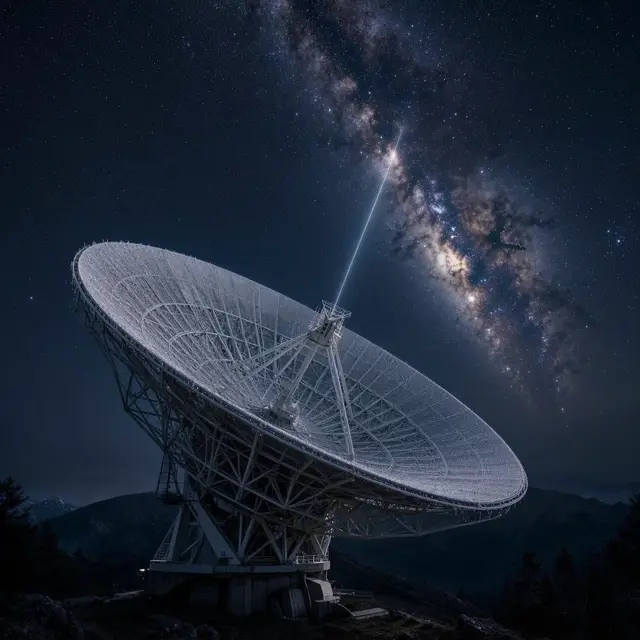
In 1961, Frank Drake turned the question into an equation — the Drake equation — multiplying the rate of star formation, the fraction of stars with planets, the fraction of planets that develop life, intelligence, and detectable technology, and how long civilizations broadcast. The catch: the last four numbers are entirely unknown. Early estimates at SETI conferences ranged from 1,000 to 100 million civilizations in our galaxy alone. Others concluded there may be fewer than one per galaxy. The equation cannot settle the argument — it can only organize our ignorance.
Fifty Ways to Explain the Silence
Proposed solutions have multiplied for decades, falling into a few great families:
- We are rare. The Rare Earth hypothesis holds that complex life needs a freakish stack of luck — the right galactic neighborhood, a giant guardian planet like Jupiter, a magnetic shield, plate tectonics, and the improbable leap to complex cells.
- Something kills everyone. Robin Hanson's Great Filter argues some step between dead chemistry and star-faring civilization is nearly impossible to pass. The chilling question is whether that filter lies behind us — or ahead, in the form of war, engineered plagues, artificial intelligence, or climate collapse.
- They're there, but silent or hidden. Perhaps civilizations abandon leaky radio for cables and fiber optics within decades, watch us without interfering like a wildlife preserve — the zoo hypothesis — or think in ways we cannot even recognize as thought.
Each explanation resolves the paradox. None of them can be tested yet. That is exactly what keeps it alive.
A Question Older Than Fermi
Fermi asked it best, but he did not ask it first. In 1686, French writer Bernard Le Bovier de Fontenelle noted that if the Moon were inhabited, its people "would already have come to us before now." Jules Verne toyed with the idea in 1865. In the 1930s, Russian rocketry pioneer Konstantin Tsiolkovsky worked out a detailed version — and proposed the zoo hypothesis as his answer — in writings that stayed unpublished for decades.
The question only became "the Fermi paradox" in 1977, when David Stephenson coined the term, after Michael Hart's influential 1975 paper forced astronomers to take it seriously. It has drawn blood in politics too: Frank Tipler's argument that real civilizations would have flooded the galaxy with self-replicating probes helped convince Senator William Proxmire to kill NASA's SETI funding in 1981. Some historians even argue Fermi never meant to doubt aliens at all — only interstellar travel. The lunch went unrecorded; the echo never faded.