A River of Stars Most People Never See
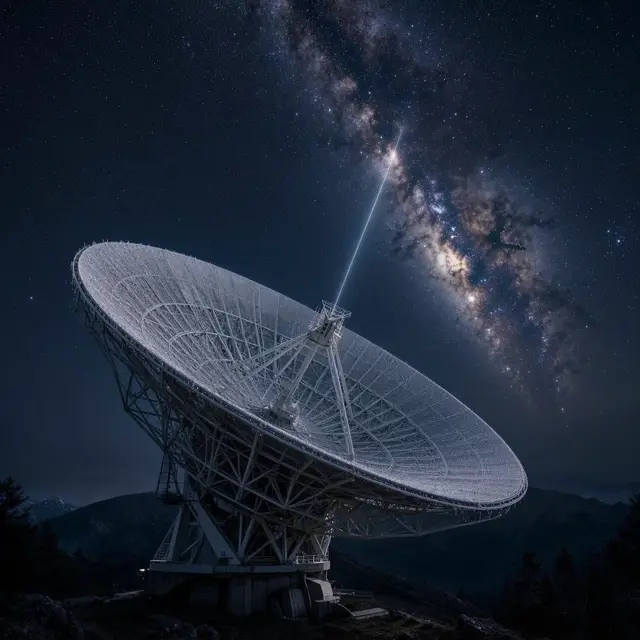
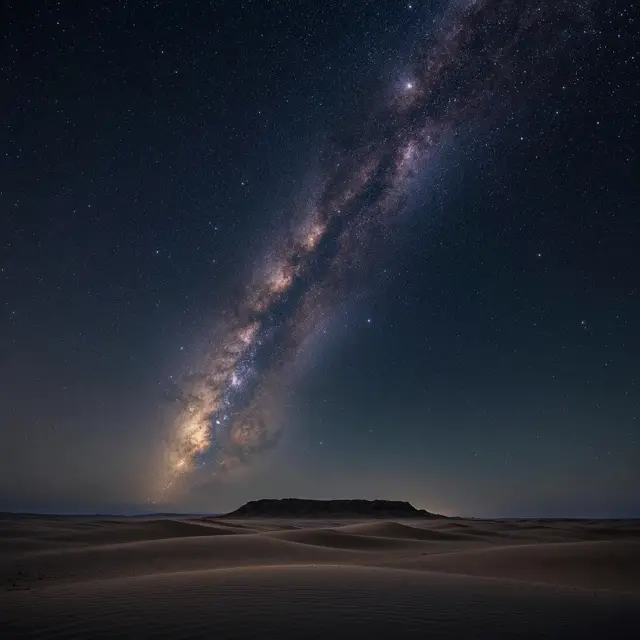
On a truly dark night, a hazy band of light stretches across the sky. That band is the Milky Way, our home galaxy, seen from the inside. Its glow comes from stars so far away that our eyes cannot pick them out one by one.
Sadly, many people never get to see it. More than one third of Earth's population cannot see the Milky Way from home because of light pollution, the glow of city lights in the night sky.
To spot it, you need a dark sky, little moonlight and about 30 minutes for your eyes to adjust. The name itself comes from its milky look. Even the word "galaxy" comes from the Greek word for milk.
When Our Galaxy Was the Whole Universe
For most of history, nobody knew what the milky band was. In 1610, Galileo Galilei pointed his telescope at it and saw that it was made of a huge number of faint stars.
Even then, the true scale stayed hidden. Until the early 1920s, most astronomers believed the Milky Way held every star in the universe. Some thought the fuzzy spirals in the sky, then called nebulae, were small clouds inside our own galaxy.
In 1920, two astronomers held a famous argument about it, known as the Great Debate. Edwin Hubble settled it a few years later. Using a powerful new telescope, he showed that the Andromeda nebula was far too distant to be part of the Milky Way. Our galaxy was just one of many.
Billions of Stars and a Black Hole at the Heart
The Milky Way is huge. It holds an estimated 100 to 400 billion stars, and at least as many planets. It is shaped like a flat spinning disc with curving arms, a type called a barred spiral galaxy, and it is about 87,000 light-years across but only about 1,000 light-years thick at the arms.
At its centre sits a supermassive black hole with about 4 million times the mass of our Sun. It is also a powerful source of radio waves.
Some of its stars are almost as old as the universe itself. Even so, the Milky Way is not unusually big. It is one of the two largest galaxies in our local group, alongside Andromeda, but studies suggest it is actually a fairly average spiral galaxy.
Our Place on the Spiral
Our Solar System is not near the centre. It sits about 27,000 light-years out, on the inner edge of a spiral arm called the Orion Arm.
We are also moving fast. The Solar System races around the galaxy at about 220 kilometres per second. Even at that speed, one full lap takes about 240 million years, a span sometimes called a galactic year.
That means the Sun has gone around only 18 to 20 times in its whole life. Since humans first appeared, it has travelled just 1/1250 of one lap. To picture the size, if the Solar System out to Neptune were the size of a coin, the Milky Way would stretch roughly the length of the United States.